









































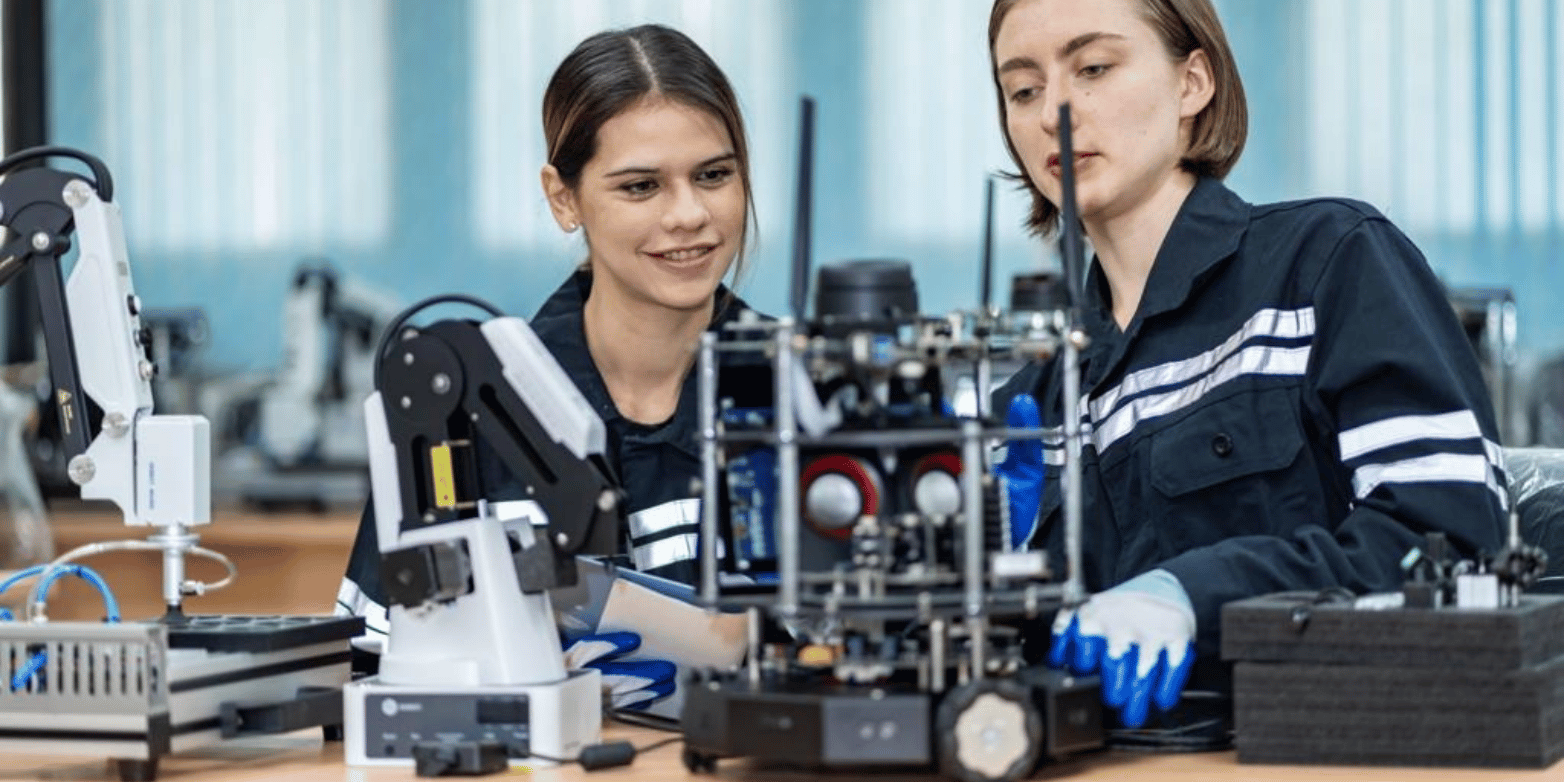
Global participation of women in science, technology, engineering, and mathematics (STEM) is on the rise, with recent data revealing that women now account for over 40 percent of STEM participants in India. In regions of the United Arab Emirates, the figure has reached 56 percent, reflecting a significant shift in traditional gender perceptions regarding technical and engineering careers. Germany is also witnessing an upward trend, with female representation in STEM at approximately 36 percent.
This increasing representation is indicative of a broader change across various regions, including Malaysia and Tunisia, where participation levels are nearing gender parity. Conversely, countries like the United States and the United Kingdom are making slower, yet steady, progress towards improving gender balance in these fields.
Within the STEM landscape, sectors such as artificial intelligence and engineering are attracting heightened interest from women. Global statistics indicate that women now constitute about 22 percent of the AI workforce, a notable increase from roughly 15 percent a decade ago. However, despite these advancements, significant disparities persist. Globally, women make up approximately 35 percent of STEM students, underscoring uneven access and participation across different regions.
Sonal Kapoor, Global Chief Business Officer at Prodigy Finance, emphasized that “opportunity alone is not enough.” She stated that the progress of women in STEM is contingent upon the establishment of support systems, clear pathways, and the reduction of barriers that hinder women’s entry and retention in these fields. Kapoor pointed out that challenges such as financial constraints, visa delays, and limited access to resources continue to impede participation, particularly at critical stages of career development.
The ongoing influence of artificial intelligence on workforce structures highlights the dual nature of the trend: while participation among women is rising, there remains a pressing need for sustained support to ensure balanced representation in tech-driven industries. As AI and automation reshape job markets, the importance of fostering inclusive environments in STEM cannot be overstated.
Kapoor’s insights resonate deeply as industries grapple with not only the expanding role of technology but also the imperative to maintain a diverse workforce. The call for comprehensive support systems is echoed by many advocates who recognize that without concerted efforts to address existing barriers, progress may stall or even reverse.
This development also underscores the broader societal shift towards embracing diversity in traditionally male-dominated fields. Organizations and educational institutions are increasingly recognizing the value of inclusive approaches, aiming to cultivate an environment conducive to innovation and collaboration across genders. The commitment to advancing women’s participation in STEM is not just a matter of equity; it is also a fundamental driver of economic growth and technological advancement.
As the global conversation around gender equality in the workplace continues to evolve, the increasing representation of women in STEM serves as a beacon of hope and progress. With systemic support mechanisms in place, the industry can anticipate a future where women not only participate but thrive in all aspects of science and technology. The journey towards achieving gender parity in STEM is ongoing, but the momentum is undoubtedly building.
See also Finance Ministry Alerts Public to Fake AI Video Featuring Adviser Salehuddin Ahmed
 Bajaj Finance Launches 200K AI-Generated Ads with Bollywood Celebrities’ Digital Rights
 Traders Seek Credit Protection as Oracle’s Bond Derivatives Costs Double Since September
 BiyaPay Reveals Strategic Upgrade to Enhance Digital Finance Platform for Global Users
 MVGX Tech Launches AI-Powered Green Supply Chain Finance System at SFF 2025