













































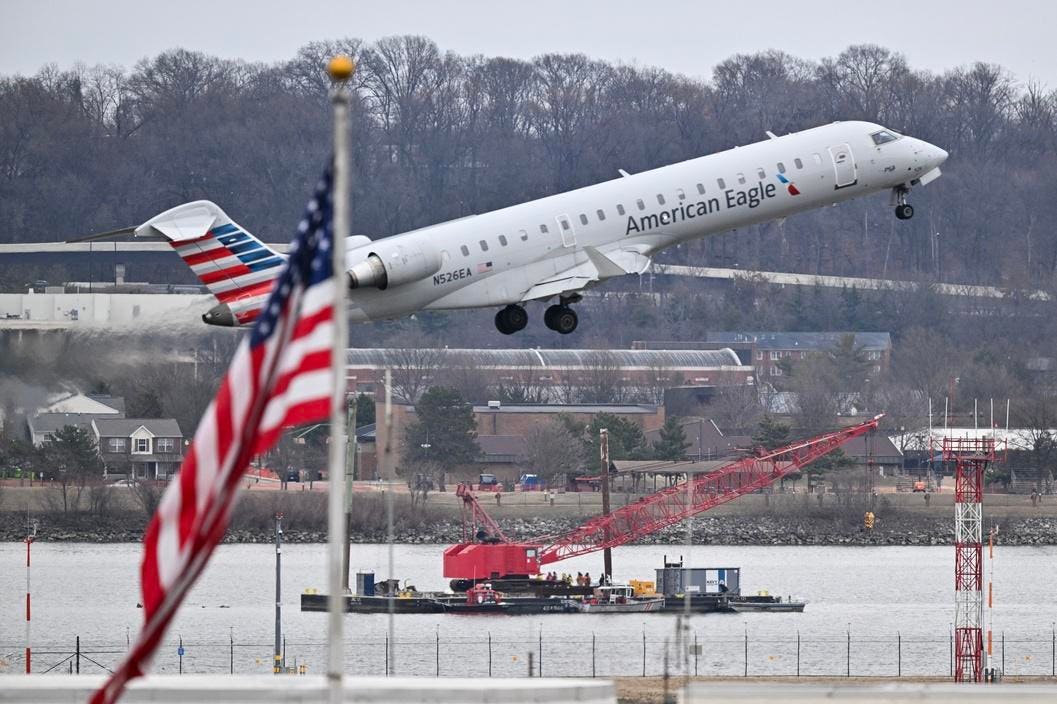
A flight took off on February 2, 2025, from Ronald Reagan Washington National Airport, just days after a tragic incident involving a regional jet and a helicopter that resulted in the deaths of 67 people. This collision on January 29 raised serious concerns about aviation safety, particularly given the alarming number of prior near misses at the airport. In response, industry leaders convened at Honeywell Aerospace’s 2025 American Aviation Leadership Summit on November 19 in Washington, D.C., to discuss the role of artificial intelligence (AI) in enhancing aviation safety and efficiency.
Secretary of Transportation Sean Duffy, who opened the summit, emphasized the need for advancements in aviation safety, referencing a “One Big Beautiful Bill” that allocated a $12.5 billion investment in modernizing the National Airspace System (NAS). He noted that this modernization includes upgrading infrastructure, such as replacing outdated copper wiring with fiber optics for faster data transmission, a critical step in improving communication and safety protocols.
Highlighting the January collision, Duffy remarked that the incident should have been preventable, citing 85 near misses over the preceding three years. “We need to take corrective action. We can’t have fixed-wing aircraft and helicopters crossing paths over the Potomac,” he stated. The FAA has begun employing AI to identify potential hotspots within the NAS, enabling proactive measures to enhance flight safety. “AI does a great job of helping us identify those trend lines and providing a warning to then take action,” Duffy added.
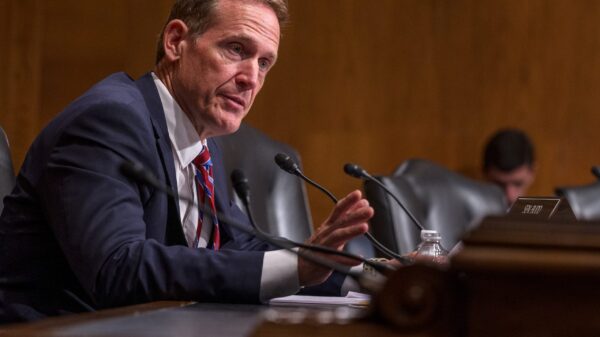
During the summit, Congressman Jay Obernolte (R-CA) addressed the benefits and risks associated with AI in aviation. As co-chair of the bipartisan AI Task Force, he has advocated for a regulatory framework for AI technologies. Obernolte, the only serving member of Congress with an advanced degree in AI, pointed out that AI significantly alters human-machine interactions by making these interactions appear more humanlike. However, he cautioned that “never, ever, ever assume that AI is correct. Always ‘trust but verify,'” underlining the potential for human error in AI systems due to their reliance on the vast but fallible breadth of human-generated data.
Obernolte explained that while different types of AI exist, aviation applications strive for deterministic outcomes, where a specific input reliably yields the same predictable output. In contrast, probabilistic AI, or machine learning, can analyze incomplete information to forecast trends but carries inherent uncertainty. Generative AI, which mimics human creativity, can produce outputs that may not align with expectations, potentially leading to errors. “We never assume that the output of AI is 100% correct,” he reiterated, emphasizing the critical need for verification.
The congressman further highlighted the dangers of overreliance on AI, referencing the Make America Healthy Again Commission’s report that included numerous citations that turned out to be fabricated or mischaracterized by AI. “Well-publicized cases of lawyers filing court briefs generated by AI that had a court history that’s completely fabricated” illustrate this risk, Obernolte remarked. The proliferation of AI-generated content on social media and other platforms poses a significant challenge, as it can mislead users into believing incorrect information.
He expressed concern over the increasing prevalence of “AI slop,” where unknowledgeable individuals generate seemingly credible posts filled with inaccuracies, leading to misinformation. Even respected publications have been caught publishing AI-assisted articles that lack proper scrutiny, raising questions about their credibility. “It’s up to us to always, always, always verify what comes out the other end, because we never know if it’s going to be 100% accurate,” Obernolte cautioned.
As AI continues to influence the aviation industry, the call for rigorous oversight and responsible application has never been more urgent. The potential for AI to enhance safety in aviation is significant, but it requires a commitment to vigilance and verification. The upcoming challenges of integrating AI technologies into an industry where safety is paramount will demand that both regulators and operators remain proactive in their oversight, ensuring that human judgment remains at the forefront of aviation safety protocols.
See also HSBC Partners with Mistral AI to Enhance Banking Operations with Generative AI Tools
 OpenAI Launches GPT-5: Enhanced Multimodal Reasoning and Workflow Management
 James Cameron Calls Generative AI ‘Horrifying’ in Latest Interview on Film Technology
 Runway Launches Gen-4.5 Video Model, Achieves 1,247 Elo Points in AI Leaderboard
 Rockstar Co-Founder Dan Houser Warns Generative AI May Degrade Game Quality