In the rapidly evolving landscape of social media, a new wave of educators is emerging to tackle the challenges posed by artificial intelligence (AI) in content creation. Jeremy Carrasco, a former videographer turned AI detective, has gained prominence by teaching millions how to differentiate between authentic content and AI-generated fakes on platforms like TikTok and Instagram. His insightful breakdowns of subtle indicators, such as unnatural eye movements and inconsistent lighting, have garnered over 10 million views, reflecting a growing demand for AI literacy as synthetic media becomes increasingly prevalent.
Carrasco’s foray into this niche began out of frustration with the proliferation of AI-produced videos that closely mimic human influencers. His viral content, which includes a detailed analysis of a seemingly flawless makeup tutorial that turned out to be an AI construct, resonates with users who are becoming more skeptical of digital deception. Recent statistics indicate that more than 1 billion AI videos have been shared on TikTok, prompting the platform to implement transparency measures, including invisible watermarks and user-controlled feed sliders.
The movement spearheaded by Carrasco is not an isolated phenomenon. Across social media, a cadre of “AI literacy” influencers is gaining traction, blending education with entertainment to clarify the complexities of artificial intelligence. Their content spans from quick tips on identifying deepfakes to detailed examinations of the algorithms that curate user feeds. This trend highlights a broader concern about authenticity in digital spaces, where trust has become a pivotal element of influence.
The Flood of Synthetic Content and Platform Responses
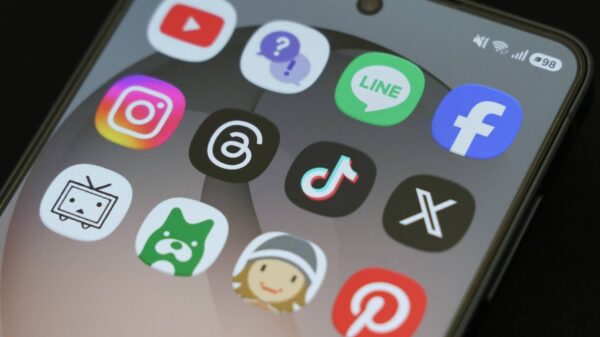
Recent updates from TikTok illustrate the urgency of the situation, as the platform has introduced new tools that allow users to control the proportion of AI-generated content in their For You feeds, complete with clearer labeling and detection mechanisms. In addition, TikTok is launching a $2 million AI literacy fund aimed at supporting educational initiatives. This move comes in response to the overwhelming presence of low-quality AI-generated content, colloquially termed “AI slop,” which threatens to overshadow genuine creativity.
Industry experts note that these adaptations are primarily reactive. Platforms such as Instagram and YouTube are grappling with similar issues, as AI tools enable anyone to produce visually appealing content at scale. A study published in Frontiers suggests that reliance on digital technologies, including AI and social media, may impair cognitive functions, raising concerns about the potential erosion of critical thinking skills. For influencers, this creates a precarious situation, as audiences may become increasingly doubtful about the authenticity of the content they consume.
The economic implications of this shift are significant. Traditional influencers, who depend on authenticity to attract sponsorships and partnerships, face a diminishing value of human creativity if AI clones can effortlessly replicate their styles. Through his educational efforts, Carrasco empowers users to demand higher standards from content creators, potentially altering the power dynamics within the influencer economy.
Beyond social media platforms, educational institutions are taking proactive measures to enhance AI literacy. Stanford University has developed curriculum materials emphasizing ethical AI use and detection, complementing grassroots efforts on social media where creators like Carrasco act as intermediaries between theoretical knowledge and practical application.
Conversations on X (formerly Twitter) reflect a mixture of optimism and concern regarding AI’s impact on education. While some users praise AI tools like Khanmigo for providing personalized tutoring, others express worries about the consequences of overreliance on technology, describing symptoms such as “brain rot.” These discussions underscore the tension between perceiving AI as a beneficial tool for learning and viewing it as a threat to cognitive development.
As the influencer economy, valued in the billions, faces new challenges, the rise of synthetic content prompts a reevaluation of monetization strategies. Carrasco’s trajectory illustrates a successful adaptation, as he positions himself as an AI literacy expert, attracting sponsorships from technology firms keen to promote ethical AI practices.
However, significant hurdles remain. Legal experts are increasingly integrating AI into their workflows, but ethical concerns surrounding misinformation and consent continue to loom large. The role of social media in amplifying AI-generated content raises additional issues, including the risk of creating echo chambers where synthetic narratives can reinforce existing biases.
In response to these challenges, emerging tools such as TikTok’s feed controls empower users to curate their experiences, minimizing exposure to undesirable AI content. Community-driven educational initiatives are also gaining momentum, as influencers form networks to share detection techniques. This collaborative approach may pave the way for standardized AI literacy certifications that could be valuable in creative industries.
Looking forward, the integration of AI in education is becoming more prevalent, as seen in Ohio State University’s curriculum discussions on X, which aim to normalize the skills necessary for navigating an increasingly artificial world. Ethical questions about representation and consent in the use of synthetic influencers complicate the landscape, as these technologies often replicate real individuals without permission, blurring the lines between inspiration and infringement.
Ultimately, figures like Carrasco are not merely responding to a crisis but are actively redefining the influencer economy. By democratizing knowledge about AI, they are prioritizing authenticity and depth in an environment where algorithmic output has become ubiquitous. As the dynamics of social media continue to evolve, those who master this new literacy will play a crucial role in shaping its future.
See also Alibaba Launches Z-Image-Turbo AI Model, Achieving Sub-Second Image Generation at $0.005/Megapixel
 Google Launches Veo 3.1 AI Video Tool, Surpassing OpenAI in Realism and Control
 Google’s Nano Banana Pro Launches with First-Ever Legible Text in AI Images
 DeepMind’s Demis Hassabis Reveals 3 AI Trends Shaping 2026: Multimodal Models and More
 ElevenLabs Launches AI Voice Marketplace Featuring Celebrity Icons for Ethical Licensing