








































Generative AI, a technology that creates new content such as text, images, audio, and code by learning patterns from vast datasets, has roots dating back to the 1960s. Its inception can be traced to Joseph Weizenbaum’s development of ELIZA, one of the first programs designed to simulate empathetic conversation. As machine learning models advanced, particularly through the evolution of artificial neural networks (ANNs), the capabilities of generative AI systems grew significantly, leading to a surge in their application across various sectors.
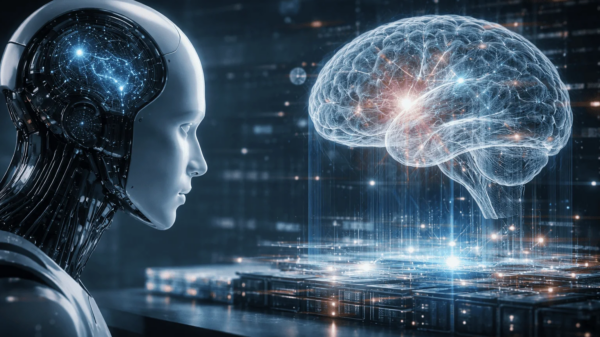
ANNs, inspired by the structure and function of the human brain, utilize layers of interconnected nodes, or “neurons,” to process information and learn from data. The evolution from simple networks to deep neural networks marked a pivotal shift in AI’s ability to understand complex patterns. Unlike discriminative models that focus on predicting outcomes, generative models learn the underlying data distribution, allowing them to generate new examples that closely resemble the original dataset. This foundational understanding has been bolstered by the development of advanced models such as variational autoencoders (VAEs), generative adversarial networks (GANs), diffusion models, and transformers, all contributing to the capabilities of large-scale generative AI systems.
A significant milestone occurred with the introduction of foundation models, which are trained to solve numerous “fill in the blank” tasks, thereby learning general patterns that can be applied across various content types. This training is resource-intensive, but the resulting models can produce coherent and contextually relevant outputs. The breakthrough moment for generative AI in the public domain came in November 2022 with the launch of ChatGPT, which catalyzed its widespread adoption among major technology companies. Platforms such as Microsoft 365 Copilot, Meta AI, and Google’s Gemini have since integrated these tools to enhance productivity, search capabilities, and educational applications.
In healthcare, generative AI is being employed to generate clinical documentation from clinician-patient interactions, while educational tools like Khan Academy’s Khanmigo facilitate grading and tutoring. This integration signifies a shift towards a default AI presence in everyday digital interactions, prompting discussions about the need for governance to ensure transparency, accountability, and public benefit, as well as to mitigate risks associated with its use.
Despite its potential advantages, the rise of generative AI has brought several challenges to the forefront. Bias remains a critical concern, as these models can reflect societal biases present in their training data, leading to skewed outputs that reinforce stereotypes. Additionally, issues surrounding ownership and authorship arise, especially given that AI-generated content lacks copyright protection, raising questions about intellectual property rights for creators whose works inform these models.
Overreliance on generative AI is another issue; while it can enhance efficiency, users may prioritize convenience over critical engagement, potentially stunting essential cognitive skills such as creativity and problem-solving. This reliance is particularly concerning among younger users, who may turn to AI for support in ways that delay seeking help from qualified professionals.
Moreover, the misuse of generative AI poses risks, particularly in the context of deepfakes, where technology is exploited to produce misleading or harmful content. As the environmental footprint of AI technology expands, substantial energy consumption and carbon emissions from data centers—vital for training and deploying these systems—also raise significant concerns regarding sustainability.
As generative AI continues to integrate into various facets of life, its influence on industries ranging from healthcare to education is undeniable. The challenge lies in balancing the advantages of this transformative technology with the ethical and societal implications it brings. Addressing these issues will be essential as stakeholders strive to maximize the benefits of generative AI while minimizing its risks and fostering trust among users.
See also Sam Altman Praises ChatGPT for Improved Em Dash Handling
 AI Country Song Fails to Top Billboard Chart Amid Viral Buzz
 GPT-5.1 and Claude 4.5 Sonnet Personality Showdown: A Comprehensive Test
 Rethink Your Presentations with OnlyOffice: A Free PowerPoint Alternative
 OpenAI Enhances ChatGPT with Em-Dash Personalization Feature