

















































Application Development and Maintenance (ADM) services are experiencing a significant transformation, moving away from traditional labor-based outsourcing toward autonomous delivery models driven by Generative AI. This shift prioritizes measurable business outcomes over conventional pricing structures, particularly in Mexico, where it is accelerating digital transformation across various sectors, including IT services, financial services, and manufacturing.
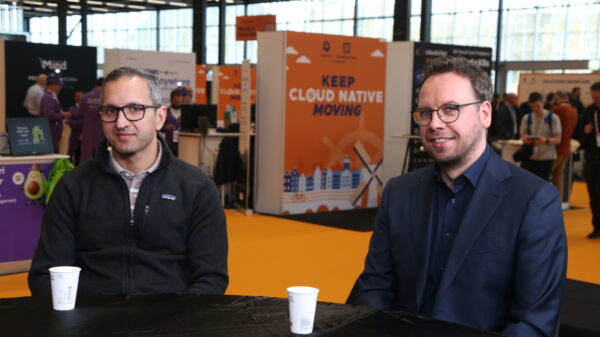
According to Sumit Mehta, India Client Partner and GTM Lead APAC at Capgemini, this evolution is underpinned by three main factors: the disruption of conventional pricing mechanisms by AI technologies, the emergence of new commercial models that focus on business impact, and the growing adoption of adaptive platforms designed for future delivery. The move toward these autonomous models aligns with escalating business pressures identified in early 2024, as organizations face the dual challenge of improving profitability amidst economic uncertainty and responding to evolving consumer needs.
Research from Everest Group highlights that 79% of organizations view the integration of new technologies as the primary catalyst for achieving positive business outcomes by 2025. Additionally, 63% of respondents indicated that shifts in customer purchasing behaviors significantly affect business results. In response to these pressures, businesses are investing in technology interventions such as hyper-automation, cloud-focused financial operations (FinOps), and the utilization of AI-powered virtual assistants. Traditional ADM models, which have historically emphasized cost reduction via offshore labor and standardized processes, are inadequate in this evolving landscape. The industry is now progressing into a fourth phase described as one characterized by autonomous systems, agentic AI, and strategic co-innovation.
The relevance of this shift is accentuated by the rapid advancement of Generative AI across three critical dimensions: enhancing existing solutions with tools like GitHub Copilot, the rise of specialized startups developing comprehensive AI tools, and major vendors outlining agentic roadmaps for product development. This transformation impacts every stage of the software lifecycle, from initial requirement gathering to ongoing maintenance, redefining technical roles, delivery frameworks, and financial structures within the global technology ecosystem.
Generative AI is profoundly changing the roles of technology professionals. For instance, software developers are transitioning into AI engineers, utilizing tools such as GitHub Copilot and Cursor AI to assist with coding tasks. Although human oversight remains essential, these technologies substantially reduce the direct effort required for development. Likewise, business analysts are evolving into prompt engineers, focusing on defining requirements for AI systems, though the complexity of human inputs still limits complete automation.
The testing and quality assurance (QA) function is emerging as a stable zone for AI adoption. QA testers are evolving into autonomous QA agents, responsible for overseeing automated test case creation and execution. The structured nature of inputs and tasks in this area enables high accuracy, positioning it as one of the most mature fields for AI integration. Conversely, growth frontiers are found in operations and deployment, where predictive AIOps and self-healing systems manage incident prediction and root cause analysis, allowing IT operation specialists to take on roles as AIOps specialists. Autonomous coding and design synthesis are seen as emerging opportunity zones where Generative AI is expected to drive further transformation.
Major global technology firms are aggressively investing in agentic AI and large-scale transformation initiatives. Accenture, for example, has launched 12 pre-built “agent” solutions based on NVIDIA AI, aiming to expand this portfolio to 100 agents by the end of 2026. The firm has also consolidated its strategy, consulting, and technology services under a single AI-focused profit and loss statement to expedite transformation. Similarly, Infosys has deployed over 200 enterprise AI agents through its Topaz framework on Google Vertex AI, enhancing workflow automation. Tata Consultancy Services (TCS) employs its MasterCraft platform, augmented by Generative AI, to modernize legacy applications, reportedly achieving cost savings of up to 70%. HCLTech has initiated a strategic collaboration with OMRON to merge Information Technology (IT) and Operational Technology (OT) within smart factories.
The engagement models within ADM are transitioning from static, linear delivery to adaptive, platform-led orchestration. This change is crucial, as organizational readiness and change management are often the greatest obstacles to AI adoption. A product-led engagement approach can lead to reductions in time-to-market of up to 11 months and enhance employee satisfaction by over 25%. Contract structures are also evolving according to the systems being managed. For systems of record, which require predictability and compliance, contracts remain long-term and stable, often incorporating blended pricing. In contrast, systems of differentiation, which offer unique competitive advantages, are associated with shorter, more flexible contracts that may involve gain-share models.
As the industry increasingly moves away from Time and Material (T&M) and fixed-price contracts, new value-driven constructs are emerging, such as usage-based pricing, which charges clients based on specific metrics like story points, automation minutes, or AI tokens consumed. Gain-share models align provider incentives with audited value outcomes, including operational cost avoidance and customer experience improvements. According to Capgemini, AI pricing is facing a paradox; as Generative AI matures, the price per full-time equivalent (FTE) role is expected to rise by 3% to 6% due to a scarcity of high-leverage roles. However, the total cost of operations is projected to decrease significantly due to automation, which reduces overall FTE count by 5% to 12% and enhances resource utilization.
Looking ahead, ADM partners must embrace a joint value governance playbook. Enterprises need to clearly articulate their strategic business narratives while effectively managing scope pivots, whereas vendors must focus on deploying scalable platforms and linking their commercial models to key business performance indicators. Ultimately, organizations must ask not whether AI is effective, but whether their ADM strategies are primed for widespread adoption. A successful strategy will treat AI as an integral component rather than an ancillary addition, fostering adaptive data operating models that embed governance directly into AI workflows to secure lasting value.
See also Sam Altman Praises ChatGPT for Improved Em Dash Handling
 AI Country Song Fails to Top Billboard Chart Amid Viral Buzz
 GPT-5.1 and Claude 4.5 Sonnet Personality Showdown: A Comprehensive Test
 Rethink Your Presentations with OnlyOffice: A Free PowerPoint Alternative
 OpenAI Enhances ChatGPT with Em-Dash Personalization Feature