





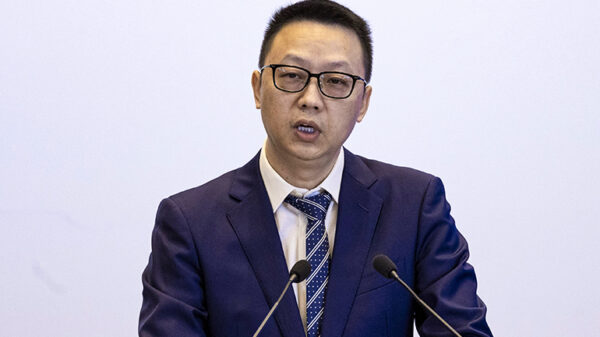

























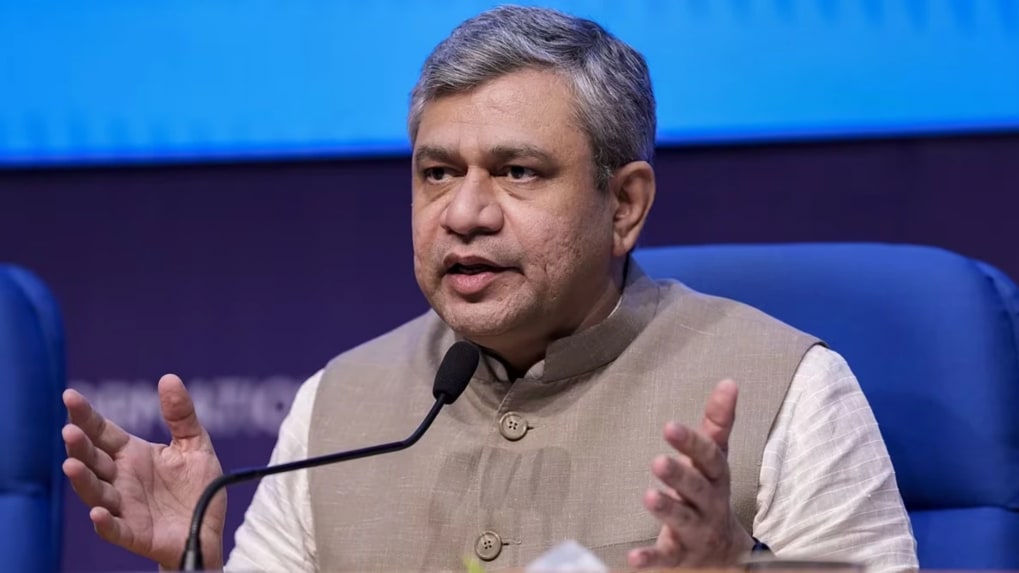
India is set to advance its AI Mission as Union Minister Ashwini Vaishnaw announced plans for expanded sovereign models, improved safety infrastructure, and greater accessibility to artificial intelligence technologies during the AI Impact Summit 2026. The minister described the five-day event, which attracted over five lakh visitors and saw participation from global AI leaders, startups, and students, as a “grand success.”
Vaishnaw emphasized the significance of the summit as a policy milestone, highlighting the upcoming Delhi declaration, which has already garnered more than 70 signatories—exceeding the previous summit’s 60 and expected to surpass 80 by its conclusion. “There is huge consensus on the declaration,” he stated, noting the alignment among major AI players on voluntary guardrails. He called this convergence a “major policy achievement,” stressing that the summit has transitioned from mere declarations to actionable commitments.
In addressing skepticism regarding the effectiveness of voluntary commitments, Vaishnaw assured the media that the summit was more than just paperwork. “There is lots and lots of real action — real MOUs, real understandings,” he asserted, indicating a tangible shift in global AI governance.
As India embarks on AI Mission 2.0, Vaishnaw outlined plans to elevate the initiative to new heights. “We will take the next level of our AI mission — a totally new level of models, a new level of common compute, a new level of safety,” he explained. Currently, India supports a portfolio of 12 foundational AI models, several of which are already operational. He remarked on the achievements of Indian engineers and researchers, noting their capabilities have surprised global industry leaders despite limited resources.
The minister also announced an expansion of India’s AI Safety Institute vision, which now comprises 12 institutes working collaboratively to bolster research surrounding responsible AI deployment. This development is part of a broader effort to enhance safety measures as AI technologies become increasingly integrated across various sectors.
Reiterating Prime Minister Narendra Modi’s vision of “Manav AI” — the notion of AI designed for and by humans — Vaishnaw remarked that this ethos resonated during bilateral and ministerial discussions at the summit. He framed the event as a turning point in the global discourse around responsible and ethical AI, particularly citing the involvement of 2.5 lakh students, an initiative that has earned a Guinness World Record.
On the critical issue of ensuring AI benefits reach the “last person” in India, Vaishnaw drew parallels with the rapid deployment of 5G technology. “You saw how the fastest rollout of 5G took place,” he asserted, indicating a similar urgency would guide the diffusion of AI technologies. He reiterated the government’s commitment to inclusive growth under the Antyodaya philosophy, emphasizing that AI adoption should not be confined to elite or enterprise applications but rather focus on sector-wide integration that serves public services, enterprises, and citizen-centric use cases.
Moreover, Vaishnaw highlighted the robust international participation at the summit, positioning India as a “trusted country” in discussions surrounding emerging technology governance. In addition to commitments related to AI, the summit also saw advances in semiconductor cooperation through the Pax Silica arrangement, further reinforcing India’s role in establishing resilient supply chains. The minister’s overarching message was forward-looking, indicating that India aims not just to be a significant AI market but also to act as a rule-shaper in areas of AI safety, sovereign model development, and global consensus-building.
With AI Mission 2.0 now in focus, the country is poised to transition from facilitating global dialogue to embedding essential AI infrastructure, safety measures, and computational capabilities at scale, marking a critical phase in India’s technological evolution.
See also Free AI Image Generators: Top 3 Tools to Create Stunning Visuals with Ease
 AuraML Launches India’s First Multimodal Robotics Model, Powered by NVIDIA Technology
 Discover Top AI Video Generators: Create Without Login or Watermark, Free Online
 AI Study Reveals ‘Spectral Labor’: Dead Voices Used for Profit Without Consent
 35 Innovative AI Content Generators Transforming Media Creation in 2026