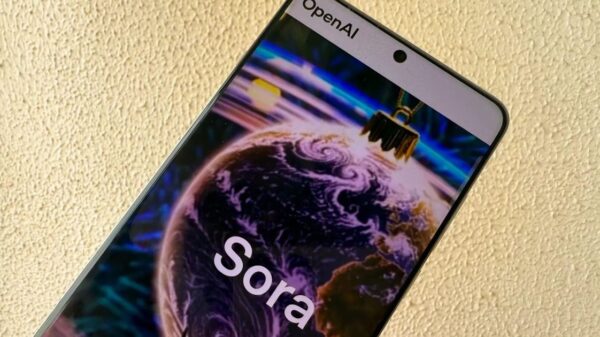







































OpenAI is shutting down its Sora AI video-generation app and related services, marking a significant pivot away from consumer-facing media tools and toward other areas of artificial intelligence development. The decision, announced abruptly, brings an end to one of the company’s most high-profile generative AI products just over two years after its debut in 2024.
Sora initially gained widespread attention following its unveiling, demonstrating the ability to generate highly realistic videos from text prompts. The technology quickly captured the imagination of creators and enterprises alike, leading OpenAI to expand it into a standalone app and developer-facing API. A second-generation version, Sora 2, introduced improved realism, audio capabilities, and more accurate physics simulation.
Despite early momentum, the product faced mixed reception as competition intensified. Rival AI companies, including those focused on video generation, introduced alternative tools, while others prioritized text, coding, and enterprise-focused capabilities. At the same time, Sora’s high computational demands made it an expensive product to operate at scale.
The shutdown also unwinds a high-profile partnership with Disney, which had included plans for a $1 billion investment and the integration of Disney characters into Sora-generated content. That agreement will no longer proceed following OpenAI’s decision to discontinue the platform.
This move comes amid broader strategic changes at OpenAI, including efforts to reallocate computing resources and sharpen its focus. The company has increasingly emphasized areas such as coding, reasoning, and real-world AI applications, where demand from enterprises is growing rapidly. Competitive pressure from rivals like Anthropic, whose models have gained traction in business and developer workflows, has further influenced this shift.
OpenAI’s leadership has indicated that the company cannot pursue every product category simultaneously, prompting a reassessment of priorities. By discontinuing Sora, OpenAI is freeing up significant computational capacity that can be redirected toward other initiatives, including advancing artificial general intelligence and building more integrated platforms.
The closure also reflects broader industry dynamics, including rising infrastructure and energy costs associated with running large-scale AI systems. Video generation, in particular, is among the most resource-intensive applications of generative AI.
While Sora’s shutdown marks the end of a prominent experiment in AI-driven media creation, its underlying technology is expected to live on in other areas. OpenAI has suggested that the research behind Sora, particularly its ability to model the physical world, may play a role in future efforts related to robotics and real-world simulation.
“We’re saying goodbye to Sora. To everyone who created with Sora, shared it, and built community around it: thank you. What you made with Sora mattered, and we know this news is disappointing. We’ll share more soon, including timelines for the app and API and details on preserving your work,” stated the Sora team on X.
The decision to shut down Sora highlights the rapidly evolving landscape of artificial intelligence, where companies must continuously adapt to competitive pressures and shifting market demands. As OpenAI reallocates resources away from consumer-facing products, the focus is likely to remain on enterprise solutions and advanced AI capabilities that promise greater economic impact and scalability in the future.
See also OpenAI Shuts Down Sora Video App as Disney Exits $1 Billion Deal
 Google Unveils 7 Free AI Tools for 2026, Enhancing Productivity and Creativity
 Gnani.ai Secures Rs 68 Crore in Series B Funding, Valuation Surges to Rs 818 Crore
 OpenAI Shuts Down Sora Video Generator Due to $1M Daily Running Costs
 Deepfake Technology Surges with 500,000 Media Instances Shared in 2023