

































Researchers from Beihang University and the Tianmushan Laboratory have made strides in advancing artificial intelligence by developing a novel model for continual panoptic perception (CPP), which enables machines to learn from multiple tasks and data types simultaneously. This breakthrough addresses critical challenges in continual learning, particularly the issues of catastrophic forgetting and semantic confusion, which can hinder a model’s ability to effectively integrate information from various sources. The team, including Bo Yuan, Danpei Zhao, Wentao Li, Tian Li, and Zhiguo Jiang, aims to enhance machine comprehension at pixel, instance, and image levels, creating a more adaptable and intelligent perception system.
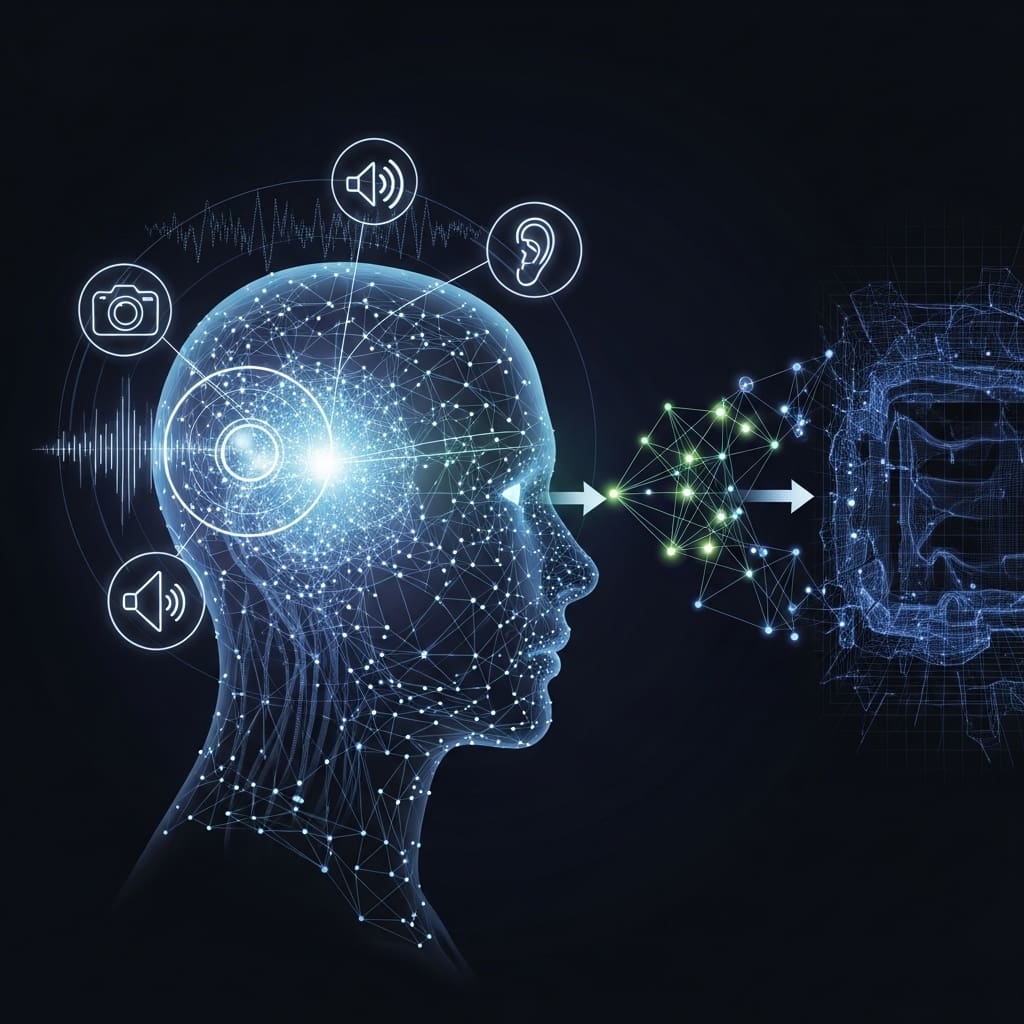
The research presents a significant departure from traditional continual learning methods that typically focus on single-task scenarios. By formalizing the continual learning task within multimodal contexts, the team’s CPP model utilizes a collaborative cross-modal encoder (CCE) to efficiently process different data types, such as images and text. This end-to-end model significantly boosts image understanding, enabling concurrent tasks like pixel-level classification and image-level captioning. The implementation of a malleable knowledge inheritance module, leveraging contrastive feature distillation and instance distillation, allows the model to preserve previously learned knowledge while adapting to new tasks.
A key focus of the research is addressing semantic obfuscation, which arises from the complexity of integrating multiple tasks and data types. The researchers introduced a cross-modal consistency constraint as part of the CPP+ architecture, ensuring that the model maintains semantic alignment during incremental updates. This innovative approach actively synchronizes learning across different modalities, which is crucial in preventing semantic drift—a common challenge in multi-task environments. Experiments conducted on diverse multimodal datasets show that the CPP model excels in fine-grained continual learning tasks, where accurate perception of subtle distinctions is vital.
Significantly, the model incorporates an asymmetric pseudo-labeling mechanism, allowing it to evolve and learn without the need for exemplar replay, a traditional method that consumes substantial memory resources and raises privacy concerns. This self-supervised learning strategy generates pseudo-labels from unlabeled data, enhancing training efficiency and minimizing the memory cost associated with retaining past examples. As a result, the CPP model demonstrates robust performance across various tasks, including class-incremental pixel classification and instance segmentation, establishing itself as a versatile tool for complex panoptic perception challenges.
Through meticulous experimentation, the team validated the performance gains achieved by the CPP and CPP+ models over existing methodologies. They reported significant improvements in both stability and plasticity—key components of continual learning. This research sets a new benchmark for multimodal and multi-task continual learning, paving the way for the development of more sophisticated and adaptable perception systems. The findings suggest that instance recognition benefits from semantic stability, while fine-grained recognition remains sensitive to incremental shifts, affirming the importance of balancing the retention of historical knowledge with the incorporation of new information.
As the research community continues to explore the intricacies of artificial intelligence, the implications of this work extend beyond academic inquiry. The advancements in continual panoptic perception could advance applications in diverse fields, including automated piloting and satellite-based remote sensing, where intelligent systems must continuously adapt to evolving environments. This progress underscores the potential for real-time, intelligent perception systems that can learn and improve autonomously, offering a glimpse into the future of AI technology. As researchers look ahead, the challenge remains to refine these models further, addressing the inherent trade-offs between historical knowledge retention and the integration of new data, ultimately enhancing the robustness of intelligent systems in complex, real-world scenarios.
👉 More information
🗞 Evolving Without Ending: Unifying Multimodal Incremental Learning for Continual Panoptic Perception
🧠 ArXiv: https://arxiv.org/abs/2601.15643
 Mexican President Sheinbaum Presents AI-Generated Image Claiming Ryan Wedding Surrender
 Jim Cramer: Generative AI Shaves Microsoft’s P/E Ratio Significantly Amid Market Pressure
 Chinese Start-ups DeepSeek and Moonshot AI Open-Source Advanced Multimodal Models, Enhancing Ecosystem Growth
 ProGiDiff Achieves High-Accuracy Medical Image Segmentation Using Natural Language Prompts