

















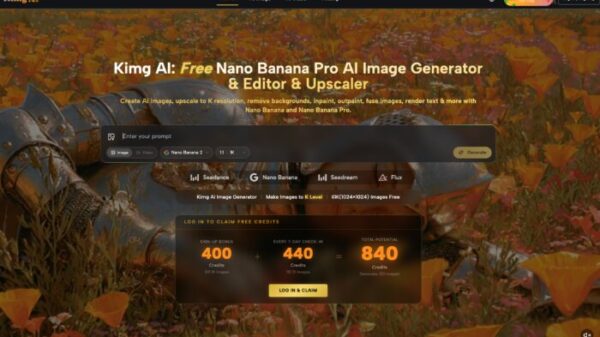

The honeymoon phase of generative AI in creative departments typically lasts about three weeks, marked by initial excitement over the technology’s capabilities. During this period, designers and copywriters share impressive high-fidelity images generated in seconds through platforms like Nano Banana Pro AI. However, the shift from individual experimentation to a standardized production pipeline poses significant challenges. When a team of creators works on a single campaign, the results can become a disjointed mix of varying art styles and inconsistent visual elements.
The crux of the issue lies not in hardware or prompt engineering, but in governance. As content teams adopt more powerful generative tools, the difficulty of maintaining coherence increases. Treating tools like Nano Banana Pro as programmable components of a tech stack, rather than “magic boxes,” is essential for operational success.
Visual drift emerges as a significant problem in collaborative environments—where creators, even using identical prompts, generate disparate results. Differences in seed selections and model versions can lead to outputs that diverge from a brand’s established identity, defined by specific color codes and stylistic attributes. For instance, one designer’s preference for high-contrast visuals may clash with another’s inclination towards a flatter aesthetic, resulting in a campaign that lacks a unified brand presence.
To mitigate visual drift, some teams are developing what can be termed a “Style Bible” for AI. This goes beyond merely documenting brand colors; it serves as a technical repository containing reference images, negative prompt libraries, and detailed model settings. A successful workflow begins with establishing a “Master Seed” or a set of reference “Anchor Images” approved by a creative director. By grounding new creations in these anchors, teams can ensure visual consistency and adherence to established guidelines.
Despite these measures, generative models often struggle with precise brand adherence. Even with well-defined references, Nano Banana Pro AI may produce outputs that require manual adjustments to align with brand standards. As a result, organizations need to anticipate the necessity of traditional editing to correct generated images.
Integrating generative AI into workflows demands a redefinition of roles within teams. The “Creative Technologist” acts as a crucial intermediary, managing the technical aspects of the Nano Banana Pro platform and curating an internal library of “LoRAs“—specific adaptations tailored to the company’s visual identity. Adopting a centralized set of weights or a shared API environment substantially reduces output variance, allowing teams to collaborate within a controlled framework.
The workflow can be envisioned as a production line: the architect sets technical parameters, prompt engineers generate volume, and editors refine outputs to eliminate common AI errors. However, some teams falsely believe that AI speeds up the process by eliminating the need for reviews. In practice, generative workflows often lead to increased “curation time,” as teams sift through numerous outputs to find brand-compliant images.
Teams also need to be wary of the “good enough” trap, where an image that is nearly perfect might be accepted despite minor flaws. Such oversights—like oddly shaped shadows or distorted logos—can detract from professional standards.
Another critical consideration is the rapid evolution of generative technologies. The model version used for a campaign today may be updated or replaced in the near future, complicating the ability to reproduce consistent assets. This creates a form of “generative technical debt,” where teams must keep meticulous records of software versions and specific seeds used in their projects.
When assessing the return on investment for these tools, teams often misallocate focus by examining “cost per image” instead of “time to final approval.” For example, generating 500 images to select a handful of suitable options can be inefficient if high-level personnel must manually curate the results. Thus, successful operations adopt an iterative refinement approach, first establishing rough layouts before finalizing details once stakeholders approve the initial concepts.
Moving Toward a Standardized Future
The ultimate goal for content teams is to render generative tools like Nano Banana Pro AI as predictable as traditional creative instruments. Achieving this requires abandoning the belief that AI can operate independently and embracing it as an extension of existing standards. By constraining creative processes to specific workflows and pre-approved stylistic references, organizations can transition from the chaotic early phase of generative media to a more structured and predictable future. As technology continues to advance, teams that prioritize stable workflows over sheer volume of output will unlock the true potential of generative media.
See also Sam Altman Praises ChatGPT for Improved Em Dash Handling
 AI Country Song Fails to Top Billboard Chart Amid Viral Buzz
 GPT-5.1 and Claude 4.5 Sonnet Personality Showdown: A Comprehensive Test
 Rethink Your Presentations with OnlyOffice: A Free PowerPoint Alternative
 OpenAI Enhances ChatGPT with Em-Dash Personalization Feature






