













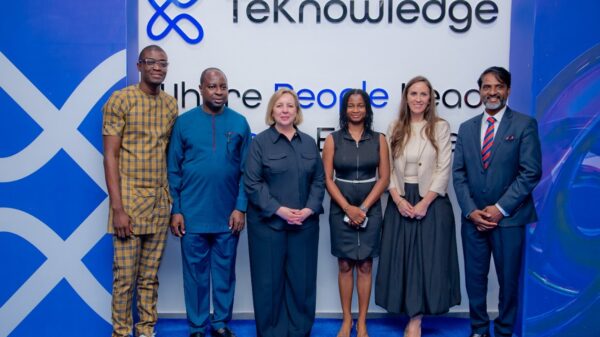





















TikTok has announced a $200,000 investment to promote artificial intelligence (AI) media literacy across Sub-Saharan Africa, addressing increasing concerns over deepfakes and other AI-generated misinformation. This initiative was unveiled during the third Sub-Saharan Africa Safer Internet Summit, which took place in Nairobi, Kenya, focusing on the theme #SaferTogether: ‘Innovation and Safety.’ The two-day summit gathered policymakers, technology experts, and civil society groups to discuss strategies aimed at enhancing online safety and bolstering digital resilience in the region.
As AI technologies become more sophisticated, experts at the summit cautioned that digitally altered images, videos, or audio can easily be used to spread misinformation, impersonate individuals, and manipulate public opinion. “The speed of AI evolution is breathtaking, but the speed of human gullibility is our biggest vulnerability,” remarked David Ajikobi, Nigeria Editor at Africa Check. This funding, he added, will help scale a “verification-first” mindset to millions encountering AI content for the first time.
With social media platforms becoming central to information dissemination, technology companies face mounting pressure to ensure users can identify misleading content and engage responsibly with new digital tools. TikTok has emphasized that improving AI literacy among internet users is crucial to mitigating the risks associated with synthetic media.
Partnerships with African Organizations
The $200,000 investment is part of TikTok’s broader $2 million global AI Literacy Fund, which was launched in November 2025. This funding builds on TikTok’s initial efforts, which awarded grants to 20 global nonprofits aimed at enhancing public understanding of AI. Among the recipients in Africa is Africa Check, a prominent fact-checking organization.
Another beneficiary is the Centre for Journalism Innovation and Development (CJID), which operates the fact-checking platform DUBAWA, dedicated to combating information disorder and empowering journalists and media professionals. Youth-focused organization Mtoto News is also involved in the initiative, developing educational content to help young people understand AI and engage with digital technology responsibly. “We want to turn them into ‘digital detectives’ who can spot a manipulated video before they hit the share button,” stated Jennifer Kaberi, CEO of Mtoto News.
TikTok has also rolled out policies mandating creators to label realistic AI-generated media, particularly when such content could mislead viewers into thinking it depicts real events or individuals. According to TikTok’s Director of Government Relations and Public Policy for Sub-Saharan Africa, Fortune Mgwili-Sibanda, these measures are part of ongoing efforts to improve transparency concerning synthetic media and maintain user trust. “Transparency is the currency of trust,” she articulated, adding that the goal is for users in regions like Lagos or Nairobi to possess the same critical awareness of deepfakes as tech experts in Silicon Valley.
To further enforce its community guidelines, TikTok employs a combination of automated detection tools and human moderators. The company reported that millions of videos are uploaded daily, underscoring the necessity of AI-assisted moderation to identify harmful or misleading content. Tokunbo Ibrahim, TikTok’s Head of Government Relations and Public Policy for Sub-Saharan Africa, highlighted the importance of collective action at the summit. “Our mission is clear: to share learnings, tackle common challenges, and collaboratively advance actionable solutions that protect citizens online,” he stated.
The Safer Internet Summit serves as a critical platform for dialogue among technology companies, regulators, and advocacy groups focused on improving online safety across Africa. Discussions at the event underscored the need to protect young users, combat misinformation, and encourage responsible innovation in artificial intelligence. As digital adoption continues to grow throughout the continent, stakeholders emphasize that media literacy and public awareness will play pivotal roles in minimizing the harmful impacts of emerging technologies like deepfakes.
See also Sam Altman Praises ChatGPT for Improved Em Dash Handling
 AI Country Song Fails to Top Billboard Chart Amid Viral Buzz
 GPT-5.1 and Claude 4.5 Sonnet Personality Showdown: A Comprehensive Test
 Rethink Your Presentations with OnlyOffice: A Free PowerPoint Alternative
 OpenAI Enhances ChatGPT with Em-Dash Personalization Feature