






































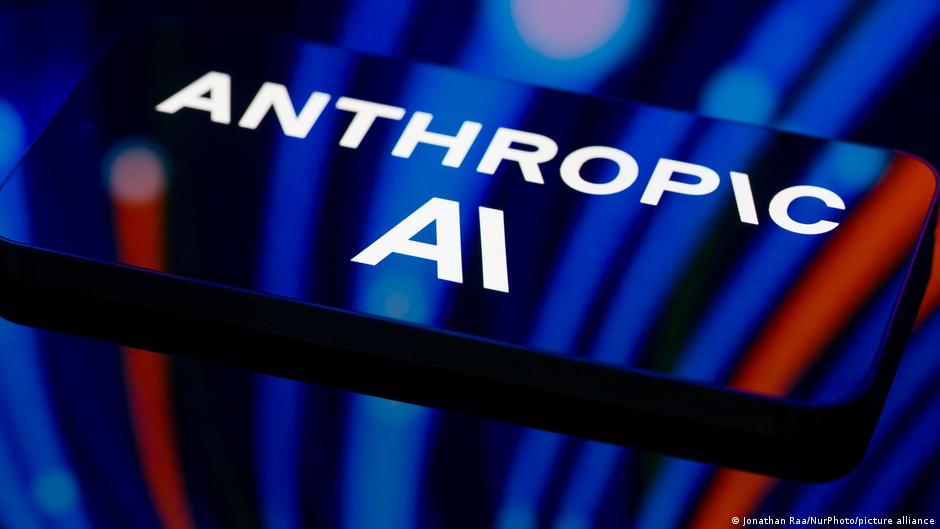
The US government’s recent decision to exclude AI firm Anthropic from its supply chain has opened a “once-in-a-lifetime chance” for Europe, according to Matthias Mieves, a politician from the center-left Social Democratic Party (SPD), which is part of Chancellor Friedrich Merz’s coalition government. With Anthropic valued at $380 billion (€327 billion) and known for its Claude series of large language models, the company has made significant strides, including partnerships with the US military and government since late 2024.
Reports suggest that Anthropic’s technology was involved in military operations, including a raid in Venezuela and the bombing of Iran, although the specifics remain unclear. The situation escalated in late February when US Defense Secretary Pete Hegseth demanded that Anthropic amend its contracts to allow for mass surveillance and fully autonomous weapons. When CEO Dario Amodei declined the request, Hegseth labeled the company a “supply chain risk,” a designation that had not previously been applied to any US firm. Subsequently, President Donald Trump ordered all federal agencies to cease using Anthropic’s services, prompting the company to file a legal challenge against the government’s actions, which it claims could result in billions in losses and reputational damage.
In a statement, Anthropic emphasized two main reasons for its refusal. The company asserted, “First, we do not believe that today’s frontier AI models are reliable enough to be used in fully autonomous weapons. … Second, we believe that mass domestic surveillance of Americans constitutes a violation of fundamental rights.”
In response to the unfolding events, Mieves has advocated for European leaders to actively pursue bringing Anthropic to Europe to enhance the development of “human-centered, trustworthy AI” models. He has argued that Anthropic’s stance aligns with European legal frameworks that prioritize individual rights. In a letter addressed to Chancellor Merz and European Commission President Ursula von der Leyen, Mieves outlined three proposals: establishing a new European base for Anthropic in cities like Berlin, Paris, or Munich; forming an alliance of European investors, including state bodies, to ensure “digital sovereignty”; and securing a commitment from the European Commission and key nations to partner with Anthropic in future projects.
However, experts within the AI sector have expressed skepticism regarding the feasibility of Mieves’ proposals. Daniel Abbou, head of Germany’s AI industry association BVKI, acknowledged the appeal of Mieves’ ideas but described them as “very, very nice” yet unrealistic. He pointed out that Anthropic’s primary investors include Amazon and Google, organizations that are deeply entrenched in US infrastructure and capital markets. Abbou remarked that losing government contracts in the US would not necessarily lead to an immediate collapse of Anthropic’s overall business, citing the surging activity of its Claude model and Opus 4.6.
Abbou suggested that a more pragmatic approach would involve establishing an “AI lab” in Europe in collaboration with Anthropic. This initiative could help stem the “brain drain” of European talent to US AI firms. He noted that Europe’s venture capital ecosystem lacks sufficient scaling opportunities, which is a critical factor driving many AI companies to seek funding in the US. “There’s a lack of scaling possibilities in Europe that would attract venture capital,” he explained, emphasizing that the financing of scaling-up operations remains a central challenge for many of the 600 German AI companies represented by the BVKI.
While Mieves acknowledges that his plan may be ambitious, he believes it is essential for Europe to adopt a more audacious approach in the AI sector. “Of course, it’s very difficult, and the probability that it will really work is low, but why did I make this proposal anyway? Because I believe we here in Europe need to think much bigger,” he stated.
As the European Union rolls out its Artificial Intelligence Act, designed to promote values-based regulation, there are growing concerns among some companies that it could stifle innovation. The Act seeks to classify AI applications based on risk levels, but the call for a balance between regulation and fostering innovation remains contentious. European leaders frequently emphasize the importance of achieving “digital sovereignty,” advocating for data and expertise to be retained within the EU while protecting intellectual property.
Arthur Mensch, CEO of the French company Mistral, has articulated the urgency of safeguarding European industries from foreign influence, stating, “We don’t want our industry to be running on American AI. I think that would be quite dangerous when it comes to the dependency that we are effectively creating.” Yet, despite widespread recognition of this issue, Mieves contends that concrete plans for achieving digital independence are lacking. “There’s never any action, we never make a concrete plan, we never drive ambitious measures,” he lamented, underscoring the need for decisive action in the face of evolving global dynamics in artificial intelligence. Anthropic did not respond to requests for comment by the time of publication.
See also AI Technology Enhances Road Safety in U.S. Cities
 China Enforces New Rules Mandating Labeling of AI-Generated Content Starting Next Year
 AI-Generated Video of Indian Army Official Criticizing Modi’s Policies Debunked as Fake
 JobSphere Launches AI Career Assistant, Reducing Costs by 89% with Multilingual Support
 Australia Mandates AI Training for 185,000 Public Servants to Enhance Service Delivery