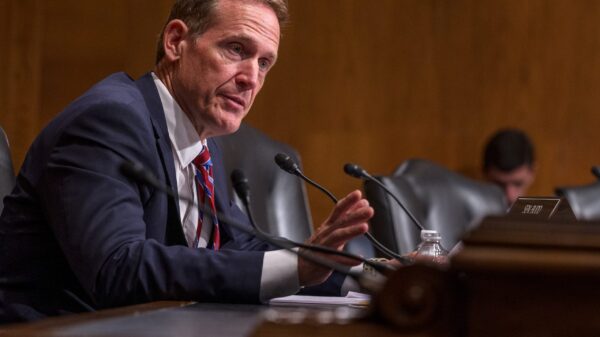












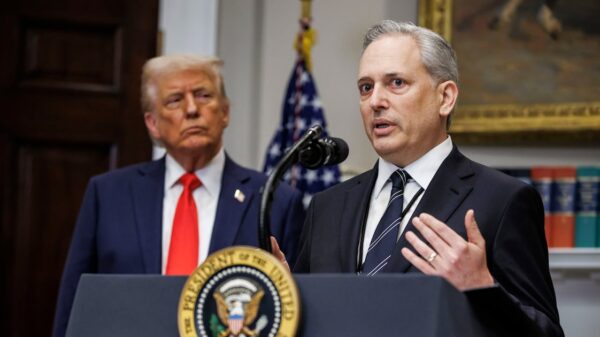



























JPMorgan Chase CEO Jamie Dimon emphasized the need for government incentives to assist businesses in supporting employees displaced by artificial intelligence, during remarks made on March 24 at the Hill & Valley Forum in Washington, D.C. Dimon’s comments reflect growing concerns over the rapid deployment of AI technologies and their potential to disrupt the job market.
Dimon suggested that government measures could enhance employer initiatives such as retraining, offering early retirement options, or facilitating transitions to other roles. He pointed out that the swift economic changes brought about by AI demand proactive strategies to accommodate workers who may lose their jobs. “It’s coming, it’s going to come quickly. This one may be quicker … so therefore, can we accommodate the people if they lose their jobs quick enough? And the answer is, I don’t know that’s going to happen, [but] I always like to be prepared,” he stated.
In previous commentary, Dimon noted that AI has already begun to displace employees at JPMorgan Chase, which has implemented “huge redeployment plans” to offer affected workers new positions. Despite some changes in the bank’s workforce—specifically a reduction in operations and support roles—the overall headcount remained stable over the past year, as new roles focused on client engagement and revenue generation were introduced.
Dimon’s call for action is echoed across the industry. Recently, ServiceNow CEO Bill McDermott warned that new college graduates could face difficulties entering the job market due to AI advancements. He suggested that unemployment rates for recent graduates could rise into the mid-30s within the next few years, asserting, “So much of the work is going to be done by agents. So it’s going to be challenging for young people to differentiate themselves in the corporate environment.”
The urgency of addressing AI’s implications for employment is evident. Dimon remarked, “Society’s got to think through what it wants to do if this becomes that kind of problem. Now is the time to start thinking about it.” This sentiment underscores the critical need for collaboration between the public and private sectors to navigate the potential fallout from widespread AI adoption.
As businesses adapt their operational structures to incorporate AI, they face a crucial decision regarding workforce management. Reports have highlighted a trend where companies must determine whether to maintain headcount while enhancing efficiency or to reduce labor costs in favor of improved margins. A recent report by PYMNTS noted a significant job cut at Block, which announced plans to lay off approximately 4,000 employees, or close to 40% of its workforce, indicative of a shift towards operational leverage.
The evolving landscape of work driven by AI necessitates strategic planning and responsiveness from both corporations and policymakers. As the technology continues to develop rapidly, the challenge lies in ensuring that workers are supported through transitions in their roles and are equipped with the skills needed for the future job market.
With AI poised to transform the workforce dramatically, the implications for economic stability and individual livelihoods are profound. The dialogue initiated by leaders like Dimon and McDermott signals the need for innovative solutions to safeguard jobs and encourage growth in an era increasingly shaped by technological advancements.
See also AI Technology Enhances Road Safety in U.S. Cities
 China Enforces New Rules Mandating Labeling of AI-Generated Content Starting Next Year
 AI-Generated Video of Indian Army Official Criticizing Modi’s Policies Debunked as Fake
 JobSphere Launches AI Career Assistant, Reducing Costs by 89% with Multilingual Support
 Australia Mandates AI Training for 185,000 Public Servants to Enhance Service Delivery