





















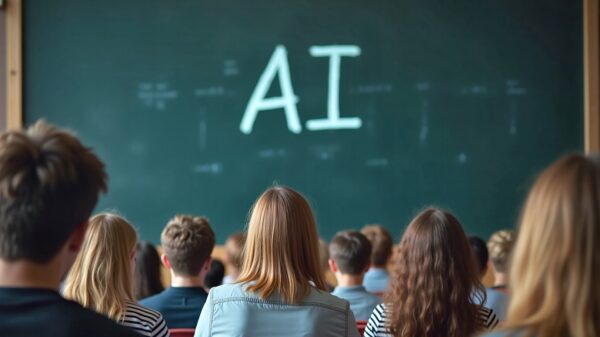


























At the beginning of this year, the UK government introduced a £27 million AI skills programme aimed at training 10 million individuals through free online courses. While these short, introductory courses provide a useful initial step for those looking to enhance their understanding of artificial intelligence, industry leaders argue that organizations must go further. They need to offer deeper, role-specific training aligned with the latest technological advancements to foster meaningful AI skills development.
A recent PwC survey revealed that more than half of CEOs, 56 percent, have yet to see any financial return from their AI investments. This raises concerns that companies are advancing their AI initiatives faster than they are preparing their workforces to effectively utilize the technology. The pressure to achieve a return on investment within months can lead to hasty implementations, while the cultivation of a skilled workforce is essential for realizing long-term benefits from AI.
Despite the significant uptake of AI—86 percent of UK companies reported using the technology—91 percent of executives admitted to exaggerating their understanding of AI. This discrepancy underlines the importance of providing comprehensive training at all levels of an organization to maximize AI’s potential benefits.
The government’s AI skills hub demonstrates a positive intent to enhance the tech capabilities of the workforce, but its effectiveness remains questionable. The program’s current offerings primarily consist of existing introductory courses that do not adequately address the evolving landscape of AI technology. Without tailored, role-specific training that meets employer needs, such initiatives risk failing to bridge the substantial AI skills gap.
For AI upskilling to yield tangible results, companies must embed continuous learning into their business strategies. Employees must grasp how their newly acquired skills translate into operational advantages and be given dedicated time to experiment with AI technologies. Yet, only 46 percent of businesses allocate specific time for employees to learn on the job. This lack of dedicated learning time hampers the necessary skill development, emphasizing the need for a culture that prioritizes ongoing education.
To ensure the success of AI initiatives, firms must assess their organizational readiness, a critical yet often overlooked factor for effective adoption. Companies need to clearly define the problems they aim to solve with AI and identify the data required for those solutions. Focusing solely on technology adoption without evaluating existing skills gaps could lead to failed projects and underwhelming returns on investment, as organizations deploy AI tools that their teams are not equipped to leverage effectively.
Employers must accurately evaluate their employees’ capabilities to determine training needs and assess readiness for new solutions or projects. This approach minimizes the risk of costly investment mistakes and increases the likelihood of successful technology implementation. A blanket approach to AI training across the workforce is unlikely to yield significant results, making structured learning plans and sector-specific courses essential for addressing the diverse requirements of various roles.
Role-specific development equips employees with relevant skills, enabling businesses to observe direct improvements in their return on investment. Establishing structured learning pathways, benchmarking skills, and facilitating hands-on learning experiences are crucial for preparing organizations for the integration of AI technologies. Skills assessments can identify gaps and highlight areas requiring further training, allowing companies to align course participation and learning outcomes with key performance indicators for ongoing growth.
As businesses move forward, the integration of AI into their operations will depend on a well-trained workforce capable of navigating the complexities of the technology. The potential for significant advancements in productivity and innovation hinges on a commitment to comprehensive skills development that evolves alongside technological change.
See also AI Technology Enhances Road Safety in U.S. Cities
 China Enforces New Rules Mandating Labeling of AI-Generated Content Starting Next Year
 AI-Generated Video of Indian Army Official Criticizing Modi’s Policies Debunked as Fake
 JobSphere Launches AI Career Assistant, Reducing Costs by 89% with Multilingual Support
 Australia Mandates AI Training for 185,000 Public Servants to Enhance Service Delivery