





































Generative artificial intelligence is fundamentally transforming the advertising landscape, enabling agencies to create campaigns with unprecedented speed and efficiency. A recent report from Marketing Dive indicates that as of January 2026, 91% of U.S. ad agencies are either utilizing or exploring generative AI tools. This shift allows firms that once spent weeks brainstorming ideas to now generate visuals, copy, and concepts in mere hours, significantly altering operational dynamics.
Tech Bay Leaf, a leading digital marketing agency, highlights this evolution, stating in a recent analysis that “generative AI has rapidly moved from a niche innovation to a foundational component of modern digital marketing.” By integrating AI into their workflows, agencies can produce highly tailored content that aligns with audience preferences and search intent at an accelerated pace. This integration enhances ideation processes, as algorithms analyze brand data to suggest concepts for human refinement.
The rapid adoption of generative AI reflects intense competitive pressures within the industry. Major holding companies, including Publicis Groupe, Omnicom, and WPP, have developed proprietary operating systems driven by generative AI and agentic technology, transforming traditional agencies into tech-savvy vendors. As reported by Ad Age, these platforms streamline everything from asset generation to performance optimization, substantially reducing the reliance on manual labor.
Initially, agencies experimented with generative AI for ideation and prototyping. Tools like Midjourney and DALL-E have emerged as valuable assets, producing visual mockups swiftly, while language models like GPT-4o are adept at crafting headlines and scripts. According to Tech Bay Leaf, AI is particularly effective in “rapid prototyping of visual concepts, enabling teams to explore dozens of variations in minutes rather than days.” This efficiency not only speeds up content creation but also enhances the marketing capabilities of agencies.
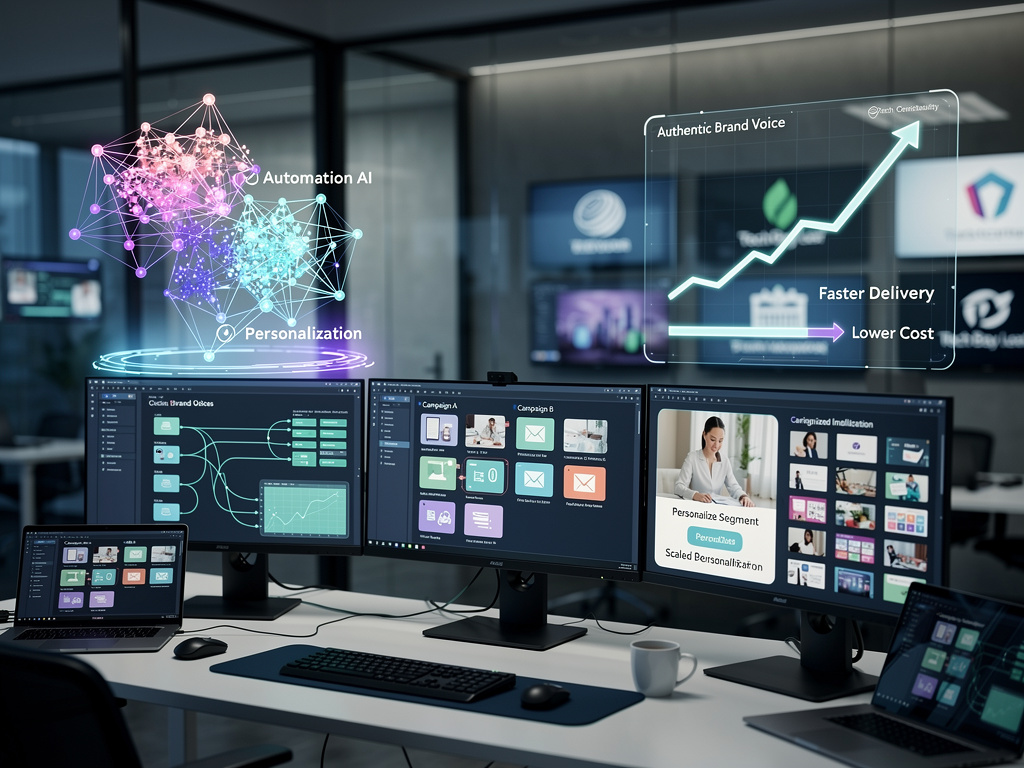
The application of AI tools extends into content marketing, where they facilitate the personalization of assets at scale. Superside notes that in 2026, several AI-powered agencies are successfully blending automation with creativity, allowing for swift production while maintaining narrative depth. Brands are reaping the benefits of accelerated iterations, with human oversight ensuring that the emotional resonance of the content is preserved.
In a notable example, a Shopify brand has been running over 900 AI-generated ads on Meta, producing 20 new user-generated-style creatives daily. This volume-testing approach enables performance marketers to quickly identify successful ads, a tactic that has gained traction among e-commerce professionals.
Proprietary Systems Reshape Client Relationships
Major agencies are leading the charge with custom platforms like Publicis’s Marcel and Omnicom’s Omni, which integrate generative AI for comprehensive campaign management. Tech Bay Leaf asserts that “agencies that successfully combine AI-driven efficiency with human creativity are setting a new standard.” These systems leverage vast datasets to predict campaign performance, positioning agencies as strategic partners rather than mere executors.
Horizon Media and Stagwell have adopted similar strategies, developing AI agents to automate routine tasks like A/B testing, resulting in clients experiencing a 30-50% faster time-to-market, according to industry benchmarks. However, challenges remain as the oversaturation of AI-generated content has sparked a demand for more authentic, “messy” creator-driven work, as noted by Digiday. Agencies are countering this trend by leveraging AI for volume while relying on human expertise for refinement.
Superside has documented nine innovative AI marketing campaigns in 2026 that leverage tools for hyper-personalization, including dynamic video ads that adapt based on viewer data. Brands employing technologies such as Higgsfield AI and Google’s Veo are able to conceptualize, film, and edit videos without large crews, as discussed in various online forums.
As marketers look ahead, there is an expectation of further evolution in the industry. “The sense of a stable middle ground is eroding,” notes Marketing Dive, highlighting how AI is contributing to polarization between traditionalists and tech adopters within the marketing space.
AI is also driving significant operational efficiencies and cost savings. Reports on X indicate that creators are replacing entire annual content teams, traditionally costing around $267,000, with AI ad agents capable of analyzing winning ads and generating new variants. Agencies are scaling this approach to handle enterprise-level operations, testing hundreds of creatives each week.
Data from Forrester reveals that more than half of agency leaders expect a substantial impact on their ecosystems due to AI technologies. Tools like Genspark AI Designer are capable of creating comprehensive brand systems from research, automating processes that once took weeks. The Drum has explored how AI is fundamentally reshaping creativity within the advertising sector.
Despite the rapid advancements, ethical concerns persist as agencies implement safeguards to mitigate bias and protect intellectual property. Tech Bay Leaf emphasizes a balanced approach, training personnel to ensure that AI augments rather than replaces human talent. Discussions on platforms like X suggest that high-velocity AI engines are generating significant performance marketing value, creating pressures for independent agencies to innovate or collaborate with larger holdings.
As agentic AI technology continues to evolve, the outlook for the industry suggests a trajectory toward fully autonomous creative pipelines by 2027. This shift will likely allow humans to focus more on strategic and ethical considerations. Agencies that master this hybrid model of automation and creativity are poised to deliver superior returns on investment in an increasingly fragmented digital landscape.
See also AI SEO Malaysia: 7 Essential Steps for SMEs to Boost Online Visibility and Engagement
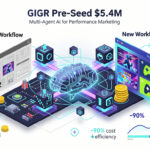 GIGR Secures $5.4M to Launch Playad.ai, Transforming Ad Creative with AI Agents
 AI Transforms B2B Sales: 71% of Marketers Automate Personalization for 137% ROI
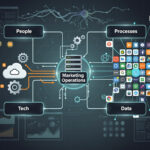 Marketing Operations Drives 27.8% Growth in 14,106 Martech Tools for 2024
 Cisco Predicts AI-Powered Concierge Agents Will Transform Customer Engagement by 2026