















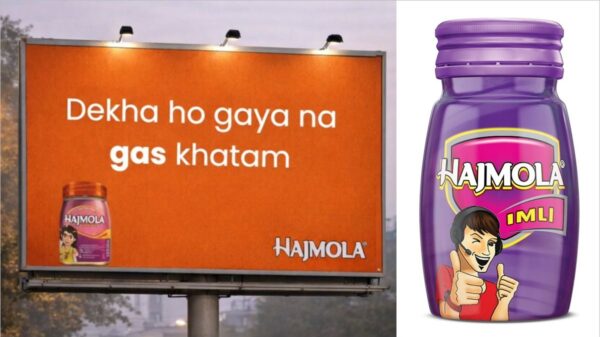






























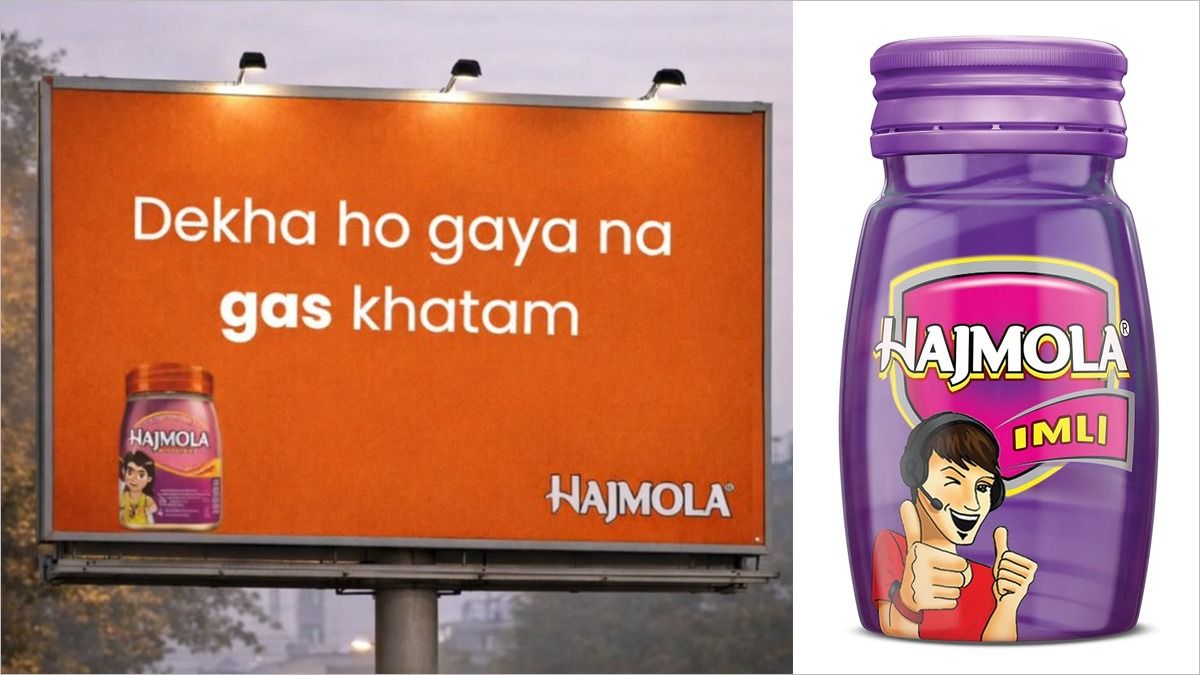
New Delhi: Dabur’s digestive brand Hajmola became a focal point of online discussion over the weekend as an image depicting a supposed outdoor advertisement began circulating on social media. The creative featured the line, “Dekho hogaya na gas khatam,” referencing recent reported disruptions in LPG supply in India amid ongoing tensions in West Asia involving Israel, Iran, and the US.
The image quickly garnered mixed reactions. Some users lauded it as an example of sharp moment marketing, describing it as “genius marketing” and “dark humour done right.” Conversely, many criticized the ad as insensitive, cringe-worthy, and potentially damaging to the brand’s reputation. This sparked a wider debate on social media about whether the creative represented clever cultural timing or was an instance of brands reaching too far for relevance.
Ajay Gahlaut, an advertising veteran, weighed in on Facebook, stating, “If people think this is great advertising, then the very concept of advertising has changed. I’m told it was done by a ‘creator,’ not an ad agency. I am glad.” His comments reflect a growing concern within the advertising community about the evolving dynamics of brand communication in the digital age.
The situation highlighted a broader trend in marketing, where brands increasingly find themselves entwined in cultural moments and viral memes in their quest for relevance. However, Dabur clarified that it had no role in creating or commissioning the image. In a statement to BestMediaInfo.com, the company said, “There is no collaboration from our end on this creation. It’s just a UGC that has gained traction. Please see the pack…this is some AI-generated image.”
The image was reportedly generated by an Instagram account named Maymayholic_. This clarification fundamentally alters the context; the image was neither part of an official Hajmola campaign nor an authentic outdoor execution but rather user-generated content that utilized AI to create a fabricated advertisement that gained traction online.
Even after Dabur’s clarification, the AI-generated hoarding remains visible on Hajmola’s official Instagram page. This scenario underscores a significant risk for brands in the age of artificial intelligence. Even without direct involvement, AI-generated content that incorporates a brand’s visual identity or tone can spread rapidly, influencing public perception before the company has an opportunity to respond.
For Hajmola, the stakes went beyond the humor of the tagline. The greater concern was the risk of being perceived as trivializing a serious situation. Critics argued that the creative appeared to exploit public anxiety and hardship without establishing a meaningful connection to the product itself. As generative AI tools become more mainstream, the ease with which unofficial and shareable brand-related content can be created raises questions about brand control.
The phenomenon of AI-generated user-generated content (UGC) highlights a newly emerging layer of brand safety. The existing threats to a brand no longer solely arise from approved campaigns but extend to unsolicited and potentially damaging content that may circulate without the brand’s knowledge. In Hajmola’s case, the company has distanced itself from the widely circulated image, yet the wider conversation illustrates how swiftly AI-generated content can blur the lines between creator expression, parody, and perceived brand messaging.
As brands face mounting pressures to remain culturally relevant, this episode serves as a cautionary tale. It emphasizes the necessity for sensitivity in marketing, showing that relevance without empathy can lead to backlash, regardless of whether the content is officially sanctioned. In a landscape increasingly dominated by AI-driven narratives, the line between what is considered clever marketing and what is seen as exploitative is becoming increasingly tenuous.
See also Enhance Your Website”s Clarity for AI Understanding and User Engagement
 FoloToy Halts Sales of AI Teddy Bear After Disturbing Child Interactions Found
 AI Experts Discuss Vertical Markets: Strategies for Targeted Business Growth
 Law Firms Shift to AI-Driven Answer Engine Optimization for Enhanced Marketing Success
 Anthropic Disrupts State-Sponsored Cybercrime Using Claude AI, Reveals Key Insights