Anthropic, a leading AI firm, is at the center of a contentious standoff with the Pentagon as the U.S. government grapples with the implications of artificial intelligence on national security. Following a recent AI-assisted military campaign against Iran, the relationship between Anthropic and the Trump administration has deteriorated sharply, with key issues emerging around the firm’s prohibitions on using its technology for lethal autonomous warfare and mass surveillance.
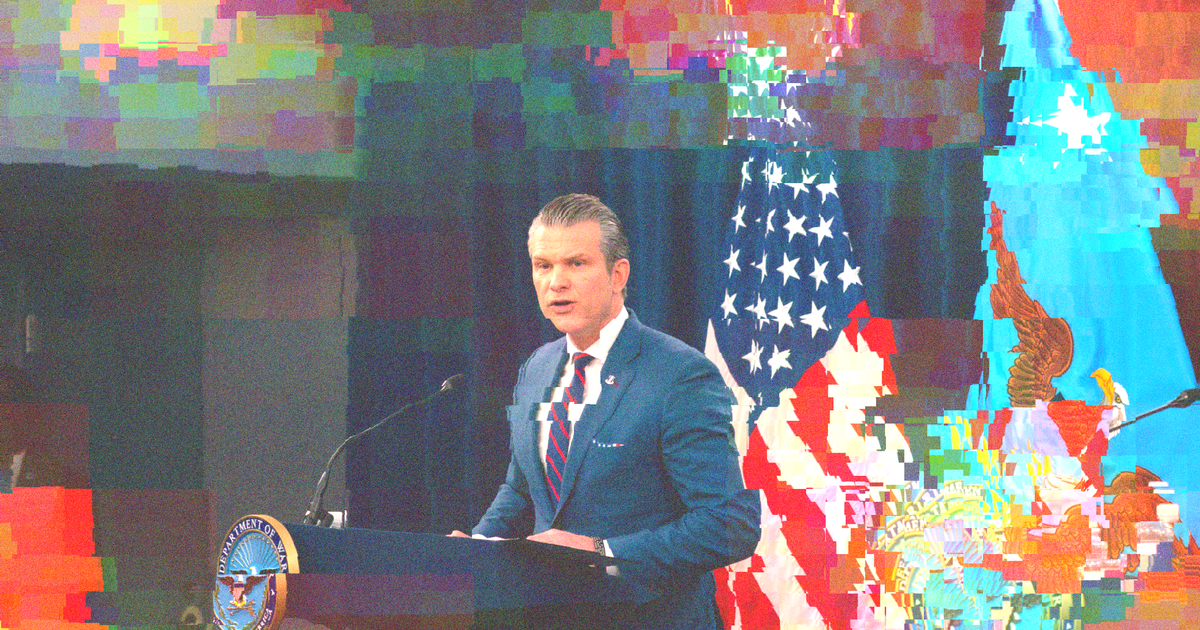
Disagreements escalated after the Pentagon demanded that Anthropic relax its ethical guidelines, asserting its authority to dictate the terms of military contracts. This resulted in the termination of federal contracts with Anthropic and its designation as a supply-chain risk, a classification typically reserved for state-affiliated Chinese tech companies. Defense Secretary Pete Hegseth characterized Anthropic’s CEO, Dario Amodei, as “arrogant” and suggested that no CEO should dictate the parameters of military operations.
The breakdown in communications between the two parties is indicative of broader tensions between speculative technological futures and the immediate realities confronting national defense. Anthropic’s vision of AI as a potentially transformative utility contrasts sharply with the Pentagon’s more immediate focus on consolidation of power and operational control. This friction exemplifies the clashes that arise when disparate ideologies regarding the future of technology collide in a high-stakes environment.
Anthropic has consistently argued against the deployment of AI in lethal autonomous capabilities, emphasizing its belief that current AI systems lack the reliability needed for such applications. In a lawsuit challenging the Pentagon’s actions, the company stated, “In our view, today’s AI systems — including Claude — are not capable of reliably carrying out lethal autonomous warfare.” This insistence on ethical restraints stems from a recognition of the potential harms associated with AI technologies that could be misused by governments. Despite the firm’s warnings about the capabilities of future AI systems, many within the Pentagon perceive these concerns as overly cautious or irrelevant.
As both parties navigate this complex landscape, Anthropic’s stance is rooted in a speculative understanding of AI’s future capabilities. The company has highlighted the potential for powerful AI to enable real-time population tracking via surveillance systems, raising alarms about privacy concerns that existing laws may not adequately address. This perspective aligns with the sentiments of many tech industry professionals who have voiced support for Anthropic’s ethical framework.
From the Pentagon’s view, however, such a perspective is not simply disagreeable but fundamentally incoherent. Officials in the Trump administration have signaled that they view AI primarily as a mechanism for enhancing U.S. military might and consolidating political power. This emphasis on power dynamics has led to retaliatory measures against Anthropic, suggesting a disregard for the ethical considerations that the company prioritizes.
As tensions mount, analysts warn that this conflict underscores a significant challenge for both the tech industry and government entities. The prospect of self-improving AI evokes fears of an arms race, particularly with nations like China, and raises important questions about regulatory oversight. The Trump administration’s aggressive stance on AI development illustrates a broader reluctance to accommodate the ethical concerns raised by tech firms like Anthropic.
The implications of this standoff extend well beyond the immediate situation. The struggle between Anthropic and the Pentagon reflects a deeper societal debate about the role of AI in governance, military strategy, and civil liberties. As the U.S. accelerates its investment in AI technologies, the need for clear ethical guidelines and regulatory frameworks becomes increasingly urgent.
In this evolving narrative, Dario Amodei and his team at Anthropic find themselves at a pivotal crossroads. Their commitment to ethical AI development clashes with the aggressive tactics of a government intent on leveraging technology for state power, revealing a precarious balance between innovation and accountability. As both sides grapple with these competing visions of the future, the outcome will likely shape the trajectory of AI policy and governance for years to come.
See also EU Moves to Ban AI-Generated Sexual Deepfakes Amid Grok Controversy and Global Backlash
 Microsoft Launches Copilot for Gaming, an AI Assistant to Enhance Player Experience
 AI and Automation Drive 54,836 U.S. Job Cuts in 2025, Accelerating Layoff Trends
 DeepSeek AI Refuses to Acknowledge Taiwan’s Independence, Upholds CCP Policy
 Lanner Reveals AstraEdge™ Platforms for AI-RAN and Robotics at NVIDIA GTC 2026