





























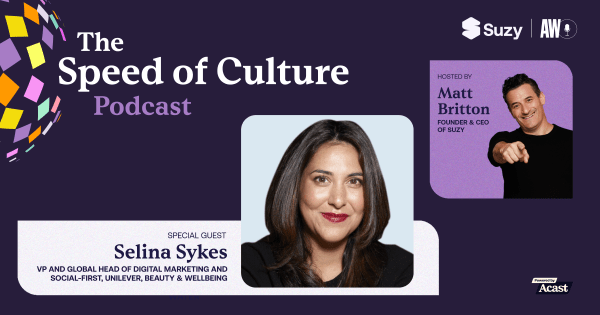
Unilever is redefining its marketing strategies through a cultural lens, emphasizing participation over distribution in a recent discussion on The Speed of Culture podcast. Selina Sykes, Vice President of beauty and wellbeing and global head of digital marketing and social at Unilever, elaborated on the company’s transformation, highlighting how modern brands must engage in culture to thrive. The conversation, hosted by Matt Britton, took place at a pivotal moment as Unilever continues to integrate advanced technologies like artificial intelligence (AI) into its marketing framework.
Sykes detailed several innovative initiatives, including Brand DNAi, AI-driven content creation, and digital twins, all of which serve to build what she termed “desire at scale.” These elements are intended to enhance the consumer journey by making it more relevant and engaging. With the rise of AI agents and agentic shopping, Sykes predicts a significant shift in how consumers make purchasing decisions, reinforcing the need for authenticity and community in the global beauty sector.
The “Vaseline Verified” campaign emerged as a key milestone in Unilever’s marketing evolution. Rather than taking a top-down approach, the campaign encouraged real users to share their experiences and hacks, which were then validated by the brand in its labs. This method of collaboration, as Sykes described, aligns closely with modern consumer expectations, fostering a narrative that is both human and culturally resonant. It exemplifies a move toward a many-to-many marketing model that is increasingly vital in today’s landscape.
Sykes, who has nearly two decades of experience at Unilever, has worked across various roles, including marketing director and CEO of The Uncovery, to shape Unilever’s strategies in global beauty marketing. Her extensive background in brand building and digital transformation has informed the company’s current approach, allowing it to remain agile in an ever-changing market. At the recent Cannes Lions festival, her team’s success—winning 11 Lions, including two Grands Prix and a Titanium award—underscored the effectiveness of these modern strategies.
One of the key insights from Sykes was the understanding that global trends indicate local nuances. “What looks like separate cultural waves often comes from the same human shift,” she noted, prompting Unilever to examine deeper forces influencing consumer behavior rather than merely imitating viral trends in specific markets. This approach is crucial for maintaining relevance in a global beauty landscape.
AI plays a foundational role in Unilever’s marketing strategy, according to Sykes. The company prioritizes addressing human friction—issues that complicate consumer decisions—before integrating AI solutions. By focusing on real problems rather than technological buzzwords, Unilever aims to ground its marketing initiatives in tangible outcomes that align with consumer behaviors and growth objectives.
In addition, Sykes discussed the establishment of an AI content engine designed to produce high volumes of varied content while maintaining creative integrity. This system supports Unilever’s shift towards a marketing model that connects brands fluidly across cultures, creators, and platforms, enabling quicker response times to consumer needs.
Another significant development highlighted by Sykes is the implementation of digital twins in marketing efforts. This technology allows Unilever to generate numerous variations of product presentations rapidly, thus reducing production costs and improving workflow efficiency. This innovation serves as a cornerstone of the AI content engine that Unilever has invested in heavily over the years.
As the conversation turned to authenticity, Sykes reflected on the current “de-influencing” trend where audiences are steering away from perceived transactional content. Consumers are increasingly gravitating toward creators who genuinely understand and use the products they endorse. In response, Unilever is prioritizing long-term partnerships with creators, fostering trust and bolstering the credibility of both the brand and its endorsers.
Looking ahead, agentic shopping represents a transformative shift in consumer behavior, reshaping the way brands engage with potential customers. Sykes emphasized that as consumers rely more on AI agents to navigate their needs and make decisions, brands must adapt to how these systems interpret and present them. This evolution signifies a new frontier in competition, merging human insight with machine logic in the marketplace.
Unilever’s ongoing transformation highlights the critical interplay between technology, culture, and consumer behavior, underscoring the need for brands to stay attuned to the evolving demands of their audiences. As the landscape continues to change, the ability to forge genuine connections based on community and authenticity will be vital for success in the global beauty industry.
See also The Nova Method Launches NovaSight, an AI Visibility Platform for Marketing Leaders
 Meta AI Transforms SEO Approach: Boosts Content Clarity and Reader Engagement
 Vonage Launches Omnichannel Conversations for Agentforce Marketing, Enhancing Customer Engagement