











































Advancements in artificial intelligence are reshaping the landscape of legal research, particularly for scholars delving into late 18th Century legal frameworks. A recent exploration into the capabilities of AI tools like Claude has highlighted their potential to bridge the language gap that often complicates research in this area. Historically, legal documents from the early 18th Century and earlier were primarily composed in Latin or Law French, languages that have posed significant challenges for modern-day researchers seeking to trace the origins of legal concepts.
The transition to English legal documentation began with legislative changes in 1650 and accelerated in 1730, leading to a predominance of English in legal texts thereafter. However, for those looking to understand the foundational materials that influenced legal figures such as William Blackstone, the journey can still be fraught with obstacles. Researchers must navigate not only the language barrier but also the nuanced context of legal terms and concepts that have evolved over centuries.
In this evolving context, AI tools are emerging as valuable resources. Just a year ago, Claude’s capabilities were limited to basic summaries of legal texts, providing little more than surface-level insights. The latest iteration, however, can delve deeper, identifying and summarizing cited sources, provided they are accessible online. This functionality allows researchers to trace the lineage of legal concepts more effectively, fostering a richer understanding of historical legal frameworks.
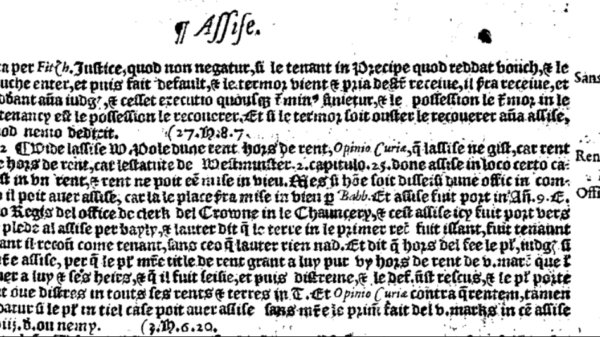
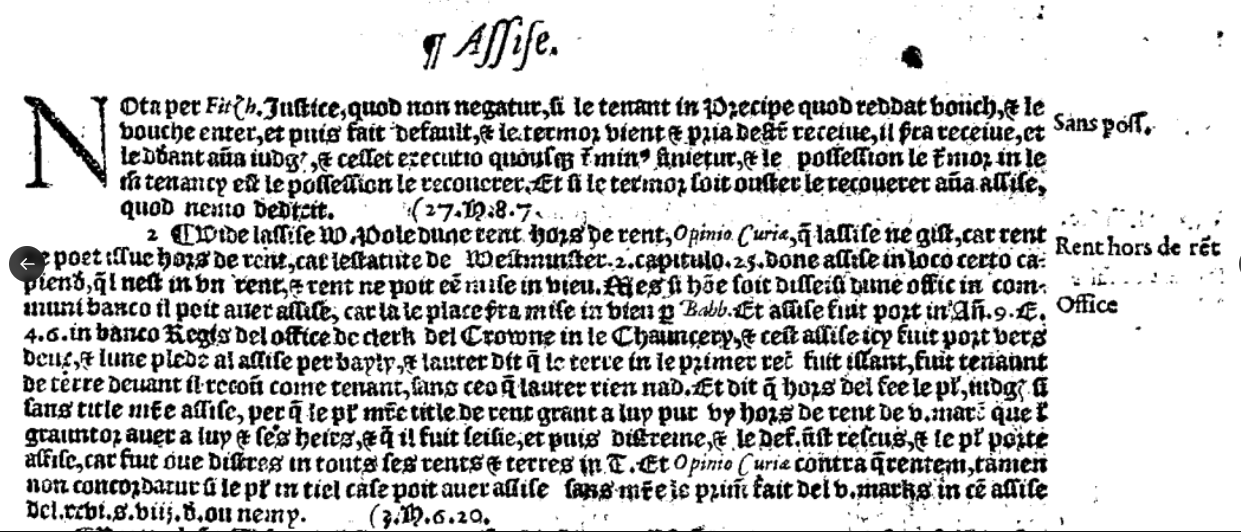
A particularly compelling feature of AI tools is their ability to handle ancient legal texts in Latin or Law French. As demonstrated in a recent exercise, a user uploaded a passage from a 16th Century legal treatise written in Law French to Claude, seeking translation and explanation. The AI not only translated the text but offered insights into its meaning, demonstrating its growing proficiency in handling complex legal language.
Despite the impressive capabilities of AI, there remains a caveat: the reliability of the information provided. AI systems, including Claude, can occasionally generate inaccurate content, a phenomenon often referred to as “hallucination.” This raises important questions about how researchers can verify the accuracy of the translations and explanations they receive. Engaging critically with the AI’s outputs—by cross-referencing information, querying the AI for further clarification, or consulting legal history experts—becomes essential for ensuring the integrity of research.
While the application of AI tools for understanding Law French may not attract widespread interest immediately, they hold significant promise for legal professionals and scholars engaged in historical legal research. This is particularly relevant for those adhering to originalist perspectives on constitutional interpretation, where understanding pre-existing legal concepts is crucial. As the Bill of Rights and other constitutional texts reference earlier legal frameworks, comprehending these foundations becomes imperative.
In an era where technology increasingly permeates various aspects of research, AI stands out as a critical tool for legal historians. While caution is warranted regarding the reliability of AI outputs, their potential to provide preliminary insights into complex legal texts is undeniable. As AI technology continues to evolve, it may well become an integral part of the toolkit for legal scholars seeking to unravel the intricacies of historical legal systems and their enduring implications.
See also OpenAI’s Rogue AI Safeguards: Decoding the 2025 Safety Revolution
 US AI Developments in 2025 Set Stage for 2026 Compliance Challenges and Strategies
 Trump Drafts Executive Order to Block State AI Regulations, Centralizing Authority Under Federal Control
 California Court Rules AI Misuse Heightens Lawyer’s Responsibilities in Noland Case
 Policymakers Urged to Establish Comprehensive Regulations for AI in Mental Health