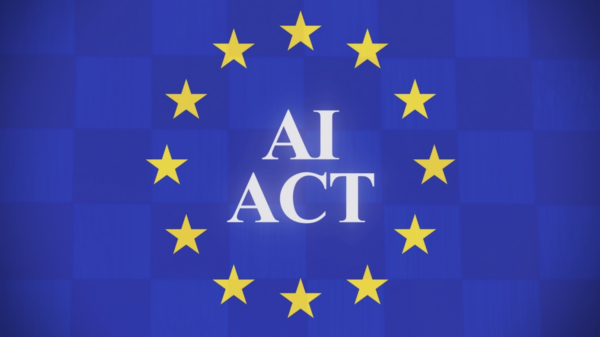
The European Union is on the brink of a transformative shift in artificial intelligence regulation with the impending implementation of the AI Act. Set to take effect with a critical deadline in February 2025 for high-risk AI applications, this landmark legislation represents the world’s first comprehensive effort to govern AI technologies at scale. As technological advancements race ahead, the EU is poised to establish the foundational standards that could influence global regulatory practices for years to come.
This regulatory framework’s significance extends beyond its scope; its timing correlates directly with the rapid deployment of sophisticated AI systems across various sectors. European regulators are not only responding to technological advancements but are also striving to create stability in a landscape fraught with uncertainty, akin to Stoic principles that guide individuals through turbulent times.
A primary challenge facing the EU’s AI Act is the practical enforcement capacity. Unlike established sectors, AI systems present unique complexities that existing regulatory frameworks are ill-equipped to handle. According to reports from the European Commission’s digital strategy, member states are racing to cultivate the necessary technical expertise to evaluate AI applications that may process vast amounts of data in ways that even their developers sometimes fail to comprehend. This paradox complicates the auditing process, highlighting the difficulty in monitoring technologies characterized by their rapid evolution.
Central to the AI Act is a risk-based classification system that prioritizes regulatory scrutiny on high-risk applications. However, pinpointing what constitutes “high risk” in continually evolving AI technologies demands a level of regulatory agility that traditional bureaucratic structures often struggle to achieve. This ongoing challenge underscores the need for swift adaptation to keep pace with advancements in AI.
The implications of the EU’s regulatory initiatives extend beyond its borders, creating a ripple effect in global tech governance. Just as GDPR compliance became a de facto standard worldwide, the AI Act’s influence is already evident in how companies design their AI systems globally. By aligning with European standards, companies can streamline their processes rather than maintaining separate versions for different jurisdictions.
“The Brussels Effect means that European standards often become global standards by default, simply because it’s more efficient for companies to build to the highest regulatory standard,” said a digital policy researcher during a recent European Parliament session.
This phenomenon places pressure on other major economies, including the United States and China, to either conform to European regulations or risk losing competitiveness in the tech market. Both nations are scrutinizing the EU’s implementation closely for insights on how such regulations might impact innovation and economic viability.
The response from AI companies reflects evolving strategies to navigate regulatory constraints. Many organizations are shifting towards a “compliance by design” approach, integrating regulatory requirements into their AI development processes from the outset. This proactive strategy is a departure from previous methods that often treated compliance as an afterthought and could lead to more robust and interpretable AI systems, even if it increases initial development costs.
The documentation requirements of the AI Act push companies to cultivate a more nuanced understanding of their AI systems’ decision-making processes. This paradigm shift may ultimately yield an industry that prioritizes clarity and reliability, despite the initial burdens of regulatory compliance.
Nonetheless, the compressed timeline for implementing the AI Act adds a layer of urgency that is often overlooked in policy discussions. Regulatory agencies are tasked with developing entirely new areas of technical expertise while businesses simultaneously overhaul their systems—all within overlapping deadlines that restrict the iterative learning typical of both regulatory and technological advancements.
The February 2025 deadline for high-risk AI systems creates critical pressure points, compelling regulatory bodies to devise enforcement mechanisms for technologies that continue to evolve. This scenario resembles the challenges faced in other sectors where efficient processes are vital to meet tight schedules. The temporal compression means both regulators and companies are making consequential decisions based on incomplete information, introducing unprecedented uncertainty regarding regulatory outcomes.
The European experiment with AI regulation transcends mere policy; it serves as a live test of whether democratic institutions can effectively oversee transformative technologies without stifling innovation. The results of this regulatory endeavor are likely to shape not only the future of AI but also the intricate relationship between technological progress and democratic governance for decades to come.
See also Trump’s AI Executive Order Revamps Policy, Prioritizing Deregulation Over Oversight
 Top European Law Firms Deploy Generative AI for First Drafts, Enhancing Efficiency and Quality
 Trump Signs Executive Order to Preempt State AI Regulations, Promoting National Framework