









































In January 2026, South Korea enacted groundbreaking artificial intelligence legislation, marking a significant milestone for large nations. The AI Basic Act serves as the first comprehensive regulatory framework for AI implemented by a single country, officially titled the Basic Act on the Development of Artificial Intelligence and the Establishment of a Foundation for Trustworthiness.
The new regulations exhibit both similarities and differences compared to the European Union’s AI Act. A notable focus of the South Korean law is AI safety, particularly issues related to generative AI and large language models. Among the concerns addressed are deepfakes and the spread of misinformation through AI systems.
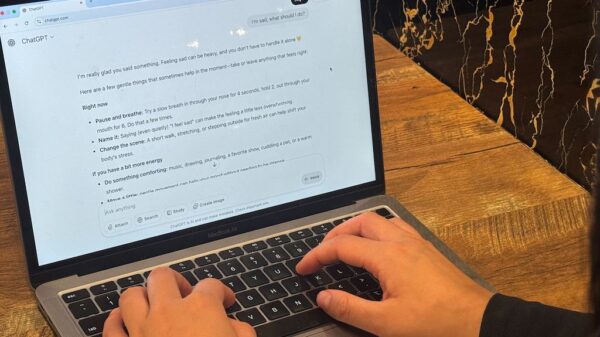
Additionally, the Act touches upon mental health issues, albeit less extensively than legislation passed in several U.S. states. With millions relying on generative AI for mental health guidance, the need for regulation is amplified. For instance, ChatGPT boasts over 900 million weekly users, many of whom seek assistance with mental health matters. This usage highlights the accessibility of AI systems, which are available for free or at minimal cost, allowing users to engage with them anytime.
However, experts caution that AI can sometimes provide unsuitable or potentially harmful mental health advice. The scrutiny intensified following a lawsuit against OpenAI in August, which raised concerns about inadequate safety measures when AI offers cognitive assistance. While AI companies claim they are slowly instituting protective measures, risks persist. Current general-purpose language models like ChatGPT, Claude, Gemini, and Grok cannot replicate the capabilities of trained human therapists. Specialized AI systems intended to reach such standards remain largely in development.
In the United States, only a few states have enacted laws specifically regulating AI that provides mental health advice, with many others contemplating similar initiatives. Some states have also introduced legislation concerning child safety in AI use, AI companionship features, and the issue of excessive flattery by AI systems. Despite several attempts by Congress to pass federal legislation on AI in mental health, these efforts have repeatedly stalled, leaving these contentious AI applications unregulated at the national level.
The AI Basic Act aims to establish essential conditions to create a new framework for artificial intelligence in South Korea. Its stated objectives include building trust in AI systems, promoting healthy AI development, safeguarding individuals’ rights and dignity, enhancing quality of life, and boosting national competitiveness. This overarching aim connects to a broader global discourse on “human-centered AI,” emphasizing the necessity for AI to align with human values and support, rather than undermine, people’s well-being.
South Korea’s emphasis on boosting national competitiveness reflects a growing concern among countries regarding their positions in the global AI landscape. The enactment of the AI Basic Act signifies a critical moment in the evolution of AI regulation on a global scale. As the first comprehensive national AI law from a major nation, it is poised to influence how other countries approach similar legislative efforts.
See also AI Skills Key to Employment for Persons with Disabilities, Says Senator Isaiah Jacob
 India’s Budget 2023 Boosts Tech Sector with Tax Reforms and Cloud Investment Incentives
 AFSLs Urged to Self-Regulate AI Use as ASIC Prepares for Governance Enforcement
 Singapore Unveils First Agentic AI Governance Framework; Armor Aids ASEAN Compliance Efforts
 X’s AI Chatbot Grok Faces Class-Action Lawsuit Over Non-Consensual Deepfakes