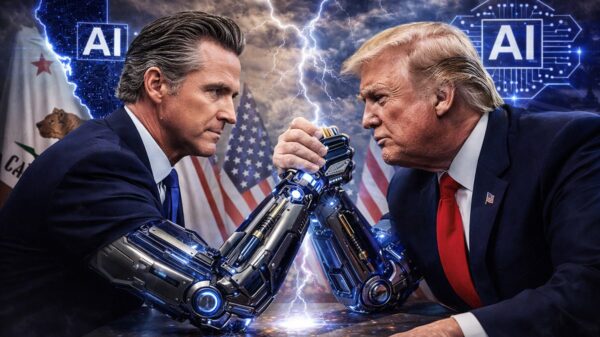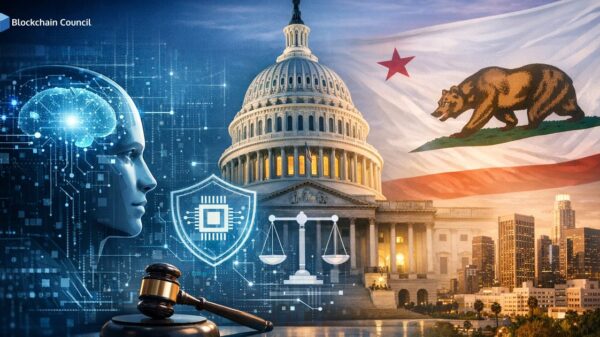
The evolving landscape of artificial intelligence (AI) regulation in the United States has become a contentious battleground, drawing contrasting approaches from political leaders. Following the legacy of President Bill Clinton’s hands-off policy during the early days of the internet, Democrats now seek to establish stringent controls over AI development. President Joe Biden’s executive order aimed to mold AI as a federal tool aligned with public policy goals, but was reversed under President Donald Trump, who is advocating for a unified federal framework to avoid fragmentation across state lines.
As states begin to fill the regulatory void left by federal inaction, blue states like California and Colorado are poised to lead the charge, potentially creating a patchwork of regulations that could stifle innovation. California, leveraging its economic power as the fourth-largest economy globally, has proposed legislation that would place its attorney general in charge of overseeing AI developments, mandating compliance with regulations ensuring “safe, ethical, equitable, and sustainable” systems. Violation of these rules could result in fines reaching $1 million, generating a climate of uncertainty for businesses involved in AI.
Meanwhile, Colorado’s regulatory approach has been described as a “Mother, may I” system that has prompted state lawmakers to delay its implementation due to concerns over its feasibility for local businesses. Proponents of these regulations argue they are necessary for consumer protection and ethical considerations, but critics warn that such measures could lead to significant economic repercussions. The U.S. Chamber of Commerce has projected that adhering to Colorado’s stringent laws could result in the loss of 713,000 jobs and a $53 billion decline in GDP.
Trump has expressed the need for a single regulatory framework to prevent the United States from falling into an EU-style regulatory quagmire, advocating for legislation to preempt state regulations that could hinder the growth of AI technology. In an attempt to consolidate authority, Senator Ted Cruz (R-Texas) proposed an amendment to the One Big Beautiful Bill that would allow states to impose restrictions, but only if they do not pose excessive burdens on AI development. This amendment ultimately failed, leaving a void in federal oversight.
In light of these developments, Trump is reportedly preparing to issue an executive order aimed at limiting states’ ability to impose restrictive laws on AI. The proposed order could threaten to withhold federal broadband funding and other grants from states that implement such regulations, creating a potential standoff between federal and state authorities over AI governance. However, without a comprehensive federal legislative solution, the potential for conflicting regulations remains high.
As Congress gears up for another attempt at addressing AI regulation in the upcoming January 30 government funding bill, concerns linger over leaving pivotal technology that impacts both economic growth and national security in the hands of numerous state legislatures. Policymakers face the challenge of balancing innovation with ethical considerations and public safety, a task complicated by the fast-paced nature of AI advancements. The decisions made in the coming months will play a crucial role in shaping the future of AI regulation in the United States.
See also Congress Proposes Regulatory Sandboxes to Enhance AI Innovation Amid State Law Conflicts
 China Proposes World AI Cooperation Organisation to Set Global Safety Standards
 FTC Warns Businesses: Key Legal Risks of AI Chatbots Require Immediate Safeguards
 Federal AI Regulation Moratorium Reemerges Amid Bipartisan Opposition from States
 Hochul Revises AI Safety Bill, Aligns with Big Tech Interests Amid Lobbying Pressure