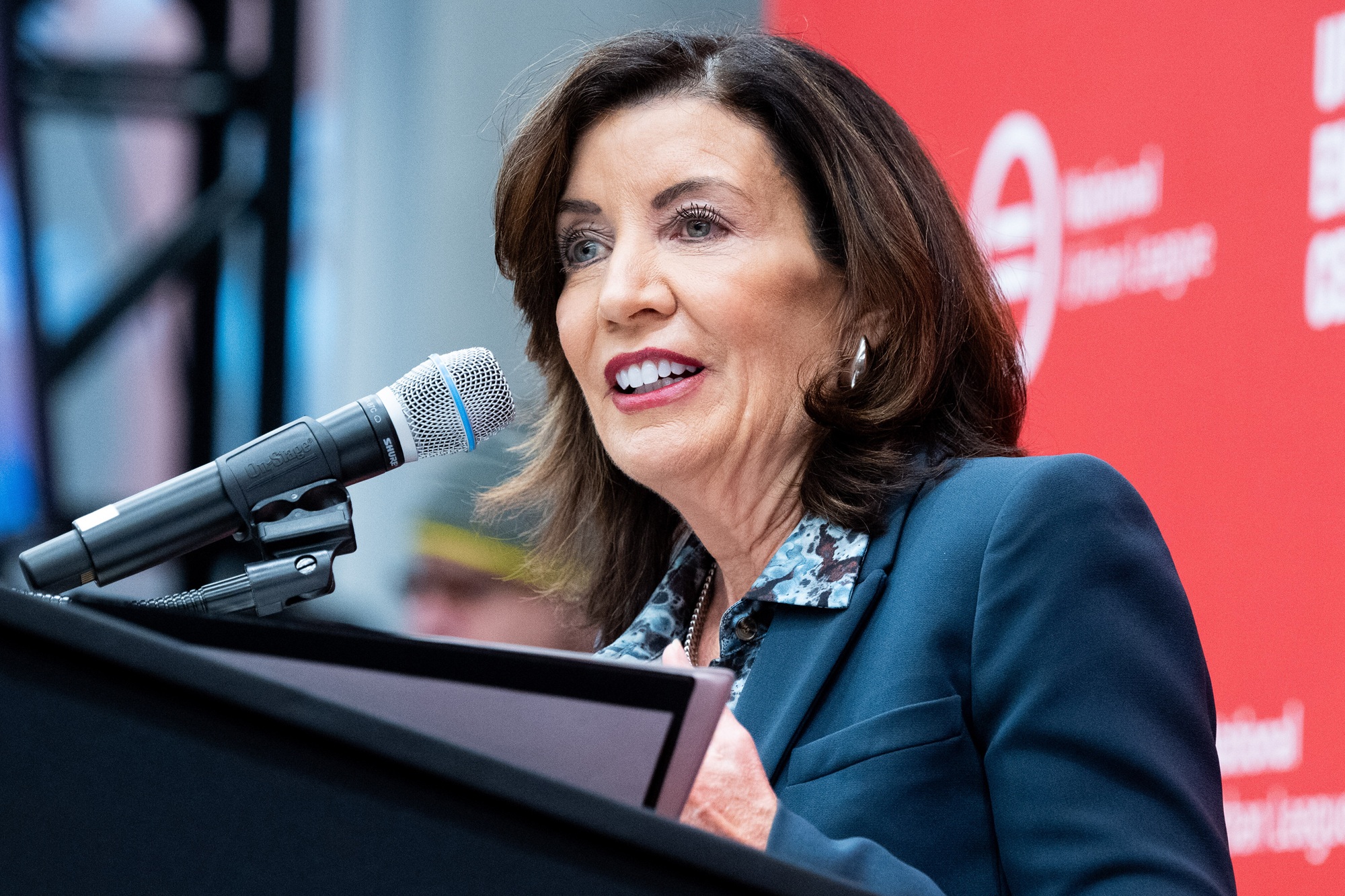
New York Governor Kathy Hochul has significantly revised a bill aimed at regulating artificial intelligence, shifting its focus toward the interests of major tech companies in recent weeks. The bill, known as the Responsible Artificial Intelligence Safety and Education (RAISE) Act, was originally designed to impose stringent regulations on advanced AI models, but Hochul’s changes have drawn sharp criticism for undermining its core provisions.
Initially co-authored by Assemblymember Alex Bores and Senator Andrew Gounardes, the RAISE Act sought to hold developers of frontier AI models accountable for safety. It mandated that these developers submit detailed plans to enhance model safety, report “critical safety incidents” promptly, and prevent the release of models deemed unsafe. Despite being on Hochul’s desk for several months, the bill’s fate transformed dramatically following Hochul’s intervention.
Critics, including various stakeholders in New York, have expressed outrage over the alterations, which many view as a capitulation to tech industry lobbying. These changes coincide with Hochul’s fundraising efforts from tech interests, raising concerns about the influence of corporate money in shaping legislation. The revisions come as former President Donald Trump has pledged to sign an executive order to prevent states from implementing their own AI regulations, following a failed attempt to establish a nationwide moratorium on state AI rules.
Despite Hochul’s defense of her actions, stating that New York aims to lead in responsible AI legislation amid a lack of federal guidance, the revised bill has drawn comparisons to a weakened AI safety law enacted in California. Hochul’s latest proposal dilutes the original requirements, transforming the safety “protocol” into a more general “framework” that lacks enforceable safety measures. Key provisions that aimed to prohibit models presenting an “unreasonable risk of critical harm” have been eliminated, as has the original requirement for swift disclosure of safety incidents.
Under the new changes, developers are now allowed to report safety incidents within a 15-day window unless there is an imminent risk of death, a notable extension from the original 72-hour requirement. Additionally, penalties for violations have been significantly reduced, from $10 million for a first violation to just $1 million across the board. This erosion of accountability has raised alarms among critics who see it as a victory for AI lobbyists who have aggressively campaigned against the RAISE Act.
The redline issued by Hochul has initiated a ten-day negotiation period with legislative authors, with a deadline set for December 19. Hochul must decide by December 31 whether to sign or veto the bill, a decision that could have far-reaching implications for AI regulation in New York and beyond.
Industry insiders suggest that Hochul’s revisions align closely with the demands of influential tech lobbyists, including venture capitalist Ron Conway and the industry group Tech:NYC, both of whom have supported her campaign financially. Critics argue that the governor has played both sides for political gain, allowing the bill to languish while extracting support from both proponents and opponents of the original legislation.
The altered RAISE Act has been characterized as a boon for technology interests, which have invested heavily in lobbying efforts to dilute the measure. Campaigns against Bores, who is running for Congress, have already begun, with political action committees vowing to challenge him for supporting what they label an overreach in AI regulation.
As New York grapples with the future of AI regulation, the outcome of Hochul’s decision will likely set a precedent that influences not only state policies but also the broader national discourse on AI accountability and safety. With tensions mounting between state autonomy and federal oversight, the unfolding drama in New York may illuminate the complex interplay of politics, technology, and public safety in an era increasingly defined by artificial intelligence.
See also Trump Signs Executive Order Limiting State AI Regulations to Boost U.S. Innovation
 Trump Signs Executive Order to Block State AI Regulations, Directs Task Force to Challenge Laws
 Trump Signs Executive Order to Block State AI Regulations, Favoring Tech Giants
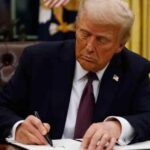 Trump Launches AI Task Force to Challenge State Regulations on Technology Oversight