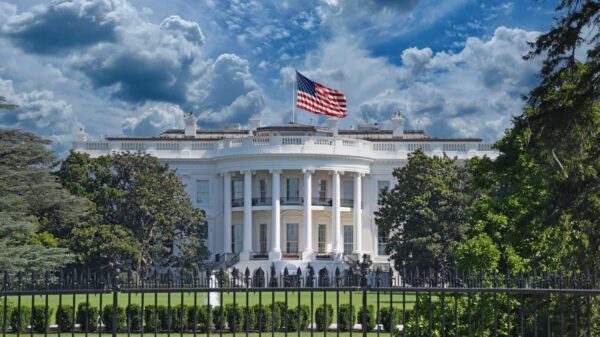










































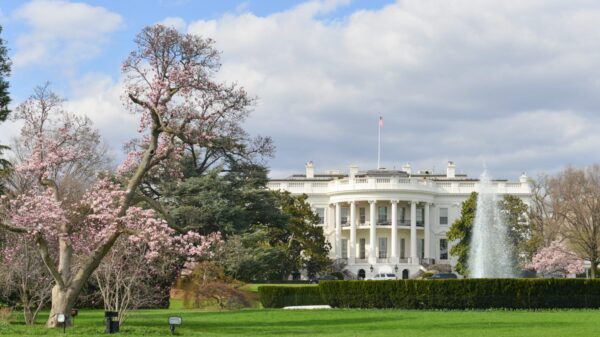






The White House introduced an artificial intelligence policy framework on Friday, proposing a unified national approach to regulate the technology. This initiative seeks to create legislation that would supersede state-level regulations, emphasizing the need for robust protections for children and measures to mitigate the rising energy costs associated with AI infrastructure expansion, as reported by Reuters.
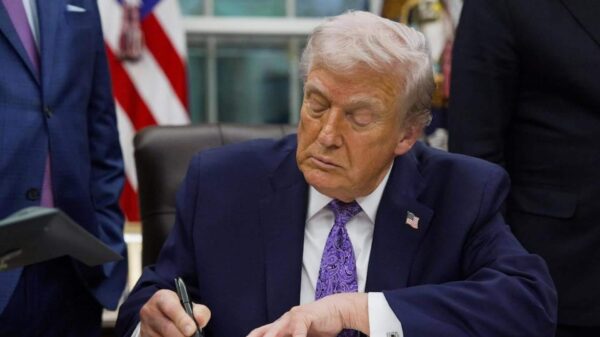
This proposal reflects a broader strategy from the Trump administration, advocating for a cohesive federal standard instead of a fragmented array of state laws. In December, President Donald Trump indicated that his administration would withhold federal broadband funding from states whose AI regulations could impede U.S. leadership in the sector, according to Reuters.
House Republican leaders, including Speaker Mike Johnson and Majority Leader Steve Scalise, have welcomed the White House plan, asserting that it presents Congress with a legislative pathway that would provide greater certainty for technology companies while focusing on consumer protections and the online safety of children, as noted by Reuters. The administration aims to collaborate with Congress to translate this policy framework into law.
As AI technology accelerates advancements across the tech industry, Nvidia has emerged as the world’s most valuable company, with Amazon, Meta Platforms, Alphabet, and Microsoft investing billions in AI initiatives, per Reuters. This growth underscores the urgency of a cohesive regulatory approach as the administration seeks to solidify U.S. leadership in the field.
Michael Kratsios, Trump’s science and technology adviser, stressed the necessity of a singular national AI framework, stating, “We need one national AI framework, not a 50-state patchwork.” He emphasized that a key focus should be fostering bipartisan consensus around protecting American children from potential hazards posed by AI technologies.
Among the child safety measures proposed in the framework are initiatives aimed at providing parents greater control over their children’s online accounts and devices, thereby enhancing privacy protections. Additionally, the plan encourages the development of tools to address risks related to sexual exploitation and self-harm, according to Reuters.
The framework also advocates for simplifying permitting processes so that energy-intensive data centers can generate electricity on-site, a strategy intended to alleviate the burden on local power systems amid growing AI demand. Furthermore, it seeks to enhance the federal government’s capabilities in responding to AI-enabled scams and national security threats.
In a broader context, the framework outlines efforts to reduce barriers to innovation and accelerate AI adoption across various industries, thereby aiming to maintain U.S. leadership in technology. Proposals within the document address intellectual property rights, free speech issues, concerns regarding censorship, and workforce development through AI education, presenting a comprehensive approach to the multifaceted challenges posed by AI.
However, the four-page plan provides limited discussion on national security matters, despite rising apprehensions among some lawmakers regarding advanced AI chip exports to China, which could potentially bolster Beijing’s military capabilities. Earlier this year, the Trump administration approved conditional exports to China of Nvidia’s second-most advanced AI chip, and licenses for these shipments have already been issued, according to Reuters.
This newly proposed national policy framework underscores an urgent need for cohesive regulation of artificial intelligence, highlighting both the opportunities and risks associated with rapid technological advancements. As discussions in Congress progress, the administration’s approach could reshape the landscape of AI regulation, with significant implications for the future of technology in the United States.
See also OpenAI’s Rogue AI Safeguards: Decoding the 2025 Safety Revolution
 US AI Developments in 2025 Set Stage for 2026 Compliance Challenges and Strategies
 Trump Drafts Executive Order to Block State AI Regulations, Centralizing Authority Under Federal Control
 California Court Rules AI Misuse Heightens Lawyer’s Responsibilities in Noland Case
 Policymakers Urged to Establish Comprehensive Regulations for AI in Mental Health