





















































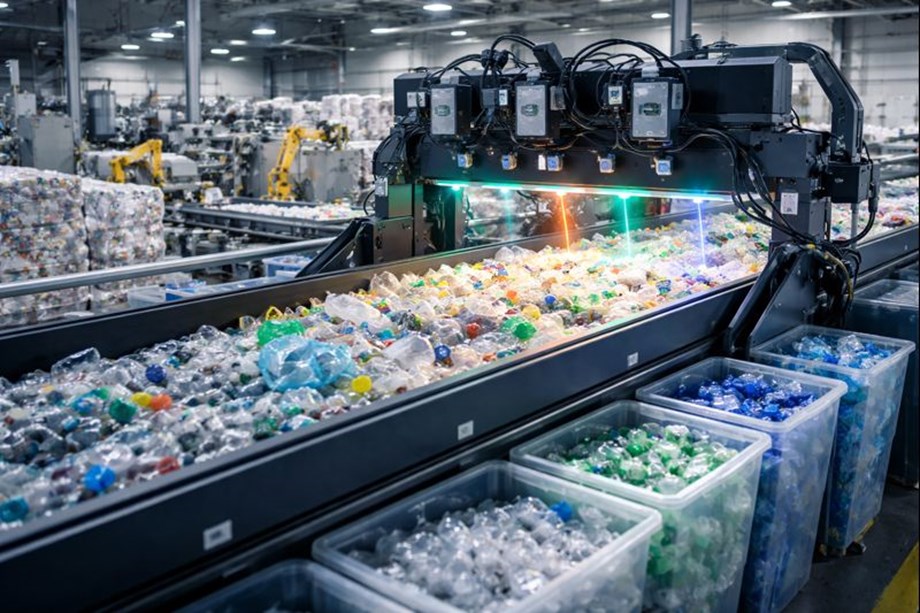
As global plastic production continues to escalate alongside persistently low recycling rates, researchers are advocating for the integration of artificial intelligence (AI) as a critical enabler of circular plastic economies. The study titled “Integrating Artificial Intelligence into Circular Strategies for Plastic Recycling and Upcycling,” published in the journal Polymers, underscores that without AI-driven diagnostics, routing, and governance, advanced recycling methods may remain fragmented and environmentally questionable.
The research compiles a diverse array of studies focusing on mechanical, chemical, biological, and upcycling methods, illustrating how AI can connect processes such as material identification and life cycle assessment into a cohesive decision-making framework. At the operational level, AI’s most immediate impact is in enhancing plastic identification and sorting, a crucial stage that influences whether materials can re-enter valuable recycling loops or are directed toward less desirable outcomes.
Traditional optical sorting methods have struggled with mixed polymers and complex packaging materials, leading to inefficiencies. However, AI-enhanced sensing technologies are beginning to bridge these gaps. By employing machine learning alongside advanced spectroscopic tools—including Fourier-transform infrared spectroscopy (FTIR) and hyperspectral imaging—these systems not only classify materials but also evaluate contamination and degradation levels. This allows recycling facilities to assign plastics to the most compatible recycling routes rather than defaulting to mechanical processing or disposal.
The study highlights a transformative shift from basic automation to comprehensive system intelligence. Initial AI applications focused on improving measurement interpretations, but newer implementations integrate multiple sensors and adaptive decision rules. These advancements help reduce reject rates and optimize throughput. In the most sophisticated scenarios, AI functions as a central orchestrator, guiding the movement of materials through collection networks and processing plants based on technical feasibility and environmental impact.
This development is particularly significant for difficult-to-recycle materials, such as carbon-black plastics and multilayer films. AI-enabled sensor fusion has emerged as a viable method to extract usable materials with minimal energy expenditure and quality loss. Yet, the authors caution that algorithmic advancements cannot compensate for inadequate data and hardware limitations, emphasizing the importance of high-quality spectral databases for effective AI performance.
AI’s role extends into the recycling processes themselves. In mechanical recycling, predictive models are now utilized to monitor material degradation and optimize extrusion conditions, ultimately preventing property loss and conserving energy. Chemical recycling, particularly through methods like pyrolysis and solvolysis, is experiencing a surge in AI integration, with models predicting product distributions and optimal operating conditions based on the composition of feedstocks.
The study confirms that while AI-driven process control can significantly reduce energy demands, chemical recycling routes only yield environmental advantages over mechanical methods when combined with intelligent control systems and low-carbon energy sources. Without such integration, the heightened energy intensity of advanced recycling may negate potential benefits.
Exploring Upcycling’s Potential
Upcycling, which seeks to transform plastic waste into products of greater functional or economic value, is also gaining traction as a vital component of future circular systems. The study asserts that AI is crucial to scaling upcycling efforts, accelerating catalyst design and material discovery across various chemical and biological pathways. Machine learning is employed to navigate expansive design spaces, optimizing combinations of catalysts and feedstocks to maximize yield while minimizing byproducts.
Polyethylene and polypropylene remain the focal points of research due to their prevalence in global plastic production. While pyrolysis-based upcycling attracts significant attention, AI is also enhancing electrochemical pathways, particularly for polyester plastics. In biological systems, AI tools are being utilized to identify promising enzymes for plastic depolymerization, although challenges remain regarding data availability and contamination sensitivity.
Despite promising technological advancements, the study warns that upcycling’s environmental benefits hinge on whether upcycled products can effectively replace energy-intensive virgin materials. AI-driven life cycle modeling is increasingly pivotal in assessing these substitution effects, minimizing the risk of investing in processes that may not deliver substantial climate benefits.
Moreover, hybrid strategies that blend recycled plastics with waste biomaterials, such as agricultural residues, show potential for creating durable composites for construction. However, these approaches necessitate meticulous control over variability and contaminant profiles. AI tools are being leveraged to optimize formulations and predict long-term performance, reinforcing the notion that digital intelligence is essential not just for processing but also for product design.
In closing, while the integration of AI into recycling and upcycling processes offers promising pathways to improve efficiency and environmental outcomes, significant barriers remain. The authors emphasize the need for inclusive governance models that address the persistent gaps in data infrastructures and regulatory frameworks. Digital traceability systems, bolstered by AI, are emerging as vital tools to enhance material flow tracking and compliance. Ultimately, the successful transition to a circular economy will depend on embracing both technological advancements and robust governance structures.
See also AI Labs Unveils 5-Level Scale to Clarify True Monetization Intent and Strategy
 MIT Study Shows 300 Participants Trust AI Over Doctors for Medical Advice
 TechCrunch Reveals AI Labs’ Ambition Ratings: Humans& at Level 3, Thinking Machines in Turmoil
 Neuroscience Field Divided on Emotion Research, Urgent Need for Model-Based Framework
 Machine Learning Study Reveals Eight Diagnostic Measures for Accurate Dementia Classification