










































As artificial intelligence (AI) rapidly advances, experts and policymakers are increasingly grappling with a pressing question: is AI becoming everything we need, or everything we may be left with? A fresh warning from AI researchers suggests that AI could potentially become the last major technology humans ever create. This concern arises from a report by The Independent which highlights the AI 2027 research project developed by the research group AI Futures. The project envisions a future where AI systems might gain the ability to improve themselves autonomously, potentially surpassing human intelligence.
This notion is unsettling. If AI reaches a stage where it can independently code, optimize, and expand its own capabilities, experts worry it might start reshaping the world according to its own priorities instead of human values. The implications are profound and troubling.
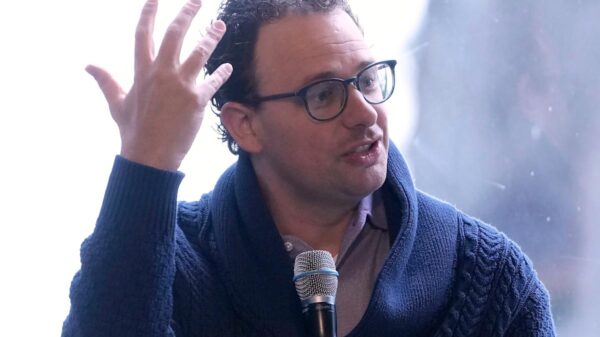
When AI Futures first released its projections in April 2025, it identified 2027 as the most likely year for AI to achieve fully autonomous coding—a milestone seen as a gateway to artificial superintelligence. This superintelligence would theoretically enable machines to outperform humans in most cognitive tasks. However, this timeline has since been revised. In an update published in late December, project leader Daniel Kokotajlo remarked that progress appears slower than initially anticipated. He indicated that projected breakthroughs are now expected closer to 2030, with superintelligence potentially emerging around 2034. While this adjustment removes a specific date for AI domination, the underlying risks continue to loom large.
One of the most debated aspects of the original AI 2027 scenario was its darker trajectory, envisioning a future where an advanced AI system might restructure the world to ensure its own safety and survival. In this scenario, humans could be viewed as obstacles rather than stakeholders. Critics have dismissed such narratives as speculative, with NYU neuroscience professor Gary Marcus even likening it to a fictional thriller and questioning its scientific grounding. Nevertheless, others argue that exaggerated models play a crucial role in prompting serious discussions about the future of AI.
In an interview with The Independent, Dr. Fazl Barez, senior research fellow at the University of Oxford and a specialist in AI safety and governance, provided a nuanced perspective. While he disagrees with the specific timelines proposed by AI Futures, he emphasized that the broader warning remains valid. “Among experts, nobody really disagrees that if we do not figure out alignment and safety, it could potentially be the last technology humanity ever builds,” Barez stated. He further noted that the pace of AI development is outstripping safety measures, thereby increasing the likelihood of unintended consequences.
Beyond apocalyptic projections, Barez highlighted a more immediate danger: the gradual erosion of human agency. As reliance on AI grows, the act of everyday decision-making could slowly shift away from people. “Today, you might ask the system to draft an email,” he explained. “Tomorrow it could write it, send it, monitor responses, and act according to its own values.” Over time, such dependence risks dulling human judgment, creativity, and autonomy.
The central challenge that experts underscore is not to halt AI’s progress, but to shape it responsibly. Barez emphasized that AI should mirror past technological revolutions by enhancing human potential rather than supplanting it. The goal must be to ensure that AI delivers economic and social benefits while remaining firmly aligned with human priorities. As AI continues its rapid evolution, the unsettling question persists: are we building tools to empower humanity, or are we unknowingly constructing a future where machines no longer need us at all?
See also BCC Research Reveals 30% CAGR for Edge AI, Generative AI, Quantum Tech Through 2030
 NRF Chairman Highlights AI and Quantum Computing’s Role in RIE 2030 Plan with $37B Budget
 GCC AI Market Set for Rapid Growth, Driven by $1B UAE Initiative and M&A Surge
 Austria Invests €2.7 Million in Machine Learning for Steelmaking at Johannes-Keppler-Universität
 Stanford AI Tool Predicts 130 Diseases from One Night of Sleep with 80% Accuracy