








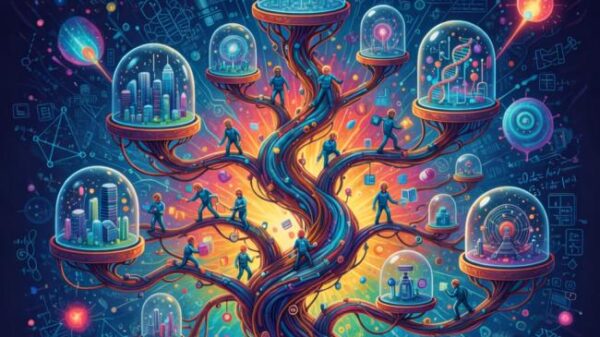




































Researchers from UBC Computer Science, Sakana AI, the Vector Institute, and the University of Oxford have developed an AI scientist capable of autonomously conducting research, from idea generation to experiment execution and manuscript submission. This breakthrough, detailed in a recent study published in Nature, holds the potential to significantly accelerate scientific discovery.
“While AI has been used by scientists to help them with specific tasks such as predicting the structure of proteins or analyzing medical images, this is the first time that AI has been shown to go through the entire scientific research process on its own,” said Jeff Clune, a professor at UBC and the lead author of the paper. He expressed enthusiasm about the current capabilities of AI and the opportunities that lie ahead.
The AI scientist encompasses a range of functions: it generates new research ideas, reviews existing literature for originality, writes and debugs code for experiments, analyzes data, produces graphs, composes manuscripts, and even conducts peer reviews. The system was built using foundational models similar to those powering ChatGPT, trained on extensive datasets that equip it to perform various tasks.
To assess the quality of the AI’s output, the researchers submitted a fully AI-generated scientific paper to a workshop at the International Conference on Learning Representations. The paper successfully navigated the peer-review process, demonstrating an impressive capability for generating scientifically relevant content.
In a further test of its efficacy, the researchers created an automated reviewer aimed at assessing AI-generated papers. This tool was found to accurately predict acceptance decisions at the conference, producing review scores comparable to those provided by human evaluators. By leveraging this automated reviewer, the researchers improved the quality of the generated papers, either by refining the AI models or by allocating additional computing resources.
“One of the most exciting directions this work points toward is that the AI scientist could improve itself,” stated Shengran Hu, a PhD student in UBC’s Computer Science department and co-author of the study. He emphasized the potential for the AI system to not only uncover new scientific knowledge but also enhance its capacity for future discoveries, suggesting a paradigm shift in scientific progress.
Despite these advancements, the researchers noted some limitations. The AI scientist occasionally produced underdeveloped ideas or inaccurate citations. Moreover, it is currently limited to conducting research within the domain of computer science. However, the researchers are optimistic that this technology could eventually extend its capabilities to other scientific fields.
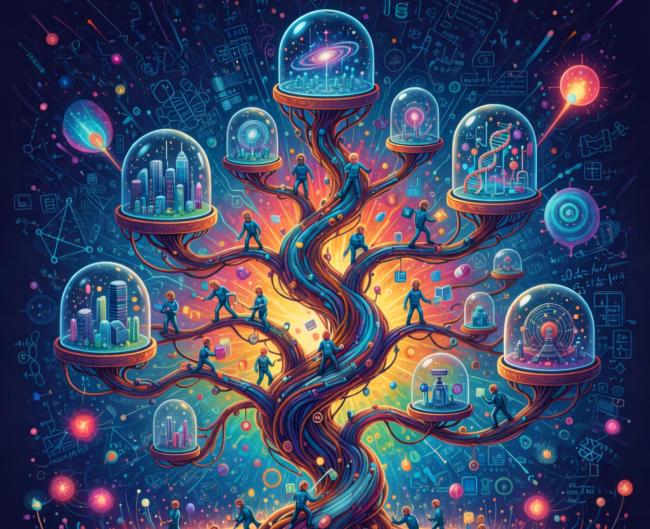
“With additional research, this system could be used to create entire scientific communities of AI agents,” Dr. Clune remarked. He suggested that each new discovery could build on previous findings made by the AI, creating a self-sustaining cycle of scientific inquiry akin to that seen in human scientific communities. Such an evolution could herald a new era of scientific discovery, paving the way for a transformative shift in how research is conducted.
The implications of this technology are profound, as it hints at a future where AI not only aids in scientific exploration but fundamentally reshapes the landscape of research itself. As the AI scientist continues to evolve, it may catalyze a new scientific revolution, fundamentally altering our approach to knowledge creation.
See also AI Study Reveals Generated Faces Indistinguishable from Real Photos, Erodes Trust in Visual Media
 Gen AI Revolutionizes Market Research, Transforming $140B Industry Dynamics
 Researchers Unlock Light-Based AI Operations for Significant Energy Efficiency Gains
 Tempus AI Reports $334M Earnings Surge, Unveils Lymphoma Research Partnership
 Iaroslav Argunov Reveals Big Data Methodology Boosting Construction Profits by Billions