














































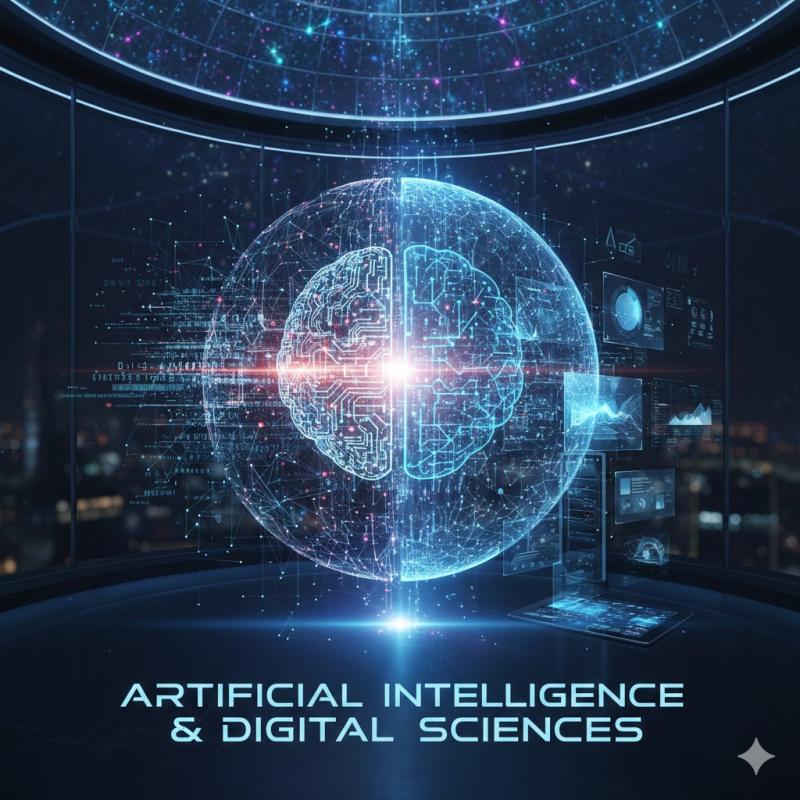
The GCC Artificial Intelligence (AI) and Digital Sciences (DS) Market is projected to experience significant growth at a high compound annual growth rate (CAGR) through the forecasting period from 2024 to 2031. This upward trajectory reflects a robust demand for advanced technological solutions across various sectors, driven by substantial investments and strategic initiatives from key players in the region.
Recent developments underscore the GCC’s commitment to establishing itself as a leader in the tech landscape. In December 2025, the United Arab Emirates (UAE) launched a US$1 billion AI initiative aimed at bolstering digital infrastructure, education, agriculture, and smart services across Africa. This move highlights the UAE’s ambition to extend its technological influence beyond its borders, positioning the nation as a pivotal player in global tech advancement.
In November 2025, the GSMA’s MWC25 Doha conference identified the Middle East and North Africa (MENA) as a key driver of enterprise digital transformation, with the GCC leading in the adoption of AI, 5G, and cloud technologies. These technologies are essential in enhancing smarter healthcare, transportation, and energy systems, which are increasingly vital in a rapidly evolving digital economy.
A report published in October 2025 indicated that the Middle East is emerging as a global nexus for AI data centers, with nations such as Qatar, UAE, and Saudi Arabia heavily investing in scalable and cost-efficient AI infrastructure. This infrastructure is crucial for supporting compute-intensive applications, thus fueling the market’s growth potential.
The market is characterized by the presence of several key players, including IBM, Microsoft, Google, and Amazon Web Services, among others. Their collaborative efforts are anticipated to enhance the overall market dynamics and accelerate technology adoption. As these companies leverage emerging trends, they are well-positioned to capitalize on the burgeoning opportunities emerging within the sector.
In terms of mergers and acquisitions, the GCC technology sector saw a 12% year-over-year increase in activity in the second quarter of 2025, primarily driven by deals in AI, cybersecurity, and cloud services. Notably, private equity is increasingly involved in mid-market AI platforms, indicative of growing investor confidence in the sector. In November 2025, Infosys bolstered its regional capabilities by acquiring AI expertise necessary for transformation within the GCC, mirroring global trends in technology consolidation.
The comprehensive research conducted by DataM Intelligence reveals that the GCC AI and DS market is set to maintain its growth momentum from 2025 to 2032. By 2024, the market had already shown resilience, and with strategic initiatives led by major corporations, it is expected to expand significantly during the forecast period. Companies actively engaging with these shifts are likely to unlock substantial revenue potential.
Growth forecasts highlight Saudi Arabia and the UAE as leading markets, with projected growth rates of 34% and 29%, respectively, fueled by government-backed initiatives and the Vision 2030 program in Saudi Arabia. In comparison, South Africa exhibits an 18% growth rate, driven by fintech innovation and the increased adoption of data analytics. The wider Middle East and Africa region is projected to grow at 19%, supported by smart infrastructure projects and public-sector digitization.
A multitude of recent product launches further illustrates the competitive landscape in the GCC. In November 2025, Infosys introduced its AI-First GCC Model, featuring innovative components designed to accelerate the digital transformation of organizations. Similarly, EY unveiled the Intelligent GCC suite, focused on autonomous intelligence and responsible AI governance, reflecting the region’s emphasis on technological adaptation.
The latest reports indicate that investments in AI have positioned the GCC as a global hub for innovation, with major sovereign funds leading the charge in building the necessary infrastructure. A recent survey by EY noted that Indian GCCs are expected to invest heavily in agentic AI, with an anticipated 58% of their investment directed towards this area by 2030.
As the GCC continues to drive advancements in AI and digital sciences, stakeholders are encouraged to adapt to the evolving landscape. The insights gleaned from comprehensive market analyses will be crucial for businesses aiming to navigate the complexities of this rapidly changing environment. Overall, the GCC’s commitment to harnessing AI technology underscores a pivotal shift towards a more digital and interconnected future.
See also Austria Invests €2.7 Million in Machine Learning for Steelmaking at Johannes-Keppler-Universität
 Stanford AI Tool Predicts 130 Diseases from One Night of Sleep with 80% Accuracy
 FactSet Expands AI Integration, Projects $2.4B Revenue by 2026 Amid Rising Tech Costs
 Latin America Lags in AI and Disinformation Research, Study Reveals Urgent Need for Action
 EchoLeak Exposes Microsoft 365 Copilot Vulnerability, Proving AI Needs New Security Models