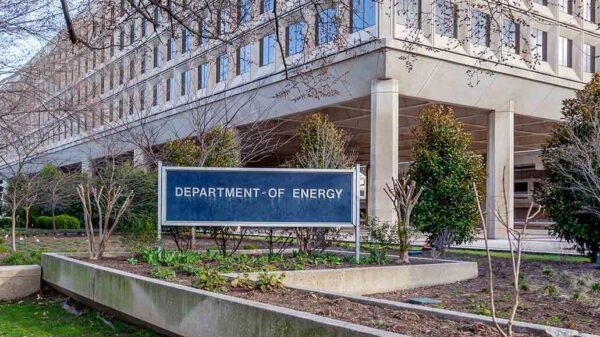













































In an ambitious push to enhance U.S. scientific leadership, the Department of Energy’s (DOE) Genesis Mission is developing a comprehensive platform that integrates the expertise and resources of 17 national laboratories. This initiative aims to streamline access to supercomputers, experimental facilities, models, and datasets, all while leveraging artificial intelligence (AI) to advance energy innovation and bolster research capabilities across various scientific domains.
The National Laboratory of the Rockies (NLR) is playing a pivotal role in this initiative, drawing on its extensive experience in AI research and advanced experimental resources. “Genesis Mission is exciting because this AI platform and capability will really change how science and research and development are done in this country in partnership with the private sector,” said Ray Grout, director of NLR’s Computational Science Center and lead for the Genesis Mission. He emphasized that this platform could expedite DOE’s mission for an affordable and secure energy future.
NLR’s contributions include the development of AI model teams that focus on critical national challenges. These teams are tasked with creating sophisticated capabilities that will be incorporated into the Genesis Mission platform, thus generating scientific breakthroughs that could benefit both researchers and industry.
One of the key challenges is to harmonize the extensive capabilities of the national laboratories into a cohesive framework. The infrastructure partners for the American Science Cloud (AmSC) are working to create a secure, federated cloud environment that integrates the national laboratory resources into the Genesis Mission. “We want to enable AI and productivity at a greater scale. Not every lab needs to build the infrastructure to do that,” said Monte Lunacek, NLR co-lead for AmSC.
NLR is also focused on enhancing the user experience for AI agents, which are integral to making the Genesis Mission platform’s resources accessible. This involves developing multimodal large language models, which can process complex requests through chat interfaces, facilitating user interaction with the platform.
Another aspect of the Genesis Mission is the GridAI model team, which aims to enhance the stability and security of the U.S. power grid using AI. “We’ve been using various versions of machine learning and AI and applying it to solving grid problems for many years,” said Ben Kroposki, NLR lead for the GridAI model team. This collaboration seeks to develop an integrated AI platform capable of conducting contingency analyses and more complex evaluations that involve multiple grid components going offline during severe storms.
In addition, the Genesis Mission aims to accelerate the transition from lab-scale experiments to industrial production through the Accelerating Intelligent Manufacturing of Energy Materials (AIM-EM) model team. This team works to integrate manufacturing considerations earlier in the research process, streamlining the pathway from innovation to commercialization. “NLR is really uniquely positioned because we develop solutions for that valley of death,” said Steven Spurgeon, NLR model team lead for AIM-EM.
The ongoing work on the AIM-EM initiative is set to be bolstered by NLR’s Energy Materials and Processing at Scale (EMAPS) facility, which is expected to be completed in 2027. The facility aims to provide the data necessary for training AI models that can help de-risk technologies in the early stages of research.
Moreover, the Genesis Mission is addressing the complexities of U.S. supply chains for critical minerals and materials. The Critical Minerals and Materials To Unlock Supply AI model team is focused on using AI to optimize extraction and processing workflows. “We not only want to support a stronger critical minerals and materials supply chain for the United States but use this as an opportunity to use AI to help drive innovation in processing that translates to improved materials,” stated Ryan King, NLR lead for the model team.
By unifying supercomputing and AI capabilities from the national laboratory complex, the Genesis Mission aims to solidify U.S. leadership in AI-driven research and development. The initiative is expected to enhance the speed and reliability of research across critical challenges and needs in the country. “When we use and adopt the Genesis Mission platform as a lab, it could put a multiplier on every dollar invested and stewarded by DOE,” Grout concluded.
See also AI Study Reveals Generated Faces Indistinguishable from Real Photos, Erodes Trust in Visual Media
 Gen AI Revolutionizes Market Research, Transforming $140B Industry Dynamics
 Researchers Unlock Light-Based AI Operations for Significant Energy Efficiency Gains
 Tempus AI Reports $334M Earnings Surge, Unveils Lymphoma Research Partnership
 Iaroslav Argunov Reveals Big Data Methodology Boosting Construction Profits by Billions