






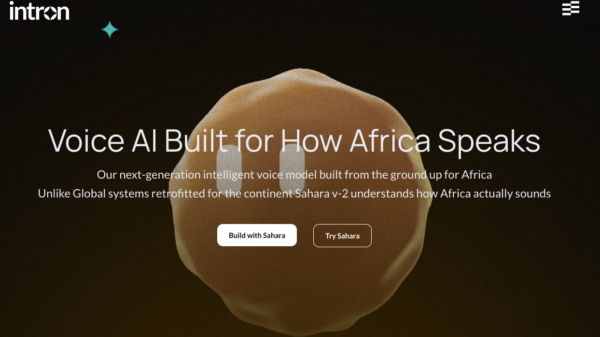








































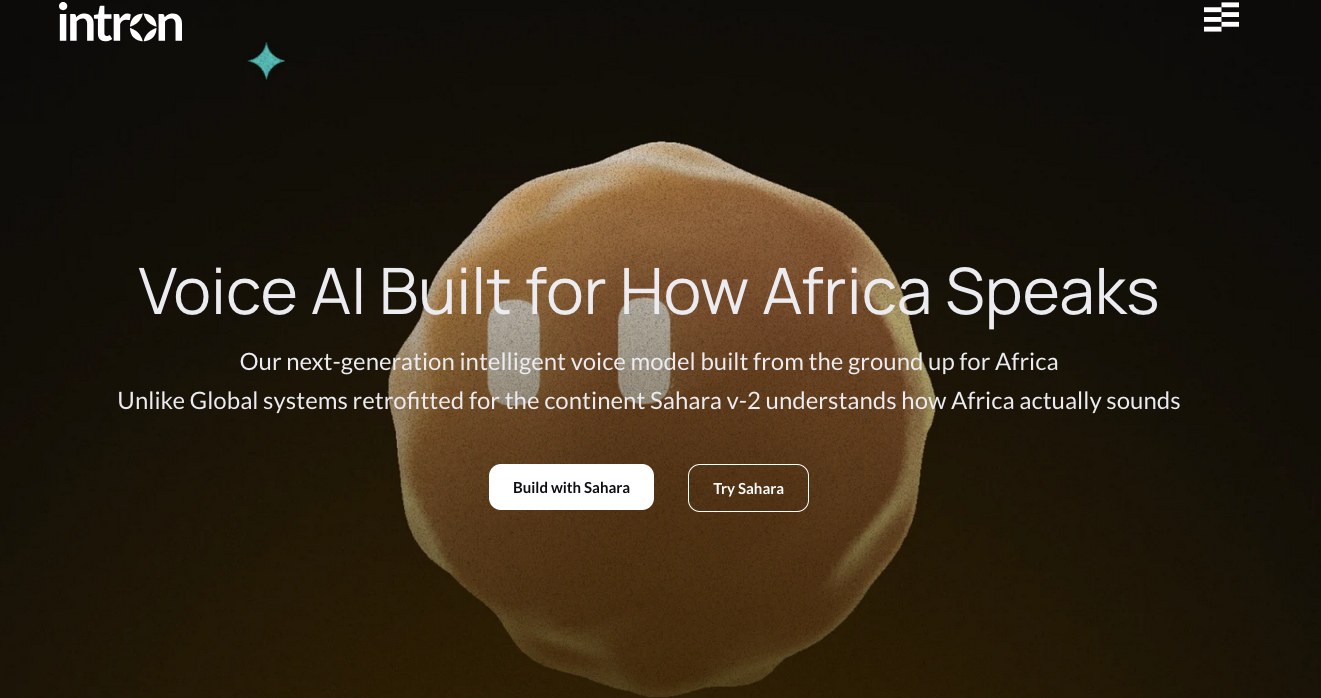
A Nigerian artificial intelligence startup, Intron, has unveiled an upgraded speech recognition platform known as Sahara v2, tailored for African languages and speech patterns. Announced recently, this enhanced version aims to revolutionize voice AI technology by supporting 57 languages, including 23 African languages and over 500 distinct accents from the continent.
To accurately reflect real-world communication nuances, Sahara v2 has been trained on more than 14 million audio recordings sourced from over 40,000 speakers across Africa and its diaspora. Intron’s objective is to bridge the gap created by predominantly Western training datasets, which can misinterpret African names, phrases, and tonal expressions.
The launch will include newly integrated African languages such as Hausa, Yoruba, Igbo, Swahili, isiZulu, Kinyarwanda, Twi, Luganda, Wolof, Shona, Amharic, and African French. Notably, Sahara v2 will feature the world’s first Swahili-English automatic speech recognition (ASR) model, designed to effectively handle code-switching—a phenomenon where speakers alternate between languages during conversation.
This innovative platform is optimized for diverse sectors, including healthcare, legal services, financial industries, and telecommunications. It promises improved recognition of African names, locations, and specific terminologies, enhancing functionality in applications such as voice banking, medical dictation, call center automation, and legal transcription. Intron’s technology is positioned to enable businesses to accurately capture spoken interactions.
Intron was founded in 2020 by Tobi Olatunji and Olakunle Asekun in Lagos, with the mission of developing AI systems that better understand Africa’s linguistic diversity. The company’s focus extends to creating robust text-to-speech and speech-to-text infrastructure, catering to industries that require precision in capturing spoken language. The launch of Sahara v2 represents a significant step in advancing voice recognition technology to meet the unique needs of African users.
The introduction of Sahara v2 not only highlights the potential of AI to cater to underrepresented languages but also indicates a broader trend towards inclusivity in technology. As companies like Intron continue to innovate, the implications for improved communication tools across Africa are profound, providing greater access to information and services in languages that resonate with local populations.
In a world increasingly driven by digital engagement, platforms like Sahara v2 stand to play a crucial role in bridging communication gaps, fostering connections among diverse linguistic communities, and empowering individuals through technology tailored to their unique speech patterns. As the landscape of AI continues to evolve, the significance of products that prioritize cultural and linguistic relevance cannot be overstated.
See also AI Study Reveals Generated Faces Indistinguishable from Real Photos, Erodes Trust in Visual Media
 Gen AI Revolutionizes Market Research, Transforming $140B Industry Dynamics
 Researchers Unlock Light-Based AI Operations for Significant Energy Efficiency Gains
 Tempus AI Reports $334M Earnings Surge, Unveils Lymphoma Research Partnership
 Iaroslav Argunov Reveals Big Data Methodology Boosting Construction Profits by Billions