


















































Concerns over the environmental and economic impact of AI data centers are mounting in Louisiana as major tech companies like Meta and Amazon expand their operations in the state. The Louisiana Public Service Commission’s approval of a new initiative in December 2022 will allow utility ratepayers to potentially shoulder much of the cost associated with powering these energy-intensive facilities.
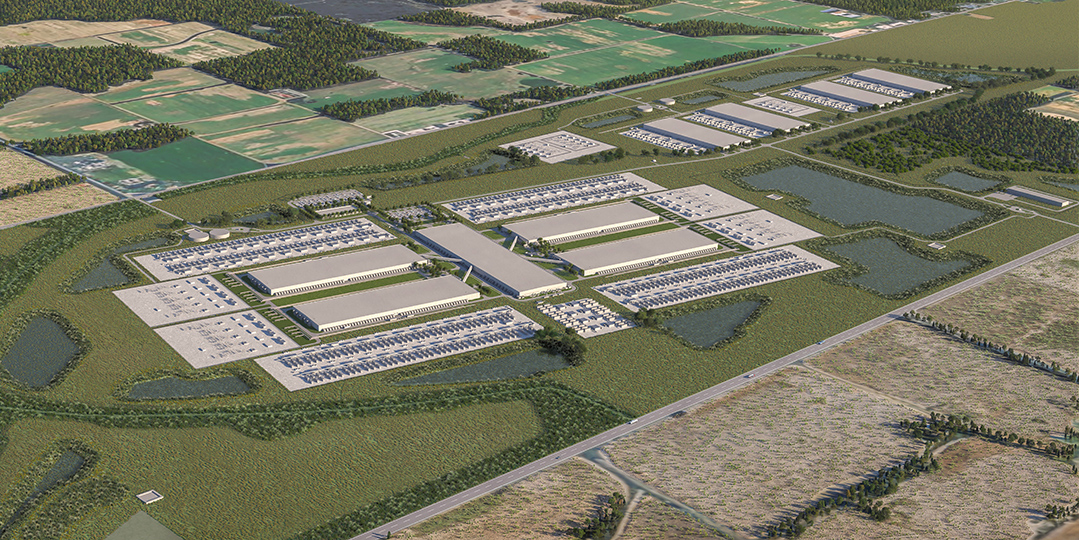
The initiative, dubbed the Lightning Amendment, streamlines the process for utility companies to construct power plants catering to large customers, many of which are AI data centers, according to the nonprofit newsroom The Lens. Meta is currently developing its Hyperion AI data center in Richland Parish, covering a staggering 2,500 acres. Recent reports indicate that Meta has acquired an additional 1,400 acres adjacent to this site, making the combined area more than twice the size of the Louis Armstrong New Orleans International Airport.
In further developments, Louisiana Economic Development announced last year that a $10 billion Hut 8 AI data center will be established in West Feliciana Parish. Additionally, the Shreveport Times reported that Amazon has selected Caddo and Bossier Parishes for its own $12 billion data centers. Critics like Brian Snyder, a professor of environmental sciences at LSU, have raised alarms about how much energy these data centers consume and their implications for local residents.
Snyder highlighted that many residents of Richland Parish, who do not utilize AI, may still end up covering some of the costs associated with these data centers. “Some of those places might want the jobs that come from that, but the people should get a say, in my opinion, about whether they want the economic development that comes with this,” he stated. This sentiment underlines the tension between local economic benefits and community concerns over environmental impacts.
While these AI data centers pose challenges, they also present opportunities for innovation. Mayank Tyagi, an LSU professor of petroleum engineering, is leveraging AI to tackle issues within the petroleum and clean energy sectors. His current work involves analyzing data for carbon capture and storage projects using generative AI to reconstruct seismic images, which are vital for monitoring these sites.
Tyagi has also developed a gas kick detection machine, employing sequence prediction techniques to enhance safety in offshore drilling operations. “When you do the drilling, not only do you want to drill safely, but you want to do it efficiently, so it can save some money for the company,” he explained.
Similarly, Professor Supratik Mukhopadhyay, also from LSU, integrates AI into drug discovery and wildfire prevention. He has utilized AI to develop treatments for COVID-19 and antibiotic resistance, and is currently exploring drug candidates for diseases like ALS. “AI is a transformative technology. It is changing the way our civilization operates,” Mukhopadhyay remarked.
However, both professors acknowledge the potential pitfalls of AI. Mukhopadhyay cautioned that AI systems can yield biased results if their underlying data is flawed, and highlighted the environmental consequences of running large data centers, including their significant energy and water consumption.
Tyagi elaborated on the energy demands of AI data centers, emphasizing that they require a reliable power source with minimal downtime. While renewable energy sources like solar and wind were initially considered, their intermittent nature often makes them less viable, leading many data centers to rely primarily on natural gas, the most dependable electricity generation source in the U.S. “The oil and gas industry and state policies in Louisiana are favorable for these large data centers,” he said.
Tyagi believes that communities hosting these data centers should have a say in the decision-making process. “Should they be on the main utility grid versus their own micro grid? That’s a very good question,” he noted. He also emphasized the ethical responsibility of large tech firms to address the challenges they may create.
As these developments unfold, the balancing act between harnessing AI’s potential and mitigating its adverse effects on local communities and environments continues to gain urgency. With a significant push towards AI integration in various sectors, stakeholders will need to engage in meaningful dialogues to ensure that the benefits are equitably shared while minimizing the impact on vulnerable populations.
See also AI Study Reveals Generated Faces Indistinguishable from Real Photos, Erodes Trust in Visual Media
 Gen AI Revolutionizes Market Research, Transforming $140B Industry Dynamics
 Researchers Unlock Light-Based AI Operations for Significant Energy Efficiency Gains
 Tempus AI Reports $334M Earnings Surge, Unveils Lymphoma Research Partnership
 Iaroslav Argunov Reveals Big Data Methodology Boosting Construction Profits by Billions