














































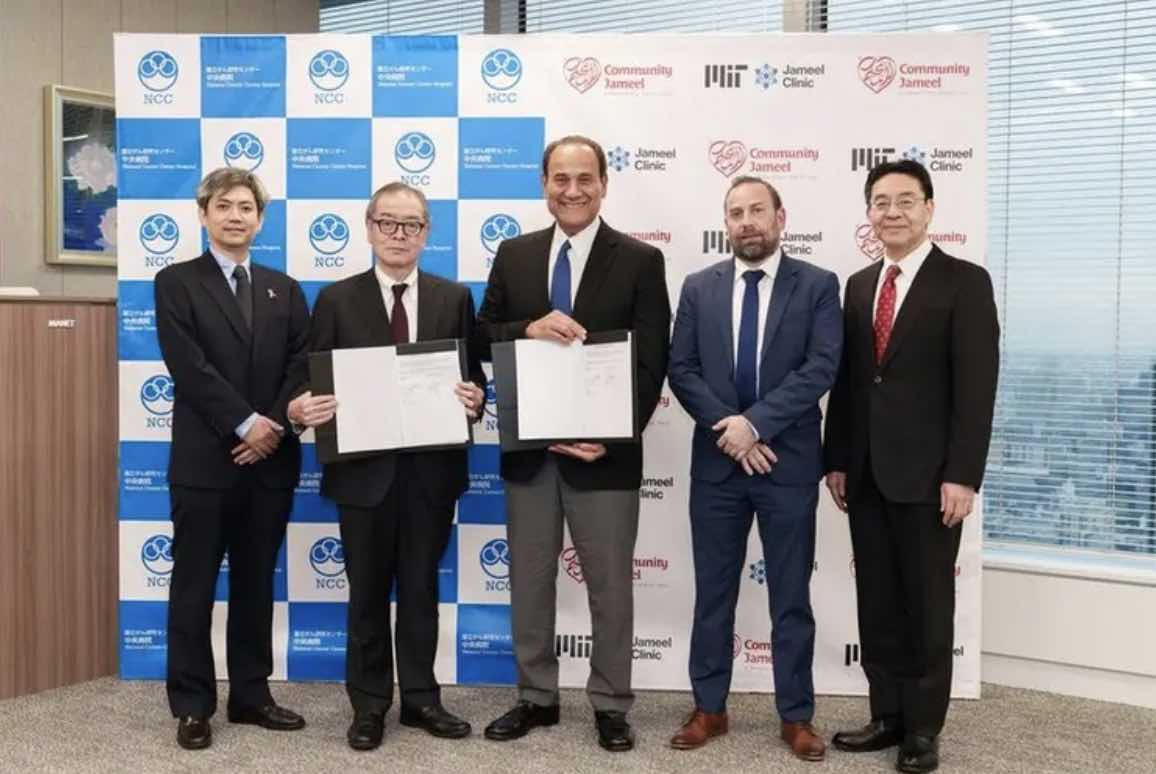
MIT Jameel Clinic has partnered with Japan’s National Cancer Center Hospital to assess Mirai, an artificial intelligence tool designed to predict breast cancer risk from mammography images. This collaboration aims to evaluate the tool’s capabilities in predicting the likelihood of developing breast cancer up to five years before diagnosis, marking a significant advancement in cancer care.
Breast cancer is the most prevalent cancer among Japanese women, accounting for about 23% of all female cancer cases. Annually, approximately 98,782 women receive diagnoses, with an estimated 16,000 deaths attributed to the disease. Early detection significantly increases the five-year survival rate, which exceeds 90% when cancer is identified early.
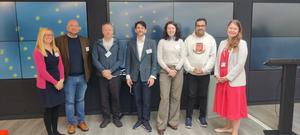
The announcement of the collaboration took place during a ceremony attended by Mohammed Abdul Latif Jameel, founder and chairman of Community Jameel, and Dr. Yasuyuki Seto, director of the National Cancer Center Hospital. Community Jameel was co-founded in 2018 with the Massachusetts Institute of Technology to promote machine learning applications in healthcare.
“Mirai is a powerful tool that harnesses AI to improve cancer care for women around the world,” said Mohammed Jameel. “With the Jameel family’s deep and longstanding connection to Japan, we are delighted that the MIT Jameel Clinic and Community Jameel are collaborating with the National Cancer Center Hospital to open the way for Mirai to improve care for Japanese women at risk of breast cancer.”
The study will evaluate mammography data collected between 2013 and 2024 from patients screened at the National Cancer Center Hospital and Yotsuya Medical Cube. Mirai will generate risk scores for each patient over a one-to-five-year horizon. Researchers will then compare these predictions against actual outcomes to evaluate accuracy within the Japanese clinical context.
Mirai has already been validated on more than two million mammograms across 72 hospitals in 23 countries. Developed at the MIT Jameel Clinic, it represents a leading initiative in artificial intelligence and health research at the institute.
Current Japanese guidelines advise mammography screening every two years for women aged 40 and older. While mammograms can identify small lumps and microcalcifications not detectable through self-examination, their interpretation primarily depends on visual assessment and clinical expertise.
“This study has the potential to contribute to improving women’s health by predicting an individual’s future risk of breast cancer using large-scale mammography screening data from the past and present,” stated Dr. Kan Yonemori, director of the Department of Medical Oncology at the National Cancer Center Hospital. Dr. Yonemori emphasized the commitment of the Japanese team to advancing this research in collaboration with the MIT Jameel Clinic.
Regina Barzilay, AI faculty lead at the MIT Jameel Clinic, expressed optimism that the research could inspire new approaches to breast cancer screening and treatment in Japan. Barzilay has overseen the development of several clinical AI tools at the Jameel Clinic, known for significant breakthroughs such as the antibiotics halicin and abaucin.
If validated, the findings from this study could facilitate risk-based screening programs in Japan. Individuals identified as higher-risk might receive more frequent monitoring, while those at lower risk could avoid unnecessary testing. This personalized approach contrasts with the current one-size-fits-all screening schedules.
Mohammed Jameel, who holds an honorary knighthood from Queen Elizabeth II for his philanthropic contributions, has forged extensive partnerships between his family’s organizations and leading research institutions. Community Jameel supports several centers at MIT, including the Abdul Latif Jameel Poverty Action Lab, whose co-founders received the 2019 Nobel Prize in Economics.
The Jameel Clinic is part of a broader array of health-focused initiatives supported by the Jameel family, which also includes the co-founding of the Jameel Institute with Imperial College London—known for critical modeling of COVID-19 spread during the pandemic.
Japan has particular significance for the Jameel family, given their long-standing business ties. Abdul Latif Jameel, the diversified network of businesses chaired by Mohammed Jameel, has served as the authorized distributor for Toyota in Saudi Arabia since 1955.
The current study is backed by Community Jameel and Jameel Corporation. Researchers will assess whether Mirai’s predictive abilities, shown to be effective in Western populations, can be similarly beneficial for Japanese women, who may have different breast density patterns and cancer risk profiles.
Since its establishment in 1962, the National Cancer Center Hospital has been a prominent institution in cancer treatment and research, conducting various trials including industry-sponsored, investigator-initiated, first-in-human, and international collaborative clinical trials. While the terms of the collaboration remain undisclosed, results from the mammography analysis are anticipated to influence future decisions regarding the implementation of AI-supported screening programs in Japan.
See also CeriBell Achieves FDA Breakthrough Status for AI-Powered LVO Stroke Detection Solution
 Reinforcement Learning Transforms Resource Management in Communication Networks
 AI Personalizes Cancer Treatment: Insights from David R. Spigel of Sarah Cannon Research Institute
 AI Futures Adjusts Timeline: Superintelligence Expected by 2034 Amid Safety Concerns
 BCC Research Reveals 30% CAGR for Edge AI, Generative AI, Quantum Tech Through 2030