


















































One in four Brits would trust AI over their doctor if the two gave different medical advice, according to new research. A survey by Medichecks found that more than half of respondents are turning to AI for medical advice, with 55.7 percent indicating they have already used tools such as ChatGPT, and an overwhelming 95.7 percent expressing willingness to do so again.
When faced with conflicting advice from AI and their general practitioner, 41.7 percent of respondents admitted they would not know whom to believe, while 23.8 percent stated they would favor AI’s recommendations over those of their doctor. This raises important questions about the evolving role of AI in healthcare.
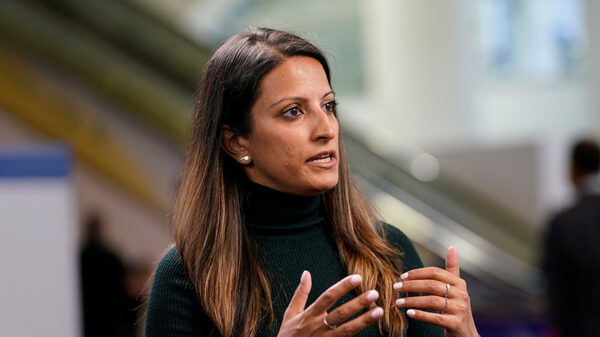
Dr. Natasha Fernando, medical director at Medichecks, commented on the implications of these findings. “AI can be a helpful tool for learning more about your health or preparing questions before a medical appointment, but it should never replace proper medical care,” she said. She emphasized that a GP’s expertise involves considering a patient’s full medical history and providing personalized assessments that AI cannot replicate.
“Medicine is rarely black and white. Two people can present with very similar symptoms but require completely different care,” Dr. Fernando noted. AI lacks the ability to interpret context—such as a patient’s lifestyle and subtle warning signs—that a clinician would assess during a consultation.
The survey revealed generational differences in AI usage for medical queries, with nearly three-quarters of individuals aged 25 to 34 having relied on AI, compared to just 34.9 percent of those over 75. Gender disparities were also evident, as 63.7 percent of men reported using AI for health advice, versus 50.9 percent of women, who expressed concerns about the decreasing personal aspect of healthcare in a digital age.
Looking ahead, more than half of the respondents (51.7 percent) believe that AI will surpass doctors in making accurate health predictions by 2030, while only 19.1 percent maintain greater trust in human physicians. Current research indicates that generative AI systems can achieve diagnostic accuracy levels similar to non-expert doctors, averaging around 52 percent. In some complex cases, specialist AI diagnostic tools have reported accuracy rates as high as 85 percent.
Despite the increasing public reliance on AI, the technology is already integrated into various aspects of modern healthcare. In England, AI aids in stroke units to analyze brain scans, while radiology departments incorporate it into clinical practice. An AI system named Mia, utilized to analyze mammograms at NHS Grampian, successfully reviewed scans of over 10,000 women, identifying every case of breast cancer detected by radiologists and discovering 11 additional cases initially missed.
However, the technology is not without its pitfalls. Google’s Med-Gemini model, for example, incorrectly identified abnormalities in a non-existent body structure known as the “basilar ganglia,” showcasing the risks associated with AI “hallucinations,” where incorrect information is generated.
Dr. Fernando cautioned against over-reliance on AI, stating, “AI does not take responsibility for the outcome of your care. Doctors do. That accountability is fundamental in medicine.” She advised that for worrying symptoms, the safest course of action is always to consult a healthcare professional capable of a comprehensive assessment.
Looking to the future, Dr. Fernando posited that while AI may serve as an increasingly valuable tool in healthcare—particularly for analyzing large datasets and aiding decision-making—it should work in conjunction with human clinicians rather than replace them. “AI can help people become more informed about their health, which is positive,” she concluded, stressing that AI should serve as a starting point for discussions with healthcare professionals rather than the final authority.
See also AI Study Reveals Generated Faces Indistinguishable from Real Photos, Erodes Trust in Visual Media
 Gen AI Revolutionizes Market Research, Transforming $140B Industry Dynamics
 Researchers Unlock Light-Based AI Operations for Significant Energy Efficiency Gains
 Tempus AI Reports $334M Earnings Surge, Unveils Lymphoma Research Partnership
 Iaroslav Argunov Reveals Big Data Methodology Boosting Construction Profits by Billions