










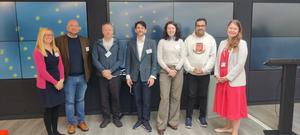









































A major UK study examining how local councils are beginning to use AI has revealed widespread gaps and progress across the country, according to new research led by Heriot-Watt University and GoLLM. The eighteen-month study analyzed two hundred and eight councils across England, Scotland, Wales, and Northern Ireland to assess their readiness to adopt AI in public services.
The report, titled AI Readiness of UK Local Authorities 2025, presents a mixed picture of national readiness, with some councils quickly building on their data and deploying targeted AI tools, while many others lag behind, still laying basic digital and data foundations. This research, conducted by Heriot-Watt’s Intelligent Automation Systems Lab (IAS), was facilitated by partnerships with organizations including the Association for Public Service Excellence (APSE) and the Society for Innovation, Technology and Modernisation (Socitm).
Dr. Luciana Blaha, head of the IAS lab at Heriot-Watt University’s Edinburgh Business School, noted that “our findings show a sector that is increasingly interested in using AI to improve public services, but one that is moving at very different speeds.” The study highlighted significant differences between regions; for instance, councils in Scotland benefited from a coordinated national approach and robust partnerships with universities, resulting in stronger data foundations and early AI adoption.
In contrast, English councils varied widely in their progress, with advanced councils operating alongside those just starting out. In Wales, the focus remains on establishing basic data and digital capabilities, while councils cautiously test tools like chatbots under a supportive national framework. Meanwhile, Northern Ireland is starting to explore AI applications, but is hindered by funding issues and existing digital limitations.
Financial support for the study included over £7,000 from the Innovation Voucher Programme, managed by Interface, along with £3,000 from the IAS Lab. GoLLM contributed additional in-kind support, enabling a team of eight researchers to complete the work. Following the study, GoLLM has invested over £6,000 in research analysts to further support the project.
Dr. Blaha emphasized the disparity among councils, affected by leadership priorities and legacy systems, which complicates the journey beyond initial experimentation with AI. “Despite this, we saw encouraging examples where AI was introduced in ways that strengthened services and supported staff rather than replaced them,” she added.
The report documented early instances of AI deployment, with various councils across the UK leveraging different tools to enhance services and alleviate staff workloads. In Scotland, councils such as Fife and Glasgow City utilize AI for waste management, employing automated sorting and advanced robotics to streamline materials processing. In England, councils like Surrey County are advancing with practical applications, such as AI-enabled pothole detection that aids road teams in identifying issues more swiftly and safely.
Welsh councils, including Bridgend County Borough, are among the early adopters of AI-powered chatbots, illustrating how simple technologies can yield immediate benefits. In Northern Ireland, Belfast City Council is testing generative AI to enhance communication and frontline services, while councils such as Lisburn & Castlereagh City and Mid & East Antrim Borough are employing automation to optimize routine internal processes.
Daniel Shorr, CEO of GoLLM and co-author of the report, remarked that “this research turns a complicated landscape into a clear starting point for action.” The findings indicate that AI readiness is not solely based on size; councils that are advancing are characterized by strong leadership, disciplined governance, strategic clarity, and robust data capabilities. These elements are also foundational to GoLLM’s feedback-to-insights platform, D.A.V.E. (Dynamic Analytics Visualisation Engine), which converts public consultation data into actionable reports.
The report advocates for the enhancement of digital foundations, emphasizing the importance of improving data quality, modernizing outdated systems, and fostering shared digital platforms. It also calls for more effective national coordination, enhancement of workforce skills, and stronger collaboration among councils, sector bodies, and universities to facilitate safe and confident AI adoption.
APSE expressed its support for the report, stating, “the findings reflect what we hear from our members regularly: councils are keen to innovate, but progress depends on strong governance and organizational capacity.” A spokesperson for Socitm noted that the enthusiasm for AI is increasing within local government, yet many councils continue to encounter practical challenges, including legacy systems and data silos.
Ultimately, the report serves as a timely reminder of the current state of AI in local government and outlines necessary steps for councils to transition from pilot programs to meaningful, scalable improvements that can benefit their communities. Further insights into this evolving landscape will be shared by Dr. Blaha and her team during the upcoming AI Public Sector week on March 17 and at a member-only session for APSE on March 24.
See also AI Models from Anthropic, Google, OpenAI, and xAI Show Compliance with Academic Misconduct
 Microsoft Appoints Peter Lee as President of Microsoft Science to Accelerate AI-Driven Research
 South Korea’s MSIT Launches AI Recommendation Service for IRIS Research Evaluators
 AI Study Reveals Generated Faces Indistinguishable from Real Photos, Erodes Trust in Visual Media
 Gen AI Revolutionizes Market Research, Transforming $140B Industry Dynamics