















































A significant shift is underway in the AI hardware landscape as a Chinese startup emerges with a promising competitor to NVIDIA’s dominant chips. Zhonghao Xinying, also known as CL Tech or Chipltech, has unveiled a General Purpose Tensor Processing Unit (GPTPU) that it claims is not only considerably cheaper but also boasts a performance increase of up to 1.5 times that of NVIDIA’s A100 GPU, which launched in 2020.
This new tensor chip aims to rival foreign AI hardware, including NVIDIA’s graphics cards and Google’s custom-built TPUs, for tasks like model training and live inferencing. The South China Morning Post reported that while the GPTPU may still lag behind its international counterparts, it signifies China’s growing capabilities in the AI sector and a potential pathway toward semiconductor self-sufficiency.
The ‘Ghana’ chip, as it is referred to, was developed by Yanggong Yifan, whose credentials include studying electrical engineering at Stanford and the University of Michigan, along with experience at Google and Oracle, where he contributed to the design of multiple generations of TPUs. Co-founder Zheng Hanxun also brings a wealth of experience from Oracle and Samsung Electronics, enhancing the startup’s credibility in a field that demands cutting-edge expertise.
One of the critical selling points of the new GPTPU is its design, which the developers assert is entirely based on self-developed intellectual property. This claim of independence from Western technology aims to ensure both security and long-term sustainability. “Our chips rely on no foreign technology licenses, ensuring security and long-term sustainability from the architectural level,” Zhonghao Xinying stated, reflecting a broader recognition of the intertwined nature of national security and semiconductor supply.
The company claims that the ‘Ghana’ chip can achieve not only faster speeds but also a reduction in power consumption by 25%, lowering it to 75% of that required by comparable foreign GPU hardware. If verified, this achievement would be significant; however, such performance enhancements are not unusual for Application-Specific Integrated Circuits (ASICs), which are designed for specific tasks and can outperform more versatile chips in those areas.
While a 1.5 times speed increase over the A100 positions the ‘Ghana’ chip as a formidable contender, it still trails behind NVIDIA’s more recent offerings, particularly the Hopper architecture and the latest Blackwell Ultra hardware. However, for a Chinese market often reliant on importing older GPUs, this domestic alternative may fulfill a critical need.
This development comes at a time when the AI chip sector is witnessing notable changes. NVIDIA has long been the leading force, but competition is intensifying. Google’s decision to rent and sell its proprietary TPU silicon to Meta has opened the door for alternatives, and China’s drive for domestic chip manufacturing reflects a similar trend. The Chinese government is actively promoting this initiative through financial incentives and market quotas aimed at reducing reliance on foreign technology.
Graphics Processing Units (GPUs) from NVIDIA and AMD are expected to maintain their status as the primary tools for AI training in the near term. Yet, the rise of ASICs like Google’s TPUs and potentially Zhonghao Xinying’s new chips may present an attractive option for businesses looking to diversify away from NVIDIA’s market dominance. Additionally, ongoing supply chain disruptions, rising memory costs, and trade restrictions may compel firms to consider these new offerings, even if they are yet unproven.
The launch of Zhonghao Xinying’s GPTPU underscores a broader shift towards increased self-reliance in technology development, particularly in China. As nations grapple with geopolitical tensions and supply chain vulnerabilities, the race for semiconductor independence is likely to accelerate. In this evolving landscape, the emergence of local alternatives like the ‘Ghana’ chip could not only reshape market dynamics but also signify a pivotal moment in the future of global AI hardware.
See also Mastiska Secures $10M Seed Funding to Develop Sovereign AI Semiconductor Solutions
 eMazzanti Technologies Launches eBot: AI Assistant for 24/7 IT Support with Microsoft Copilot Studio
 ESDS Launches Sovereign-Grade GPU-as-a-Service for Large-Scale AI Workloads
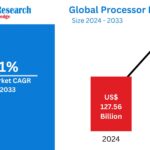 Global Processor Market Set to Reach $210.26B by 2033, Driven by AI and Cloud Demand
 One Stop Systems Launches PCIe 6.0 Products, Valuation Estimate at $8 Amid 156% Shareholder Return