














































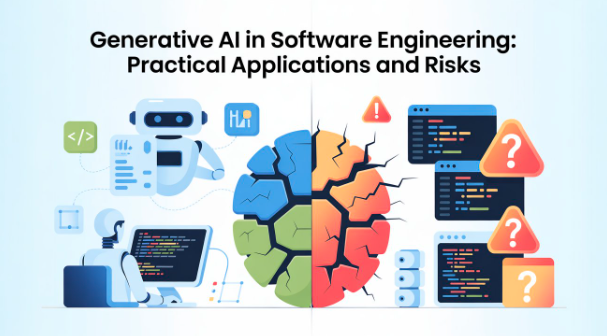
Generative AI is poised to revolutionize software development, significantly reducing the time required to create applications from months to hours. An EY India survey predicts that within the next five years, the technology will boost productivity in the software sector by 43-45%, driven by a growing number of IT projects utilizing these innovative tools. However, while the potential benefits of generative AI are substantial, they come with inherent risks that must be carefully managed.
Software engineering has traditionally encompassed labor-intensive tasks such as coding, debugging, documentation, and testing. As competition intensifies, development teams are under pressure to deliver products more swiftly while maintaining quality. Generative AI can aid in this effort by providing tools that assist developers in real time. Currently, these AI assistants are capable of offering code suggestions, improving legacy code, automating test cases, drafting application coding guidelines, summarizing complex codebases, and identifying potential errors within applications. Such capabilities enable developers to expedite the software development cycle and bring ideas to market faster.
Numerous AI companies are now focusing on developing advanced tools that integrate intelligent development environments (IDEs) and automated pipelines to enhance code quality, speed, security, and optimize development workflows. As organizations adopt these technologies, they must also consider how generative AI can add value to their operations.
One of the most significant advantages of generative AI is its ability to automate routine tasks and simplify complex workflows. This leads to substantial productivity gains, reduced costs, and accelerated innovation. For instance, AI tools can rapidly generate initial code structures, enabling both startups and large enterprises to test ideas quickly before committing extensive resources. Additionally, generative AI streamlines the testing phase by providing immediate unit tests and alerts for edge cases, thereby enhancing quality assurance.
Moreover, AI can facilitate documentation and knowledge sharing by translating complex systems into accessible language, which aids in team collaboration and onboarding of new employees. It also plays a critical role in refactoring and optimizing outdated code, suggesting more modern patterns to improve performance. With skilled engineers guiding the process, these AI tools not only increase speed but also enhance the quality of software produced.
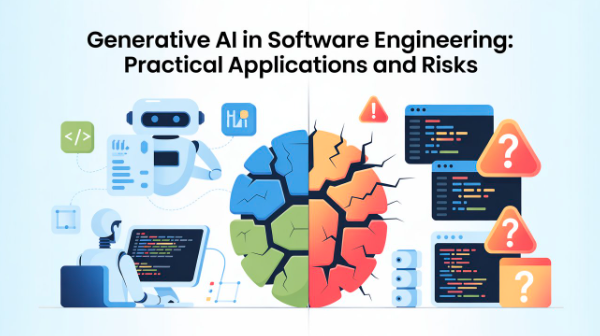
Nevertheless, the integration of generative AI into software engineering poses several risks. AI-generated code may not always be secure, as it can include outdated libraries and insecure coding practices, potentially introducing vulnerabilities into production systems. Furthermore, the AI models themselves are often trained on vast amounts of publicly available source code, raising compliance concerns regarding copyright and licensing. Organizations must ensure that any generated code adheres to legal standards before deployment.
Another concern is the potential over-reliance on AI, which could diminish a developer’s problem-solving abilities and architectural skills. This risk is particularly pronounced in high-stakes fields such as banking and healthcare, where engineering oversights can result in significant consequences.
To navigate these challenges responsibly, organizations should adopt a balanced approach to integrating generative AI into their software engineering processes. Keeping experienced developers involved in oversight is crucial, as they must verify AI outputs to ensure quality and security. Establishing clear usage policies for AI tools, outlining security protocols, and defining approved platforms are essential steps in mitigating risks.
Investing in training is equally important. Developers should be equipped with the knowledge to effectively utilize generative AI, understanding when to trust its output and recognizing its limitations. Security testing must not be an afterthought; all AI-generated code should meet the same rigorous standards as code written by humans. This is why leading software development firms are not viewing AI as a substitute for human engineers but rather as a complement that requires structured guidelines for effective use.
Looking ahead, generative AI is not merely a passing trend but an integral component of the software development landscape. Future advancements may see AI contributing to system architecture design, code debugging, self-healing environments, and smarter DevOps that operate autonomously. The key to harnessing the full potential of generative AI lies in selecting the right technology partners and ensuring that engineers are adept at leveraging AI strategically to minimize risks.
See also Tesseract Launches Site Manager and PRISM Vision Badge for Job Site Clarity
 Affordable Android Smartwatches That Offer Great Value and Features
 Russia”s AIDOL Robot Stumbles During Debut in Moscow
 AI Technology Revolutionizes Meat Processing at Cargill Slaughterhouse
 Seagate Unveils Exos 4U100: 3.2PB AI-Ready Storage with Advanced HAMR Tech