


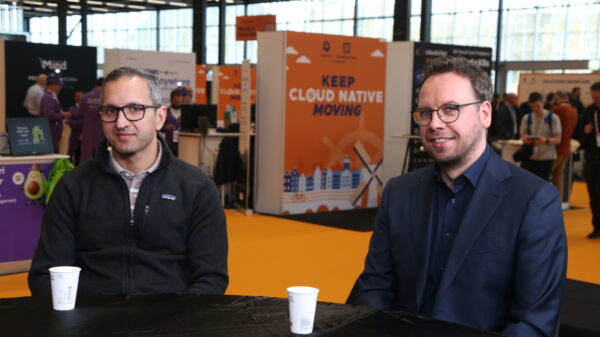













































Artificial intelligence (AI) is seen as a transformative force in healthcare, where precision and speed can significantly affect patient outcomes. However, despite advancements in models and algorithms, many healthcare AI initiatives struggle to move beyond pilot programs. In a recent interview with iTNews Asia, Dr. Ilya Burkov, Global Head of Healthcare at NVIDIA-backed Nebius, discussed the challenges that hinder the scaling of AI in healthcare, emphasizing that inadequate infrastructure often stands as a critical barrier between promising prototypes and real-world clinical applications.
Burkov explained that the primary reason many AI projects stall in healthcare is not due to flawed models, but rather insufficient infrastructure. “The jump to production fails when systems designed for small-scale exploration are forced to handle real-world volatility. What works in controlled research settings often collapses under the demands of clinical environments,” he stated. He noted that initial AI projects can sustain manual processes and limited datasets, but the complexities of real-world healthcare require systems capable of repeatability, parallel experimentation, and continuous validation—capabilities that many existing infrastructures cannot support.
This inadequacy creates a bottleneck where innovation slows, not because the scientific principles are flawed, but due to the systems’ inability to keep up with the demands of the field. Burkov highlighted GPU-native cloud architectures as a potential solution to these limitations. “Medical teams historically constrained their research to fit computational limits, working with smaller datasets or accepting long processing delays. GPU-native systems eliminate this by enabling thousands of calculations simultaneously rather than sequentially,” he explained. This shift allows healthcare organizations to move beyond delayed, retrospective analysis, enabling them to generate insights from live patient data and transitioning clinical decision-making from reactive to proactive.
Burkov underscored that the advantages of advanced AI infrastructure extend beyond speed; they also open up entirely new avenues for scientific discovery. “Infrastructure doesn’t just accelerate workflows, it changes what’s scientifically possible,” he stated. He cited epigenetics research as an example, where trillions of chemical markers are analyzed to understand gene regulation. With specialized GPU environments, researchers can train foundation models that uncover disease signals that remain hidden in traditional approaches. Similarly, in drug discovery, generative AI systems can evaluate tens of millions of cells across thousands of genetic variables simultaneously, facilitating the precise identification of cellular failures and paving the way for highly personalized therapies.
The drawbacks of inadequate infrastructure become more apparent as datasets expand. “In drug discovery, researchers often reach a point where they can no longer test multiple hypotheses in parallel. What begins as rapid iteration turns into a sequential process dictated by hardware constraints,” Burkov noted. This scenario compels teams to adopt more conservative approaches, stifling innovation. “The science remains sound, but the discovery process becomes limited by the system’s inability to scale,” he added.
As AI models grow increasingly complex, Burkov emphasized the necessity for strategic infrastructure planning. He advised organizations to concentrate on value-driven deployment, stating that successful teams apply computational discipline by aligning resources with specific clinical outcomes rather than simply chasing model size. Balancing performance, cost, and security is crucial and should be treated as core design principles. With careful planning, organizations can scale AI workloads in a predictable manner without incurring compliance risks or operational strain.
While hybrid and multi-cloud strategies are often touted for their flexibility, Burkov cautioned that their real-world application in healthcare is not straightforward. “The challenge is operational coordination. Without clear role definitions, hybrid environments can slow research instead of accelerating it,” he warned. He also discussed the “overlooked readiness gap,” noting that organizations frequently underestimate the complexity of preparing data for AI. “High-volume data is useless without proper labeling and context. This requires specialized expertise that many teams lack,” he said. Moreover, he pointed to the “assurance burden”—the ongoing need to revalidate models as patient populations and clinical conditions evolve.
Burkov concluded that workflow integration is vital for success. “Even the most accurate model will fail if it disrupts clinical practice,” he remarked. Advances in AI infrastructure are democratizing access for smaller labs, allowing them to test ambitious ideas without the need for substantial computing systems. This shift is reflected in funding trends, with AI-driven ventures capturing a growing share of digital health investment across the Asia-Pacific region. However, Burkov cautions against assuming a level playing field, as larger institutions continue to hold advantages in clinical validation and deployment.
In the next five years, Burkov anticipates significant advances in areas constrained by feedback speed. “Drug discovery will see immediate impact as infrastructure shortens the loop between hypothesis and validation,” he stated. Medical imaging is also poised for evolution, moving from static snapshots to adaptive systems that update as clinical protocols change. Across healthcare, the speed of learning will be the defining factor; the faster systems can learn from new data and be safely reviewed, the quicker AI will become an essential tool in care delivery.
See also Tesseract Launches Site Manager and PRISM Vision Badge for Job Site Clarity
 Affordable Android Smartwatches That Offer Great Value and Features
 Russia”s AIDOL Robot Stumbles During Debut in Moscow
 AI Technology Revolutionizes Meat Processing at Cargill Slaughterhouse
 Seagate Unveils Exos 4U100: 3.2PB AI-Ready Storage with Advanced HAMR Tech