







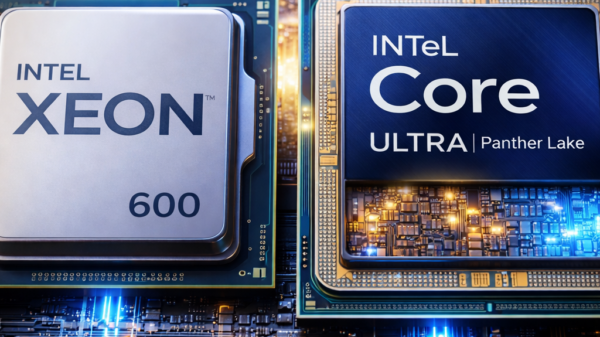





























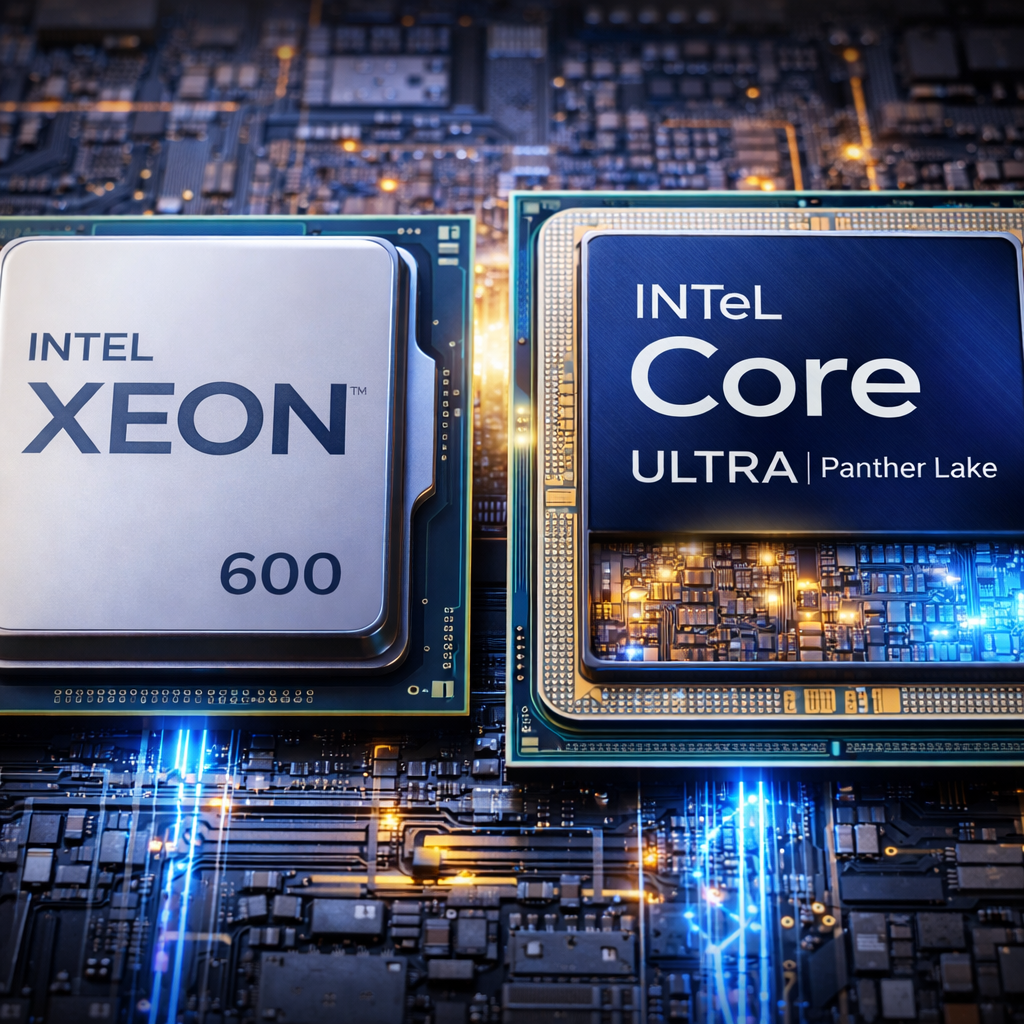
Intel is transitioning its CPU strategy to emphasize integrated AI acceleration, marking a significant shift from what was once considered an auxiliary feature to a fundamental expectation in both data centers and client devices. The introduction of the new Xeon 600 processors and the forthcoming Panther Lake generation, which will utilize an 18A manufacturing process, underscores this paradigm shift towards specialized on-die acceleration rather than solely relying on traditional CPU performance. Although Intel frames this development as a technological advancement, it reflects a broader architectural realignment within the company.
Intel has officially confirmed that its Xeon 600 series is part of its current server roadmap, strategically designed for AI-oriented workloads. The platform boasts advanced acceleration features tailored for optimized vector and matrix operations, crucial for inference tasks. Previous generations, such as those utilizing AMX (Advanced Matrix Extensions), laid the groundwork for this evolution. The Xeon 600 aims to integrate conventional CPU workloads with AI functions without depending on dedicated accelerators like GPUs. Although many technical details remain undisclosed, Intel’s focus on “AI-first workloads” suggests a shift in the CPU’s role, where it will actively manage AI inference, especially within the low to mid-performance range. This strategic positioning seeks to bridge the gap between legacy CPUs and specialized AI hardware, prioritizing efficiency, latency, and seamless integration.
Alongside its server advancements, Intel is poised to launch the Panther Lake architecture, which will incorporate enhanced AI acceleration as an inherent component of its CPU design. The integration of a dedicated NPU (Neural Processing Unit), first introduced with the Meteor Lake architecture, will be expanded in Panther Lake to facilitate more efficient energy use and improve overall system performance. This is particularly pertinent for the notebook segment, where local AI applications such as speech processing and image analysis are increasingly expected to operate offline and efficiently. Technical specifics about Panther Lake are still limited, relying heavily on Intel’s official roadmaps and industry reports highlighting the anticipated emphasis on the NPU.
The evolving landscape indicates a blurring of lines between CPUs, GPUs, and accelerators, with a hybrid computing model emerging where various units are dynamically allocated according to workload demands. In the server realm, not every AI task will automatically default to a GPU, while in client devices, local AI processing is rapidly becoming a standard feature. Consequently, the evaluation metrics for CPUs are shifting; traditional parameters like clock speed and core count are now complemented by new indices, including NPU performance and energy efficiency in AI tasks. Despite the clear strategic direction, uncertainties linger, particularly regarding Intel’s limited performance data in relation to dedicated accelerators or rival solutions. The success of this integrated approach hinges on robust software support, as AI capabilities within the CPU are ineffective without efficient utilization in frameworks and applications. A functioning ecosystem that extends beyond hardware announcements is essential for Intel’s strategy to succeed.
Ultimately, with the launch of the Xeon 600 and Panther Lake, Intel is not merely adjusting its offerings; it is making a bold declaration that AI will be a standard component of future CPUs. This is driven by prevailing software trends and competitive pressures rather than technical novelty. The effectiveness of this strategy will depend less on the hardware itself and more on Intel’s ability to harmonize architectural integration, manufacturing improvements, and software capabilities into a competitive advantage. Users will ultimately assess this approach based on tangible outcomes: faster, more efficient, and effective task execution.
See also Tesseract Launches Site Manager and PRISM Vision Badge for Job Site Clarity
 Affordable Android Smartwatches That Offer Great Value and Features
 Russia”s AIDOL Robot Stumbles During Debut in Moscow
 AI Technology Revolutionizes Meat Processing at Cargill Slaughterhouse
 Seagate Unveils Exos 4U100: 3.2PB AI-Ready Storage with Advanced HAMR Tech