



















































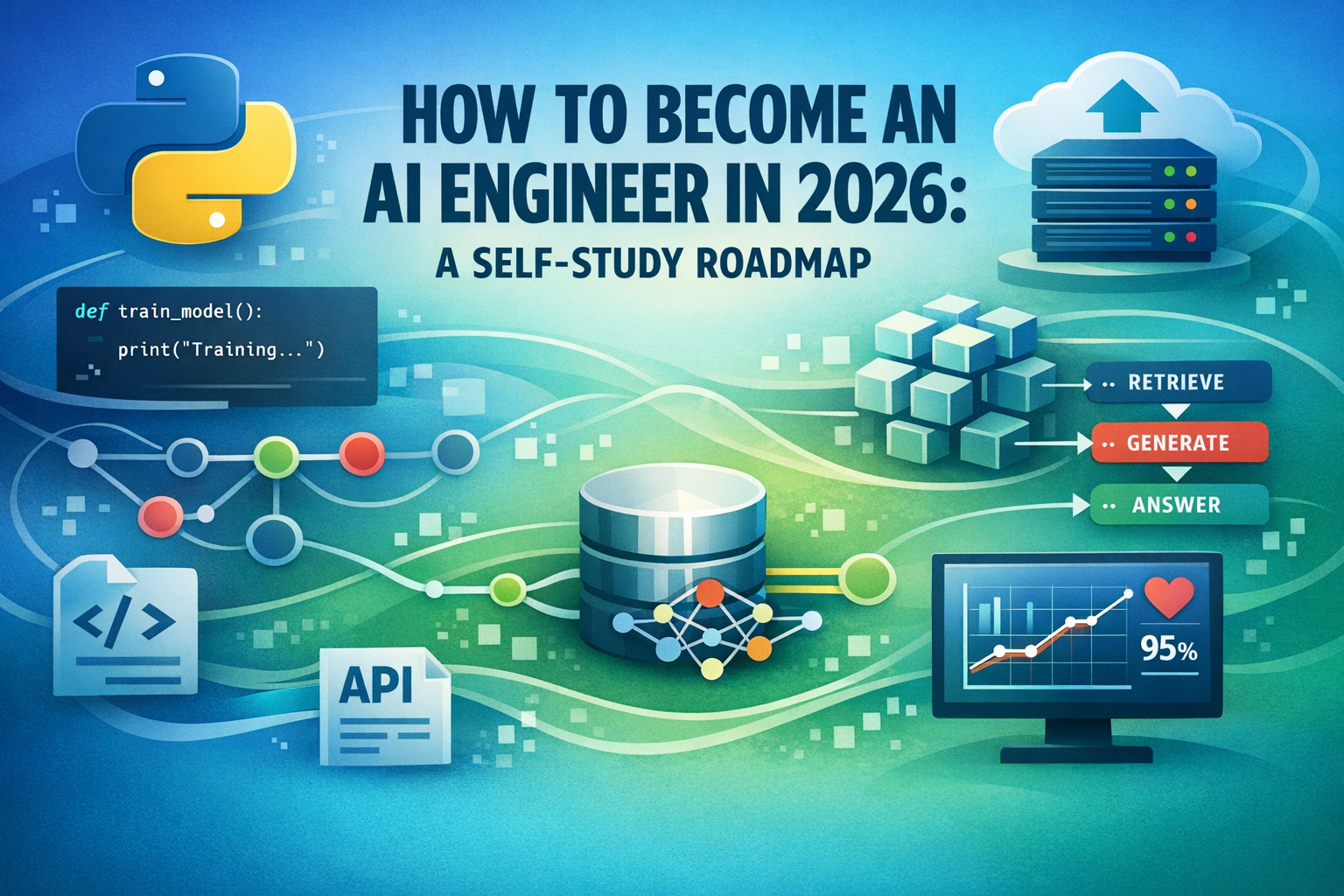
As artificial intelligence (AI) continues to transform industries, the demand for qualified AI engineers is surging. These professionals are responsible for creating practical applications that leverage existing AI models, developing tools such as chatbots and intelligent workflows that address real-world problems. With a landscape that is evolving rapidly, prospective AI engineers must navigate a structured learning path that combines programming skills, software engineering principles, and an understanding of AI technologies.
The journey to becoming proficient in AI engineering begins with mastering the fundamentals of programming. Python is widely regarded as the primary language due to its versatility and the extensive range of libraries available for AI applications. Beginners are encouraged to engage with resources like “Python for Everybody” and “Automate the Boring Stuff with Python” to build a solid programming foundation, which typically requires two to three months of dedicated practice. As learners progress, they should familiarize themselves with Git and version control, ensuring that their projects are well-documented on platforms like GitHub.
Once the basics of programming are established, aspiring AI engineers should shift their focus to software engineering essentials. This phase emphasizes understanding web application architecture, API design, and database management. Knowledge in these areas is crucial, as AI engineering is fundamentally rooted in software engineering principles. As such, learners should explore backend frameworks such as FastAPI or Flask, delve into testing methodologies like Pytest, and develop their API design skills through practical projects.
The next step involves gaining insights into AI and large language model (LLM) fundamentals. Understanding how LLMs operate—predominantly through pattern recognition rather than human-like reasoning—is essential for effective application. Engineers should learn about tokenization and context management, which are crucial for managing costs associated with API usage. Practical projects at this stage could include developing chatbots or text summarizers, allowing engineers to apply their knowledge of LLM APIs.
Retrieval-augmented generation (RAG) systems represent a significant advancement in AI applications, allowing models to access and reason over specific documents and databases. RAG enhances the utility of LLMs by bridging the gap between general knowledge and domain-specific information. Engineers must understand how to effectively chunk documents, manage complex formatting, and evaluate the performance of their systems. Engaging with vector databases such as Chroma can streamline this process and facilitate the development of robust RAG applications.
Advancing further, AI engineers should explore agentic AI, which empowers systems to plan and execute multi-step tasks autonomously. This involves giving models access to various functions and managing their execution while ensuring error handling and cost management. Learning about function calling, agent design patterns, and memory systems are critical as engineers develop more sophisticated AI applications.
Transitioning from prototype development to production presents unique challenges. AI applications require robust monitoring systems, evaluation frameworks, and deployment pipelines to ensure reliability and efficiency. Engineers need to focus on prompt versioning, logging, and observability while implementing strategies for A/B testing and rate limiting. These practices are vital for maintaining the quality of AI systems in real-world applications.
Finally, continuous learning is essential in the fast-paced field of AI. As new models and techniques emerge, engineers must stay informed about AI safety and alignment to mitigate risks associated with biased outputs and potential exploitation. Implementing robust input validation, output filtering, and proactive safety measures will safeguard the integrity of AI applications.
With a strong foundation built through hands-on experience and a diverse portfolio of projects, aspiring AI engineers can begin exploring job opportunities in AI-first startups, consulting firms, and freelance platforms. Given the rapid evolution of the field, those willing to invest time in learning and adaptation will find themselves well-positioned to contribute to innovative AI solutions that address pressing challenges.
See also MACOM, Seagate, Semtech Stocks Drop Amid Prolonged AI Chip Export Review
 AI Expert Chris Willis Reveals How Jobs Can Evolve with Technology’s Rapid Growth
 Elon Musk Merges SpaceX and xAI in $1.25 Trillion AI-Driven Space Initiative
 SoftBank Partners with Intel, Eyes $30B Investment in OpenAI Amid AI Infrastructure Push
 Alphabet Reports $113.8B in Q4 Revenue Amid 13% Tech Stock Selloff