

















































NHS England is set to trial a combination of AI and robot-assisted care aimed at accelerating the detection and diagnosis of lung cancer, the UK’s leading cause of cancer-related deaths. This initiative coincides with the health service’s commitment to provide all smokers and ex-smokers the opportunity for lung cancer screenings by 2030.
The screening expansion is projected to result in an additional 50,000 lung cancer diagnoses by 2035, with 23,000 of those cases identified at an early stage, potentially saving thousands of lives. Lung cancer remains a focal point in the UK government’s upcoming national cancer plan, particularly due to its status as the country’s most lethal form of cancer, claiming around 33,100 lives annually, or roughly 91 deaths per day.
Health disparities play a significant role in lung cancer mortality, with lower-income populations being disproportionately affected. This disease accounts for a year of the nine-year life expectancy gap between the wealthiest and the poorest regions of England, highlighting critical health inequalities.
NHS officials anticipate that the integration of AI and robotic technology will enhance early detection, allowing for quicker treatment and improved survival rates. The trial will take place at Guy’s and St Thomas’ NHS Trust in London, where innovative technologies will be employed to analyze lung scans and identify potential cancerous growths.
“This is a glimpse of the future of cancer detection,” remarked Prof. Peter Johnson, NHS England’s national clinical director for cancer. The AI software is designed to scrutinize lung scans and alert healthcare providers to the presence of small nodules, some as small as 6mm, comparable to the size of a grain of rice, which are most likely to be malignant.
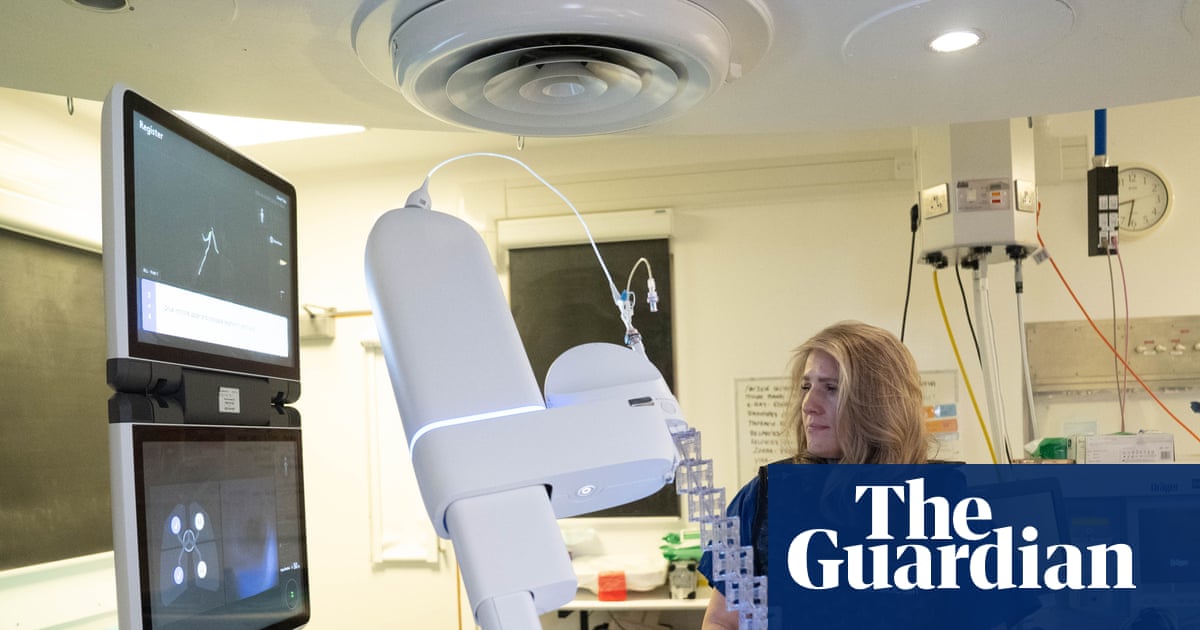
Following the identification of these nodules, a robotic camera will assist in guiding miniature tools for biopsy procedures, allowing for more precise tissue sampling than current methods. This approach could enable doctors to investigate potentially cancerous nodules that are difficult to detect with traditional techniques.
NHS England emphasized that if proven effective, this technology could revolutionize lung cancer diagnosis, particularly as the NHS screening program increasingly uncovers very small nodules that might have otherwise gone unnoticed until much later stages. The new system aims to minimize the frequency of unnecessary repeat scans and invasive surgeries, potentially replacing weeks of uncertainty with a single, half-hour cancer biopsy.
To date, the trial team has successfully conducted about 300 robotic biopsies, leading to 215 patients receiving cancer treatment. “Lung cancer is the leading cause of cancer death in the UK, but diagnosing it at an earlier stage can significantly improve people’s chances of survival,” said Michelle Mitchell, chief executive of Cancer Research UK. “New technologies like this hold immense potential, and it is crucial that we quickly conduct tests to ensure they are accurate and beneficial for patients in real-world settings, so that innovations can reach everyone sooner.”
The deployment of AI and robotics in lung cancer detection reflects a broader trend toward the integration of advanced technologies in healthcare, aimed at improving patient outcomes and addressing health disparities. As the trial progresses, its findings could pave the way for more effective cancer screening protocols, ultimately transforming the landscape of cancer diagnosis in the UK.
See also Microsoft Launches Maia 200 Chip, Promises 30% Better AI Performance Per Dollar
 Gulf Oil Giants Fund $3B AI Energy Infrastructure Initiative in India Energy Week
 Seagate Sees 25.2% Stock Surge Amid AI Storage Demand and Dividend Increase
 Shanghai Surpasses 120,000 PFLOPS in Intelligent Computing, Launches New Industry Initiative