





























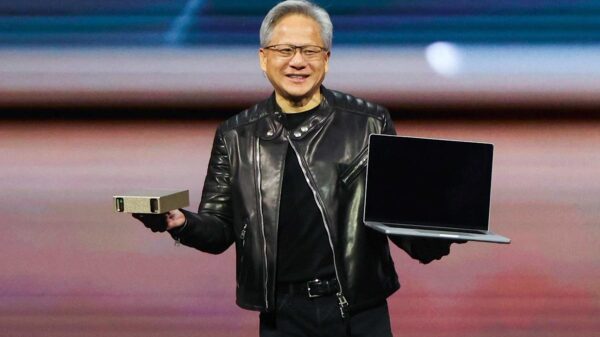




















The AI chip wars have entered a new phase as Nvidia CEO Jensen Huang is set to unveil a new generation of CPU processors aimed at facilitating agentic AI during the company’s GTC conference in San Jose this week. This marks a significant shift from Nvidia’s historically GPU-centric strategy, which has driven its valuation to nearly $2 trillion. As enterprises increasingly deploy autonomous AI agents that require distinct computing architectures, the demand for traditional CPUs is surging, benefiting both Nvidia and rival AMD.
Nvidia has long built its chipmaking empire on the strength of its graphics processors, but the evolving landscape of AI is prompting Huang to reconsider the company’s strategy. At this week’s GTC event, industry insiders anticipate Huang will introduce a new suite of CPUs tailored specifically for agentic AI—software agents capable of reasoning, planning, and acting autonomously rather than just generating text-based outputs.
The timing of this announcement is particularly telling. Nvidia has dominated the AI infrastructure market with its H100 and H200 GPUs, powering key players like OpenAI and Anthropic. However, the rise of agentic systems is revealing limitations in purely GPU-centric architectures. Unlike large language models, which excel in massive parallel processing, agentic AI systems engage in complex workflows, memory management, sequential decision-making, and interactions with external tools. This shift necessitates the kind of general-purpose computing capabilities that CPUs have historically provided.
AMD has recognized this transition early on. The company’s EPYC server processors have experienced double-digit growth for six consecutive quarters, with CEO Lisa Su attributing much of this momentum to the rising demand for AI inference workloads, as noted in the company’s latest earnings call. Nevertheless, Nvidia has no intention of surrendering its market share. Following its acquisition of server CPU designer Arm-based startup Mellanox in 2020 for $7 billion, Nvidia has been discreetly evolving its Grace CPU architecture alongside its GPU roadmap.
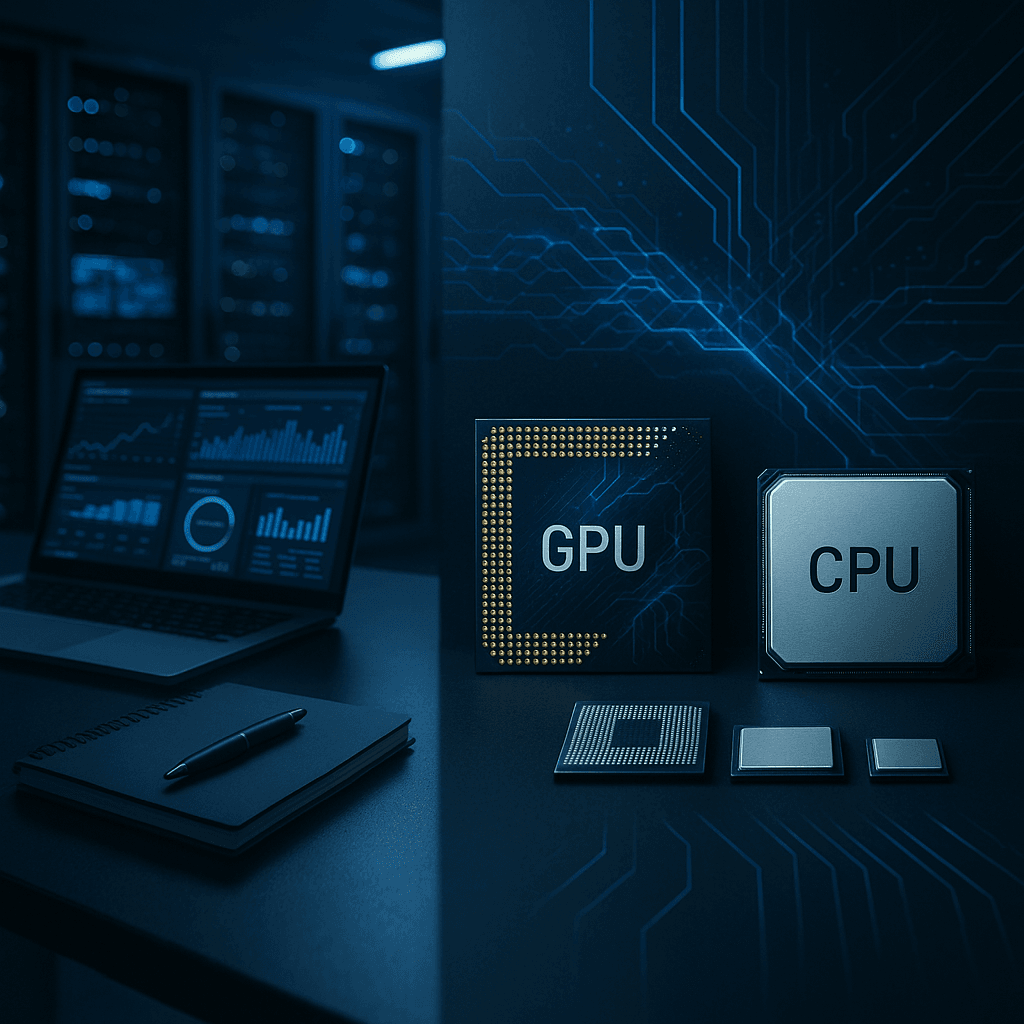
The crux of what differentiates agentic AI lies in its workload characteristics. Training models like GPT-4 or Claude necessitated extensive parallel processing capabilities, a domain where GPUs excel. In contrast, an AI agent that manages tasks such as booking travel or coordinating schedules relies heavily on sequential logic, API calls, and state management. Current enterprise infrastructure data indicates that these workloads demonstrate 60-70% CPU utilization compared to 30-40% GPU utilization, fundamentally reversing the ratio observed during large language model training.
As Nvidia prepares to pivot towards CPUs optimized for agentic AI, the industry will be watching closely to see how this strategy unfolds. The move underscores a broader trend where companies must adapt to evolving AI demands that challenge previous computing paradigms. With both Nvidia and AMD positioning themselves to capitalize on this shift, the future of AI infrastructure could hinge on the balance between GPU and CPU capabilities, as they cater to the diverse needs of autonomous software agents.
See also Tesseract Launches Site Manager and PRISM Vision Badge for Job Site Clarity
 Affordable Android Smartwatches That Offer Great Value and Features
 Russia”s AIDOL Robot Stumbles During Debut in Moscow
 AI Technology Revolutionizes Meat Processing at Cargill Slaughterhouse
 Seagate Unveils Exos 4U100: 3.2PB AI-Ready Storage with Advanced HAMR Tech