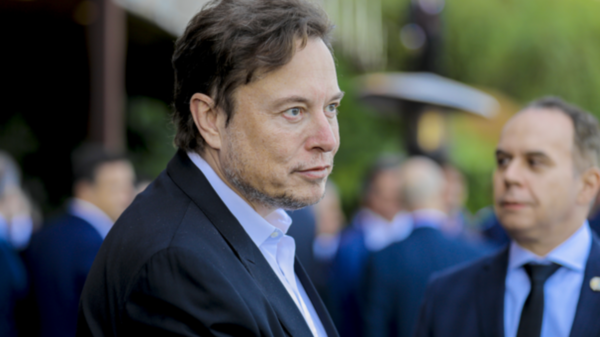















































Tesla is poised to revive its ambitious Dojo AI supercomputer project, following significant advancements in its proprietary AI5 chip design, which CEO Elon Musk declared is “almost done.” This development comes as the company also embarks on the early stages of its AI6 chip design, a move that underscores Tesla’s commitment to advancing its artificial intelligence capabilities.
Last year, Tesla revealed plans for Samsung Electronics Co. to manufacture the forthcoming AI6 processor, in a deal valued at $16.5 billion. This partnership not only enhances Tesla’s technology aspirations but also serves as a substantial endorsement for Samsung’s chip foundry business, which caters to a range of external clients.
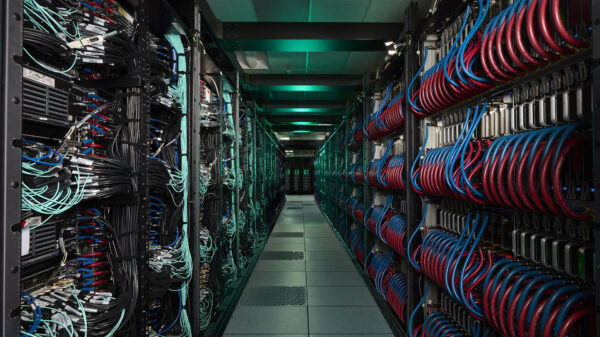
The Dojo project is pivotal to Tesla’s strategy, designed as an in-house artificial intelligence supercomputer that will bolster the automaker’s multibillion-dollar initiative to lead in the driverless vehicle sector and the broader AI landscape. Although previously paused, the renewed momentum around the AI5 chip’s development signals a recommitment to vertical integration in AI hardware, crucial for enhancing Tesla’s autonomous driving software and future technology initiatives.
To facilitate this growth, Musk recently took to his X platform, inviting applications for roles focused on creating what he termed “the highest volume chips in the world.” Prospective candidates were directed to submit their applications to [email protected], including key details about their previous technical challenges. This recruitment effort reflects Tesla’s intent to scale its chip manufacturing and development capabilities significantly, positioning itself to capture a dominant share of the specialized AI hardware market.
The emphasis on internal chip development and supercomputing infrastructure not only places Tesla in direct competition with established semiconductor giants but also highlights the strategic importance of these technologies in the evolving landscape of AI and autonomous driving. Successful execution of the Dojo project and the progression of its AI chips could yield substantial implications for Tesla’s long-term valuation and its role within the burgeoning AI hardware ecosystem.
As Tesla re-engages with its Dojo project and accelerates its chip designs, the company is not merely seeking advancements in technology but is also aiming for a transformative impact in the automotive sector. This renewed focus on AI hardware may well redefine competition within the industry, positioning Tesla as a formidable player in both the automotive and semiconductor fields.
See also Automation Revolutionizes AI Processor Interconnects, Enhancing Efficiency and Design Speed
 Microsoft’s AI Strategy Drives $281.7B Revenue, Apple Focuses on Hardware Ecosystem
 Vista AI Secures $29.5M Series B Funding to Expand Automated MRI Scanning Capabilities
 Quantum Computing Market Projected to Surge to $72 Billion by 2035, Says McKinsey
 AMD Launches Instinct MI325X with 1.8x Memory Advantage Over NVIDIA H200 Amid 25% Tariffs