



















































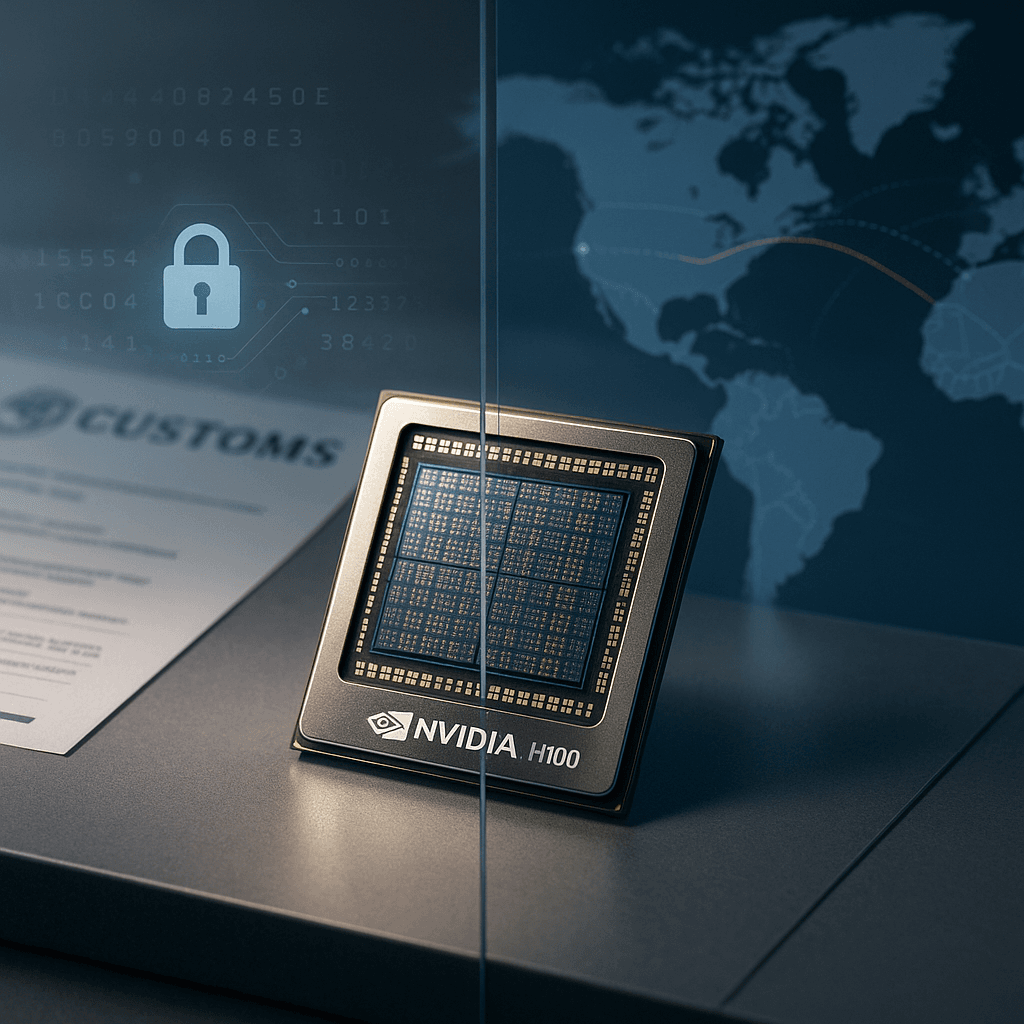
Federal prosecutors have charged several U.S. technology executives with illegally smuggling Nvidia AI chips to China, a move that highlights the escalating enforcement of export controls aimed at preventing advanced semiconductor technology from reaching Chinese markets. This significant legal action comes amid heightened tensions in the global semiconductor trade war, particularly as the demand for Nvidia’s high-performance chips surges.
The criminal charges focus on Nvidia’s H100 and A100 chips, which have become essential for training large language models and running sophisticated artificial intelligence systems. Since October 2022, the U.S. Commerce Department has prohibited the export of these chips to China without special licenses, citing national security concerns regarding their potential military applications. As a result, these restrictions have created a black market for the chips, as Chinese companies and research institutions, already heavily invested in Nvidia’s ecosystem, seek ways to acquire them.
According to reports, prosecutors allege that intermediaries employed shell companies, forged documentation, and utilized convoluted shipping routes to facilitate the illicit transfer of these banned chips into China. This underground market underscores the challenges faced by authorities in policing the semiconductor supply chain, particularly as demand for AI development accelerates globally.
The case signifies a marked escalation in Washington’s efforts to enforce strict export controls amid a rapidly evolving landscape of AI technology. Nvidia’s dominance in the global AI chip market has only intensified competition, with the company reporting data center revenue of $47.5 billion for fiscal 2024, primarily driven by the soaring demand for AI chips.
This legal action is part of a broader trend where the U.S. government is tightening semiconductor trade policies, reflecting national security concerns that the advanced capabilities provided by AI hardware could enhance China’s military and technological prowess. The prosecution not only targets individuals but also brings to light the systemic challenges in managing the flow of critical technology across borders.
The increasing difficulty of monitoring chip exports is emblematic of the geopolitical complexities surrounding technology and trade. As the AI arms race intensifies, the power dynamics may shift significantly based on who controls access to the most advanced chips. With each development, the stakes continue to rise, raising questions about the future of technology collaboration and competition between the U.S. and China.
As the semiconductor industry grapples with these challenges, the implications of this case could resonate beyond legal ramifications. The outcome may influence how other technology companies navigate the fragile balance between innovation, compliance, and market demand, shaping the future of AI development on a global scale.
See also Tesseract Launches Site Manager and PRISM Vision Badge for Job Site Clarity
 Affordable Android Smartwatches That Offer Great Value and Features
 Russia”s AIDOL Robot Stumbles During Debut in Moscow
 AI Technology Revolutionizes Meat Processing at Cargill Slaughterhouse
 Seagate Unveils Exos 4U100: 3.2PB AI-Ready Storage with Advanced HAMR Tech