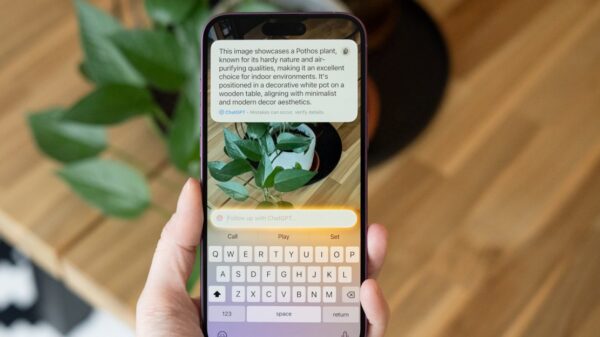
























































The market for voice technology is rapidly evolving, with experts noting a significant uptick in its adoption among office workers seeking greater job efficiency. “The Artificial Intelligence (AI) voice market is here to stay and will continue to expand into the physical world in 2026,” said Marios Savvides, the Bossa Nova Professor of Artificial Intelligence, Electrical and Computer Engineering and director of the Cylab Biometrics Center at Carnegie Mellon University.
The AI voice market reached $5.4 billion in 2024, a 25 percent increase from the previous year, and is projected to grow to $8.7 billion by 2026, according to a report from Andreessen Horowitz. Savvides highlighted that users commonly rely on basic voice assistants like Siri and Alexa for everyday tasks such as setting timers and checking the weather. As the AI megatrend continues, new users are emerging—from digital companions designed to boost morale to businesses implementing voice interfaces in cars, kiosks, and restaurants. Voice assistants are poised to become a primary user interface, potentially replacing touch controls in smartphones and other devices.
Leading the charge in this market are major tech companies, including Amazon’s Alexa, Apple’s Siri, Google’s Gemini, and Microsoft’s (MSFT) Copilot. With advancements in AI, these voice assistants are expected to play an increasingly vital role, particularly in the lucrative enterprise sector, where they may transform interactions between large corporations and their consumers and employees.
“They do make the workplace more efficient and they do help small businesses save money by using voice assistants to operate as receptionists,” noted Frank Gamrat, executive director of the Allegheny Institute for Public Policy. Despite the benefits, Gamrat cautioned that sometimes the technology fails to perform as expected, and there are ongoing privacy concerns regarding its use.
Voice recognition systems typically require audio to be uploaded, processed, and stored, often in cloud environments, heightening the risk of data breaches or unauthorized access. There is also the issue of major tech providers retaining voice data to train AI models, which could inadvertently expose sensitive information. A 2019 security study revealed over 7,000 hours of sensitive medical transcriptions were left exposed due to misconfigured storage by AI vendors.
“Automated platforms that integrate with smartphones, smart speakers, or virtual assistants introduce other attack vectors—like unauthorized voice activation, spoofing, or audio injection—that can lead to unintended data capture,” said Savvides. Despite these risks, industry analysts argue that for high-volume businesses, voice assistants lead to fewer dropped calls, more consistent support, and enhanced customer interactions, freeing teams from answering repetitive inquiries.
According to John Schultz, a manufacturing analyst from Hershey, Pennsylvania, 77 percent of manufacturers were utilizing AI solutions in 2025, an increase from 70 percent in 2024. “AI voice assistants aren’t likely to play flashy roles like JARVIS from ‘Iron Man’ or scary ones like HAL from ‘2001’ anytime soon,” Schultz remarked.
The applications for digital assistants are expanding, with the most common tasks reported by users being checking the weather and playing music, as indicated by a YouGov survey of U.S. adults. Other popular functions include web queries, setting alarms, and hands-free calling. However, the survey also highlighted consumer frustrations, particularly with assistants not understanding requests.
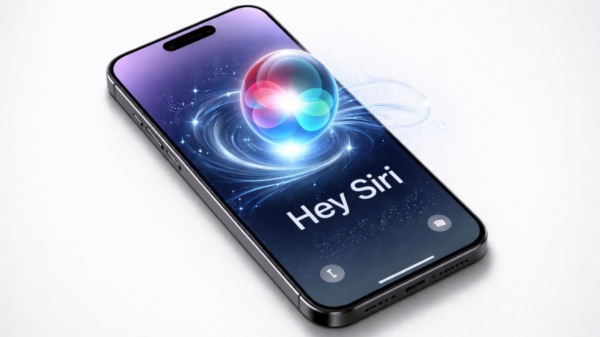
Looking ahead, attention is turning toward Apple as the expected launch of an AI-powered Siri is anticipated in spring 2026. Unlike early digital assistants that were limited to basic commands, today’s AI voice agents are becoming more deeply integrated within enterprise systems. They can now schedule meetings, transcribe conversations, automate repetitive tasks, provide IT support, assist in HR recruitment, and manage customer service calls with near-human accuracy, presenting significant efficiency gains for businesses.
Gamrat concluded, “We just have to be careful on how we use this maturing technology for workers.” As the voice technology landscape continues to develop, the implications for workplace efficiency and privacy remain at the forefront of discussion.
See also Moore Threads Launches Huashan AI Chip, Surpassing Nvidia’s Hopper in Performance
 AI Hiring Increases Application Volume but Lowers Hiring Rates, Study Finds
 Alphabet Invests $10 Billion in Quantum Computing, Set to Lead Industry Advances
 Experts Warn of Gaps in AI Job Revolution Predictions Amidst Automation Surge
 Nvidia Reveals Four Key Inversions Shaping GPU Economics and AI Hardware Value