




































Claude Code has witnessed remarkable growth following the launch of its latest model, Claude Opus 4.5. Developers have reported a significant enhancement in AI programming capabilities, evolving from mere code completion tools to fully functional agent-based development systems. In less than a year on the market, the product’s Annual Recurring Revenue (ARR) has surpassed 1 billion US dollars, positioning it as one of Anthropic‘s fastest-growing business segments. The tool has not only revitalized internal engineering collaboration at Anthropic but has also started to penetrate wider knowledge work domains.
Claude Code, Anthropic’s AI-driven coding tool, is steering the global software development industry toward a crucial juncture. With its new ‘Agentic’ capabilities, the product has fundamentally changed coding practices and is experiencing unprecedented commercial success. On January 22, in an interview with WIRED, Boris Cherny, head of Claude Code, noted that the substantial improvements in underlying model capabilities are facilitating a shift from manual coding to full AI delegation, thereby transforming the work landscape for engineers and redefining productivity metrics across the industry.
According to insiders, Claude Code’s ARR is projected to grow by at least an additional 100 million US dollars by the end of 2025, shortly after the product had proudly announced that its ARR had surpassed the 1 billion US dollar threshold. Currently, Claude Code constitutes approximately 12% of Anthropic’s total ARR of around 9 billion US dollars, making it one of the company’s quickest-growing business segments.
This notable success is primarily credited to the release of Claude Opus 4.5, which many developers regard as a “step-function” improvement in programming capabilities. Unlike its predecessors, which were limited to code completion, Claude Code can comprehend natural language instructions and autonomously carry out subsequent development tasks. This shift towards agent-based solutions has spurred competition, prompting startups like Cursor and Windsurf, alongside tech giants such as OpenAI, Google, and xAI, to intensify their market efforts in this burgeoning field.
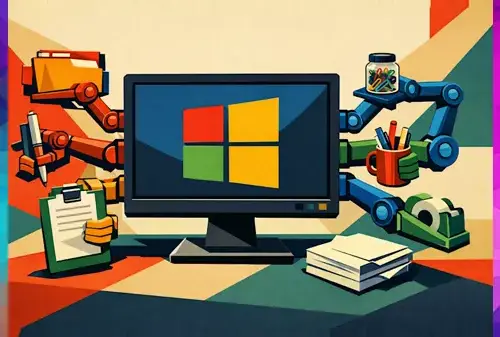
As AI agent capabilities continue to advance, Anthropic is aiming to replicate this transformative model across various sectors. The company recently launched Cowork, a new product designed to extend AI agent functionalities beyond programming terminals to general office tasks such as file management and software interaction, hoping to incite a similar productivity revolution in non-programming areas.
The evolution of AI programming tools has surpassed many expectations. From 2021 to 2024, most tools offered only autocomplete features, suggesting a few lines of code as developers typed. By early 2025, startups like Cursor and Windsurf began unveiling early ‘agent-style’ programming products. Cherny remarked that Anthropic strategically focused on the future trajectory of AI capabilities during the design phase of Claude Code. He stated, “We built the simplest thing. The craziest part is that three months ago, we learned that half of Anthropic’s sales team uses Claude Code every week.”
This forward-looking strategy appears to have paid off. Cherny disclosed that his use of Claude Code for coding tasks escalated from an initial 5% to 30% in May of the previous year following the release of Opus 4 and Sonnet 4. Remarkably, within two months of the Opus 4.5’s launch, he reported that 100% of his coding was performed by Claude Code. The company Workera opted for Claude Code after evaluating multiple AI programming tools, with several senior engineers deeming it superior to competitors like Cursor and Windsurf.
The primary advantage of Claude Code is its agency-based work model. Cherny explained that, unlike a year ago when users mainly relied on chat functions, Claude Code and Cowork have realized genuine agency capabilities, enabling them to utilize tools, read system files, and engage with platforms like Slack and Google Sheets. “This is the golden age for those with short attention spans,” Cherny observed. The most proficient Claude Code users can initiate multiple tasks simultaneously, allowing the AI to operate independently before sequentially reviewing progress. Cherny himself typically engages five to ten agents concurrently across multiple interfaces.
This method is increasingly prevalent within Anthropic. During an internal review meeting prior to the product’s official launch, CEO Dario Amodei asked employees if they would be required to use the product. In reality, nearly 100% of Anthropic’s technical staff regularly use Claude Code, with 95% of the team’s code being generated through the tool. Similar usage patterns have been observed among Anthropic’s enterprise clients, which share comparable security needs and interaction methods, allowing the company to refine the product through internal testing.
Following the success of Claude Code, Anthropic unveiled Cowork, an AI agent tool crafted for non-programmers, capable of managing files on users’ systems and interacting with software without accessing coding environments. Cherny referred to Cowork as “Claude Code for non-programmers,” noting his use of the tool for project management tasks, such as verifying the completion of engineers’ progress reports and sending reminders via Slack. He believes that AI agents will ultimately manage various mundane tasks, a feat already achieved in engineering this year, and anticipates similar breakthroughs across other domains.
As the competitive landscape intensifies, the success of Claude Code is drawing more contenders into the AI programming market. In November, Cursor reported an ARR of 1 billion US dollars, allowing users to program using models from Anthropic and other AI labs. Additionally, major players like OpenAI, Google, and xAI are rapidly developing agent-based programming products, vying for a larger market share. At the crux of this competition lies the capability of the underlying AI models, with Claude Opus 4.5 providing Anthropic with a temporary advantage.
Cherny offers a historical perspective for engineers navigating this transition, recalling how programming has progressed from punch cards to contemporary languages like Python. “As an industry, we have continuously undergone transformations, which represent an increasing level of abstraction. I believe agents are merely a point on this continuum,” he stated. He forecasts that as the learning curve diminishes, using tools like Claude Code and Cowork will become increasingly intuitive. Anthropic aims to achieve positive cash flow by 2028, with Claude Code being a significant contributor to this target.
See also Generative AI Transforms Software Engineering: The Rise of AI Orchestrators and Builders
 Elastic Launches Agent Builder and Context-Driven AI Tools; Shares Potentially Undervalued by 47%
 AI Transforms Clinical Research: 5 Trends Boosting Recruitment by 20% and Cutting Timelines by 6 Months
 TresVista Partners with RapidCanvas to Enhance AI Workflows for Financial Services
 Thorne Launches AI Wellness Chatbot Taia to Personalize Health Guidance for Consumers