



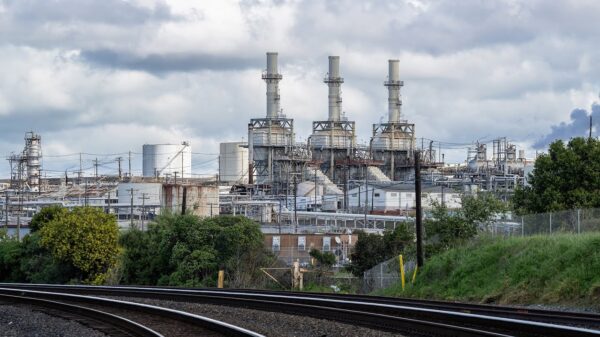


































Artificial intelligence is making significant inroads in the rail industry, transforming traditional safety protocols and operational efficiencies. A prime example of this shift is Herzog’s innovative RailSentry system, an intelligent grade crossing monitoring tool aimed at enhancing safety at train crossings. This technology comes at a crucial time as suppliers increasingly seek AI-driven solutions to resolve long-standing challenges in rail infrastructure.
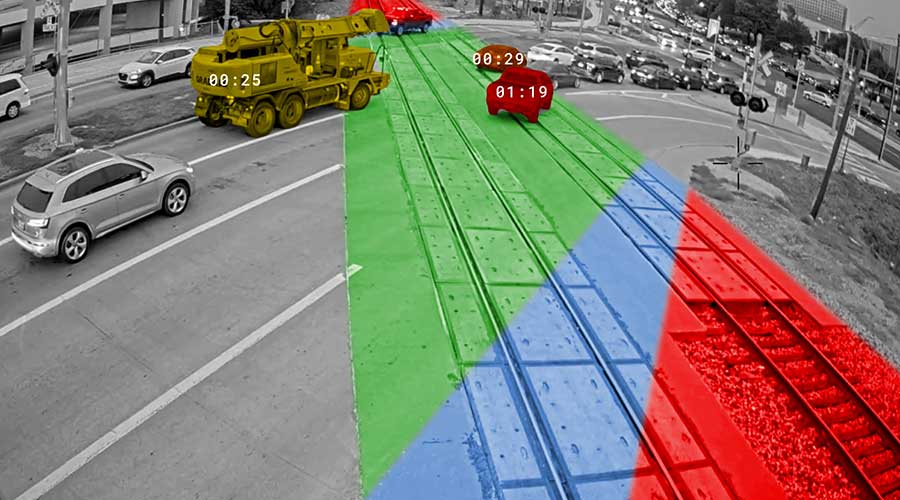
Herzog’s RailSentry represents a departure from conventional methods that have primarily relied on fixed warning systems and reactive measures following incidents. According to Herzog officials, the system employs AI to create a digital twin of the track environment, allowing for real-time monitoring of crossing activity. This proactive approach enables the detection of unsafe behaviors, such as vehicles stopping on tracks or attempting to bypass gates, providing actionable data that railroads and municipalities can use to mitigate risks before accidents occur.
The effectiveness of RailSentry is already evident. By 2025, multiple railroads, including Caltrain and Trinity Railway Express, had installed the system, bringing the total to 13 units. A notable deployment occurred at a dangerous crossing in Burlingame, California, which has recorded zero incidents since the system’s installation. Herzog officials assert that this underscores the potential for AI-driven monitoring to make tangible improvements in safety outcomes.
More broadly, RailSentry is part of a growing trend among rail suppliers to incorporate intelligence into infrastructure. Rather than replacing human expertise, Herzog maintains that AI serves to enhance existing knowledge. The data collected by systems like RailSentry equips engineers, safety teams, and planners with valuable insights into risk patterns, allowing for better evaluation of crossing designs and prioritization of safety improvements.
As AI technology continues to proliferate within the rail industry, its importance lies not in its novelty but in the results it yields. Herzog officials believe that systems like RailSentry illustrate how intelligent technology can effectively address persistent safety challenges, reducing incidents and providing clearer operational insights for railroads.
In a parallel development, VisioStack Inc. is tackling a different but equally significant challenge in rail infrastructure. As railroads expand the types and amounts of track inspection and condition data they collect, the focus has shifted from merely accessing this data to making it usable. VisioStack aims to simplify this complexity with its AI-driven Global Search and AI Search Builder, designed to enhance user interaction with multifaceted track data.
The Global Search tool enables users to query, combine, and visualize railway assets and condition data in a unified manner. Users can filter and summarize inspection results, images, and operational datasets, fostering collaboration among engineering and maintenance teams. This holistic approach lays a consistent groundwork for analyzing track conditions and informs planning decisions more effectively.
Building on this foundation, VisioStack’s AI Search Builder allows users to formulate their queries using everyday language. For example, users can request information about defects near bridges or locate rail segments due for replacement in the coming years. The large language model interprets user intent, translating it into appropriate queries that select relevant data types and filters.
This method addresses key hurdles in track data analysis, namely, navigating complexity and constructing technically accurate queries. By streamlining the search process, VisioStack’s AI tools enhance the speed of investigations and improve prioritization during planning and maintenance cycles. Rather than undermining the role of engineering judgment, the company focuses on making existing data more accessible and applicable to real-world trackwork decisions.
As the rail industry increasingly embraces AI, both Herzog and VisioStack exemplify how intelligent technologies can reshape operations. These developments not only promise enhanced safety and efficiency but also signal a future where data-driven insights become integral to decision-making in rail infrastructure.
See also UH Manoa Integrates Google and Gemini AI to Transform Language Teaching Strategies
 Claude Code Achieves $1B ARR, Revolutionizing AI Programming with Agentic Development
 Generative AI Transforms Software Engineering: The Rise of AI Orchestrators and Builders
 Elastic Launches Agent Builder and Context-Driven AI Tools; Shares Potentially Undervalued by 47%
 AI Transforms Clinical Research: 5 Trends Boosting Recruitment by 20% and Cutting Timelines by 6 Months