









































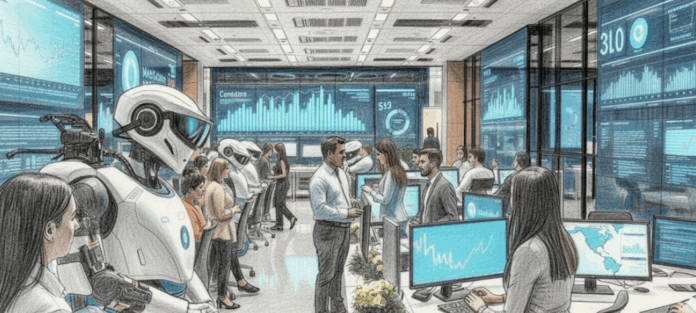
As companies across the U.S. expand their use of artificial intelligence, layoffs increasingly cite AI adoption as a contributing factor, according to multiple corporate announcements in recent months. This trend reflects growing pressure on businesses to demonstrate efficiency gains from technology investments while reshaping their workforce structures.
Notable examples include Pinterest and Dow, both of which attributed recent job reductions in part to AI integration. In 2025, businesses specifically mentioned AI in roughly 55,000 job cuts, more than twelve times the figure reported just two years earlier, with the majority concentrated in technology sectors, especially California and Washington.
Economists suggest the effect of AI on the broader labor market remains limited, but for affected employees, the impact is immediate and significant. “Companies are increasingly replacing routine tasks with AI-driven solutions,” said a representative from Challenger, Gray & Christmas, the outplacement and labor research firm that tracks these trends.
The surge in AI usage is not confined to a few sectors; rather, it reflects a wider transformation in how businesses operate. Many companies are investing heavily in AI technologies, pushing the envelope on automation and data processing capabilities. The shift indicates a clear pivot toward leveraging technology to achieve operational efficiency, even at the cost of job cuts.
In the tech industry, companies like Meta and Microsoft have also made significant moves toward AI integration, prompting discussions around workforce implications. In recent statements, leaders at these firms have underscored the necessity of AI in maintaining competitive advantage, even as they navigate the complexities of a changing job market.
The trend of layoffs attributed to AI adoption raises questions about the future of work. As organizations increasingly adopt AI tools, the skills required for many roles are evolving. Traditional jobs may become obsolete, while new roles centered around AI management and oversight will likely emerge. This transition poses a challenge for workforce retraining and adaptation.
Labor market analysts argue that preparing for this shift will be crucial for both employees and employers. Investing in reskilling and upskilling programs can mitigate the adverse effects of AI-driven job displacement. Companies that prioritize workforce development may find themselves better positioned to harness the full potential of AI technologies.
Looking ahead, the intersection of AI and employment will continue to be a focal point for corporate strategies and economic policies. As organizations weigh the benefits of automation against the societal impacts of job losses, a balanced approach will be essential. Policymakers and industry leaders will need to collaborate to ensure that the evolution of work fosters economic growth while supporting those affected by these transformative changes.
For more information on the ongoing impact of AI in the labor market, refer to the insights from organizations such as Challenger, Gray & Christmas and recent reports from the U.S. Bureau of Labor Statistics.
See also Amazon and Prosus Form $100M AI Cloud Partnership to Boost Global Expansion
 Sandisk’s AI NAND Demand Fuels 31.8% Stock Surge Amid Kioxia Supply Deal
 Healwell AI Faces Crucial 2026: Must Prove Growth Post-Transformation Amid 52% Stock Decline
 Hackers Exploit Hugging Face to Distribute 6,000+ Android Banking Trojans
 Bitcoin Plummets to 2024 Low Amid AI Disruption Fears and Geopolitical Tensions