










































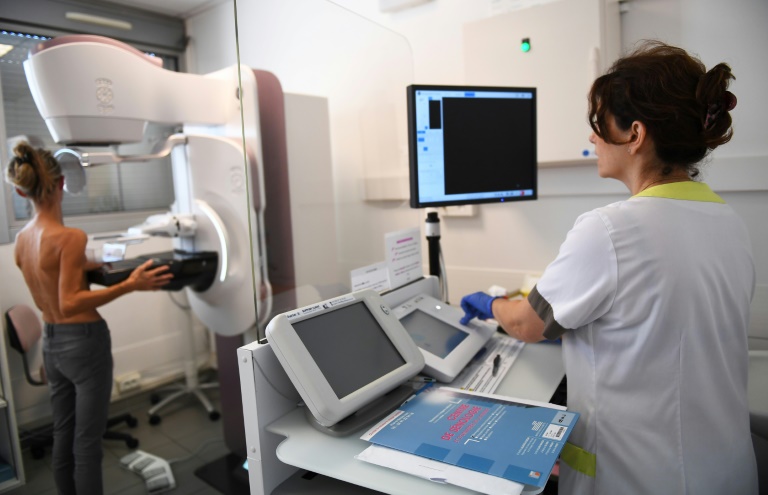
Artificial intelligence has demonstrated its capability to assist medical professionals in identifying more cases of breast cancer, according to a groundbreaking trial conducted in Sweden. The study, published in The Lancet medical journal, marks the first completed randomized controlled trial—considered the gold standard in medical research—focused on AI-supported breast cancer screening.
The trial, which took place between 2021 and 2022, involved over 100,000 women who underwent routine breast cancer scans. Participants were divided into two groups: one in which a single radiologist was aided by an AI system to analyze the scans, and another that followed the standard European method requiring two radiologists to interpret the images.
Results revealed that the AI-assisted group detected 9 percent more cancer cases than the control group. Additionally, this group exhibited a 12 percent lower rate of interval cancers—tumors that develop between regular screenings—over the following two years, a finding that holds particular significance in the early diagnosis of breast cancer.
The success of the AI system was consistent across different age groups and breast density levels, both of which can be risk factors for breast cancer. Notably, the rate of false positives was comparable in both groups, suggesting that the AI may improve detection without increasing unnecessary alarms.
Kristina Lang, a senior study author from Lund University, emphasized the potential for widespread implementation of AI in breast cancer screening programs to alleviate the significant workload facing radiologists while enhancing early cancer detection. However, she urged that such deployment should be approached with caution and accompanied by ongoing monitoring.
The sentiment around AI integration in radiology is mixed. Jean-Philippe Masson, head of the French National Federation of Radiologists, cautioned that while AI can enhance diagnosis, it is essential for the “radiologist’s eye and experience” to validate AI findings. He noted that AI could misinterpret changes in breast tissue that are not indicative of cancer, raising concerns about potential overdiagnosis.
Despite these apprehensions, Stephen Duffy, an emeritus professor of cancer screening at Queen Mary University of London, asserted that the study bolsters the argument for AI-assisted cancer screenings being safe. Nonetheless, he highlighted the need for further follow-up to ascertain whether the control group might eventually catch up in terms of cancer detection rates.
Interim results from the trial disclosed that AI technology significantly reduced the time radiologists spent analyzing scans, nearly halving the time required. The AI model, named Transpara, was trained on over 200,000 previous examinations from 10 countries, showcasing its adaptability and potential for broader application.
The implications of this trial are profound. In 2022, the World Health Organization reported that more than 2.3 million women were diagnosed with breast cancer, leading to 670,000 deaths globally. Given the pressing challenges faced by healthcare systems, especially in radiology, the integration of AI could be pivotal in transforming breast cancer screening practices.
As AI technology evolves, its role in healthcare is expected to grow, potentially reshaping diagnostic methodologies and improving outcomes for millions. However, the balance between innovation and caution will be critical as stakeholders navigate the complexities of AI implementation in medical settings.
See also Audio Format Investment Surges: 71% of Publishers Prioritize Podcasts by 2026
 Amazon Pursues $50B Investment in OpenAI to Propel Valuation to $830B Amid Intense Competition
 India’s Economic Survey 2026: Strategic AI Investments to Bridge $X Billion Gap in Agri-Tech
 Pentagon-AI Standoff Halts $200M Anthropic Deal, Microsoft Secures $750M Perplexity Contract