














































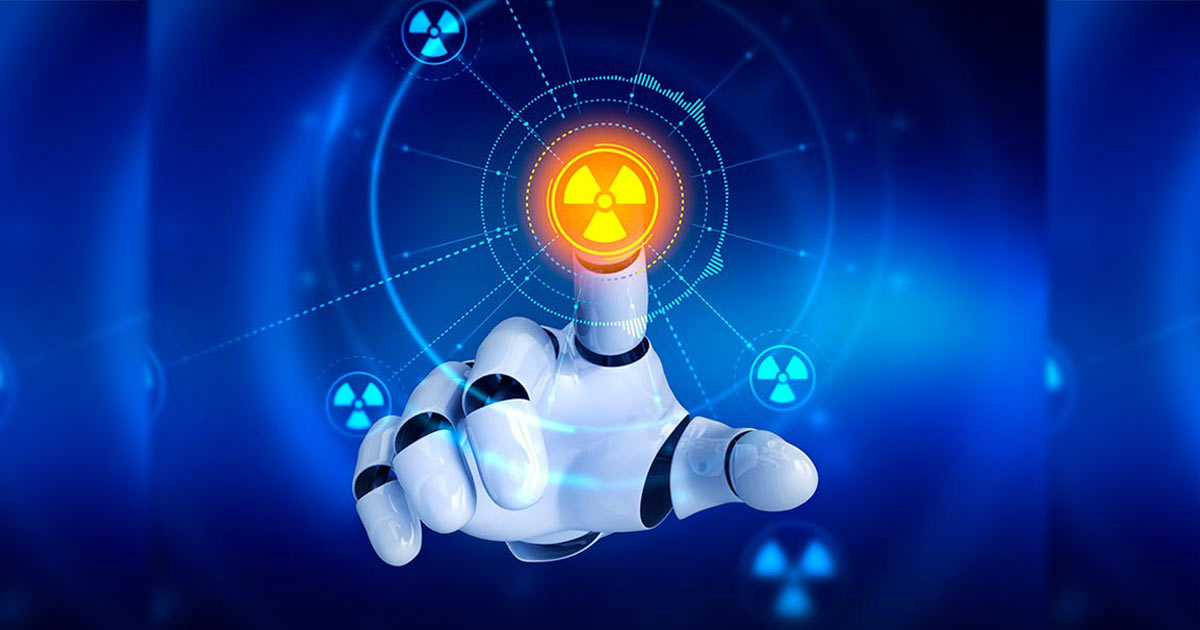
The integration of artificial intelligence (AI) into nuclear strategy is reshaping the dynamics of strategic stability among the United States, Russia, and China, as these nations engage in a tripolar arms race. This development marks a significant shift in the landscape of nuclear deterrence, blurring the lines between conventional and nuclear warfare.
Emerging technologies, particularly AI, are increasingly influencing nuclear command, control, and communication (NC3) systems. The vulnerabilities introduced by AI—including susceptibility to cyber-attacks and other non-nuclear threats—are prompting states to consider pre-emptive actions against potential adversaries. This creates a heightened sense of urgency to bolster deterrence through accelerated arms races. As policymakers grapple with these complexities, the implications for crisis management and escalation become ever more pressing.
Historically, the concept of “strategic stability” emerged during the Cold War, aimed at describing the nuclear interplay between the Soviet Union and the United States. At its core, strategic stability typically involves two key elements: the absence of incentives for a first nuclear strike (crisis stability) and the prevention of nuclear force build-ups (arms race stability). As technological advancements evolve, however, the interpretations of these elements have become more subjective, introducing paradoxes that heighten risks of miscalculation among nuclear states. Current interpretations must now account for the destabilizing effects of advanced technologies like AI, which complicate established notions of deterrence.
Amid ongoing geopolitical tensions, the potential for conventional warfare to escalate into nuclear conflict is significant. The lack of consensus on arms control between the U.S., Russia, and China further exacerbates the situation, as countries pursue modernization of their arsenals to maintain or gain an advantage. AI is becoming an essential tool in this context, as states seek to leverage it to enhance their deterrent capabilities, further complicating the arms race.
While AI applications in NC3 offer benefits—such as improved early warning systems and enhanced intelligence—the risks of miscalculations and the urgency to exploit AI capabilities create a volatile environment. The incorporation of AI can lead to a first-mover advantage, prompting nations to act quickly, which may inadvertently destabilize arms race stability. The U.S., for instance, is enhancing its counterforce targeting strategies, spurring Russia and China to adopt similar technological advancements in their conventional systems to counteract this perceived disadvantage.
The integration of AI into military frameworks is not without risks. An AI-based NC3 system could fall prey to cyberattacks that disrupt its operational capabilities. Furthermore, the dual-use nature of non-nuclear strategic weapons (NNSWs) poses additional challenges, as these weapons can be designed to target adversaries’ nuclear infrastructures, creating incentives for pre-emptive actions. The growing reliance on AI in decision-making processes may lead to hasty judgments during crises, potentially resulting in catastrophic outcomes.
Table 1 highlights the AI-enhanced systems deployed by the U.S., Russia, and China, detailing their levels of autonomy and associated risks. The United States employs AI-assisted C3 systems characterized by low autonomy and a human-in-the-loop approach, but this may introduce biases in decision-making. In contrast, Russia is developing more autonomous systems, such as the Perimeter/Dead Hand and the Poseidon nuclear-armed unmanned underwater vehicle, which operate semi-autonomously and could be subject to cyber vulnerabilities. China focuses on integrating AI with hypersonic and unmanned vehicles, posing escalation risks and transparency issues.
The integration of AI into nuclear strategy represents a fundamental shift in how states approach deterrence and crisis management. As AI technologies proliferate, states face an urgent need to reassess their defense strategies, weighing the benefits of enhanced capabilities against the heightened risks of escalation and miscalculation. The fear of being pre-empted remains a central concern, driving states to rapidly develop AI-integrated systems while navigating the intricate balance of stability and insecurity.
In conclusion, the evolving strategic environment, marked by fierce competition among nuclear-armed states, underscores the imperative for a reevaluation of deterrence and arms control frameworks. The integration of AI into military strategy blurs the lines between nuclear and conventional warfare, heightening escalation risks and challenging the principles of crisis stability. As states contend with these technological advancements, the potential for miscalculation looms large, necessitating a future-oriented dialogue to mitigate the risks associated with the new nuclear age.
See also Combat AI Slop: 6 Essential Steps to Safeguard Your Business’s Productivity and Quality
 Meta’s Patent Battle with Solos and China’s Scrutiny Risks AI Strategy Amid $2B Acquisition
 Retail Investors Shift $15B to Nvidia, $6B to Tesla, as Apple Sees $4B Sell-off
 Rapid AI Advancements Drive Urgent Policy Reforms in National Security and Geopolitics
 Shane Legg of Google DeepMind Announces AGI Economics Hiring; Elon Musk Suggests Grok Integration