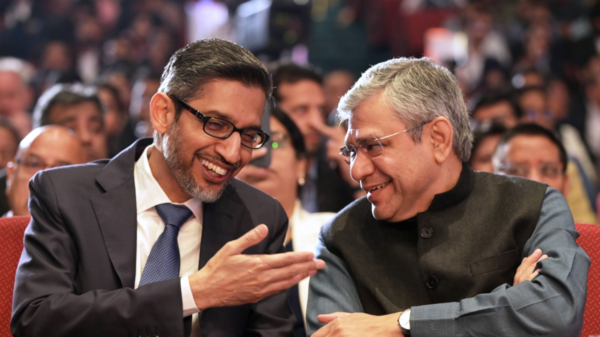
















































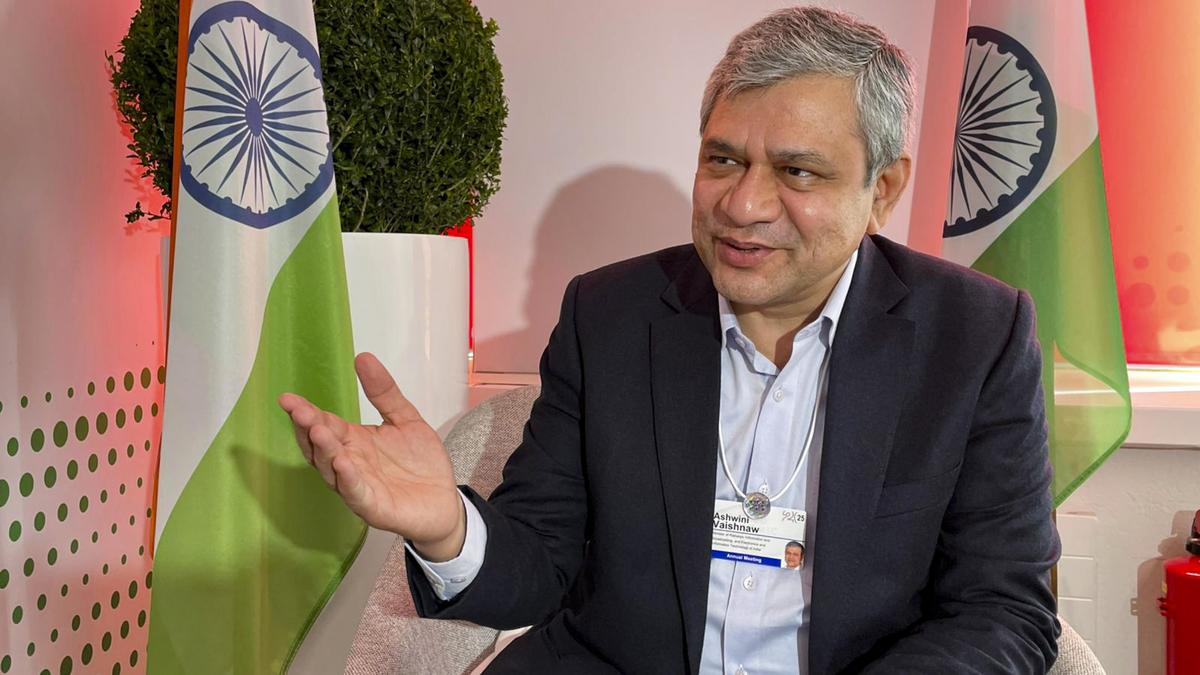
Information Technology Minister Ashwini Vaishnaw stated that producing large language models (LLMs) does not necessarily confer a geopolitical advantage during an interview at the World Economic Forum in Davos, Switzerland on January 20, 2025. He emphasized that the true benefits of massive investments in artificial intelligence (AI) will accrue to countries that effectively deploy these technologies.
Vaishnaw raised concerns about the potential for firms heavily investing in the AI sector to face bankruptcy. “The boom in countries with massive investment might be leading to a situation where the firms investing in the AI craze go bust,” he noted.
He queried the geopolitical implications of having a large model, asking, “Can it switch off that model? What will happen to a country like India? We have our own bouquet of models which can be used for 95% of our work. So does creating a large model give you geopolitical power? I don’t think so.” He asserted that India’s capability to deploy AI tools effectively positions it as a leader in helping businesses worldwide integrate AI into their processes.
Vaishnaw elaborated on the practicality of scaling AI technology, stating, “If you have a 50 billion parameter model, you can deploy it using one GPU. If you have a 30 billion parameter model, which is absolutely good for 80% of your work, you don’t even require a GPU.” He concluded that the notion of a geopolitical edge derived from large models is overstated, given the vast number of CPUs available globally and the emergence of custom silicon products from diverse countries.
During his time at the forum, the Minister engaged with several executives from the semiconductor and AI industries. He met with Joel Kaplan, Chief Global Officer at Meta Platforms, discussing the protection of social media users from deepfakes and AI-generated content. Vaishnaw also met with IBM CEO Arvind Krishna and representatives from Google.
In another discussion, he highlighted the upcoming AI Impact Summit scheduled for next week in New Delhi. At this summit, India plans to launch a “UPI-like” repository of AI tools. Kavita Bhatia, COO of the summit, informed The Hindu that this collection will serve as a repository of successful AI use cases that can be easily replicated by other countries.
Vaishnaw’s comments reflect a growing sentiment in the tech community that the quantity of investment in AI does not automatically translate to success or geopolitical dominance. The focus is shifting towards the practical application and integration of AI technologies, which could be crucial for nations like India to leverage its strengths in this rapidly evolving landscape.
As the global landscape for AI continues to develop, the emphasis on both technological advancements and their practical implications will likely shape future discussions on AI’s role in geopolitics and economic strategy.
See also German Utility Stadtwerk am See Tests AI for Enhanced Grid Stability and Efficiency
 CODIT Unveils ChatCODIT: Transforming Global Regulatory Intelligence with AI-Powered Insights
 Apple Chooses Google Gemini AI to Enhance Siri, $1B Annual Deal Confirmed
 Celebrities Rally Against AI Copyright Violations in “Stealing Isn’t Innovation” Campaign
 Trump Threatens NATO with Tariffs as 96% of Burden Falls on American Consumers