NVIDIA has introduced AIConfigurator, an open-source tool designed to streamline the deployment and optimization of large language models (LLMs) within its Dynamo AI serving stack. Released recently, the tool aims to alleviate the complexities involved in configuring hardware and software setups for high-performance, cost-effective AI serving. With a user-friendly interface, AIConfigurator enables engineers to identify optimal configurations in a matter of minutes, rather than spending days on extensive manual testing.
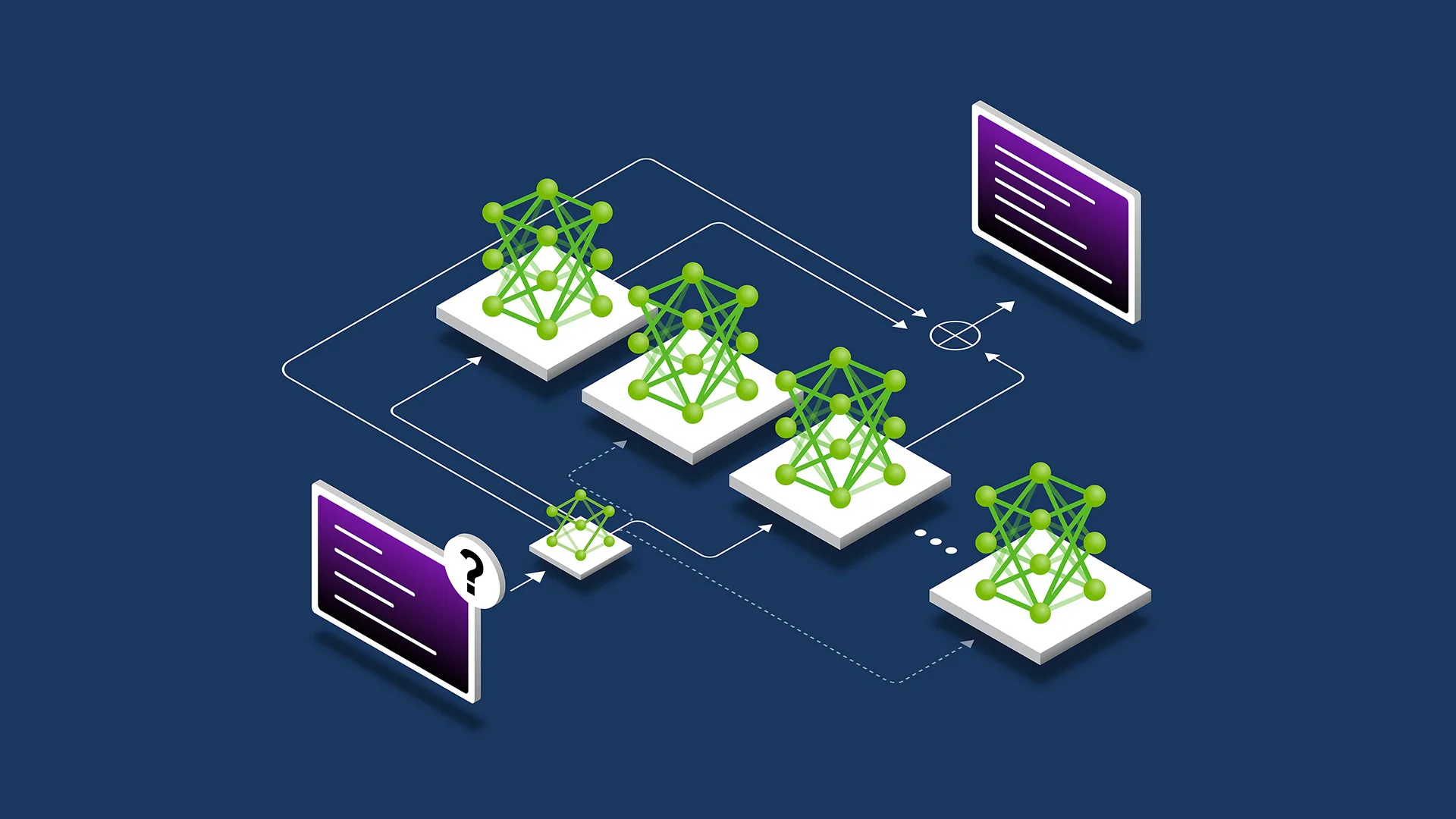
The primary advantage of AIConfigurator lies in its ability to predict the performance of various configurations without the need to exhaustively test each one on real hardware. The tool deconstructs LLM inference into individual operations, allowing it to gauge each one separately on the targeted GPU. By reassembling these measurements, AIConfigurator estimates the overall performance of any configuration, thus bypassing the need for GPU resources during the search process.
AIConfigurator employs a sophisticated methodology for estimating latency across various operations, including General Matrix Multiplications (GEMM), attention mechanisms, and mixture-of-experts (MoE) dispatch. Its collector toolchain benchmarks each operation across different quantization modes and batch sizes, logging results into a performance database calibrated to specific silicon. In cases where data for a new model or GPU is unavailable, AIConfigurator utilizes speed-of-light roofline estimates with empirical correction factors, ensuring practical recommendations even before empirical profiling is conducted.
The tool also accounts for complex scenarios such as continuous batching for aggregated serving and the rate-matching of prefill and decode worker pools in disaggregated serving. Rather than providing a singular answer, AIConfigurator produces a Pareto frontier that illustrates the trade-offs between throughput and latency for both serving modes. This extensive search, which often evaluates tens of thousands of configurations, can be completed within seconds.
To illustrate its capabilities, consider a scenario where developers wish to deploy the Qwen3-32B model with NVFP4 quantization across 64 NVIDIA B200 GPUs, targeting specific service-level agreements (SLAs) of 1000 milliseconds for time-to-first-token (TTFT) and 15 milliseconds for time-per-output-token (TPOT). With a single command, developers can search through a multitude of configurations. The AIConfigurator promptly returns a recommendation, achieving a throughput of 550 tokens per second per GPU, marking a 38% improvement over the best aggregated configuration.
AIConfigurator initially supported only NVIDIA TensorRT LLM but has since expanded to include a framework-agnostic layer, making it compatible with various models including those based on SGLang, thanks to contributions from community partners like Alibaba and Mooncake. Users seeking to compare different frameworks can do so easily, with an option to automatically assess multiple backends in one command. This flexibility allows AIConfigurator to generate native configuration files and deployment artifacts tailored to specific frameworks.
One notable area of focus is SGLang’s “Wide Expert Parallelism” (WideEP), which enhances decode throughput for MoE models by distributing experts across numerous GPUs. AIConfigurator effectively simulates the key elements of WideEP, addressing challenges such as load imbalance through an innovative modeling approach. Preliminary results indicate that configurations identified by AIConfigurator closely align with those manually optimized in production environments.
Further collaboration is anticipated to bring these methodologies to full production readiness. Additionally, Alibaba has integrated AIConfigurator into its AI Serving Stack, a comprehensive solution that facilitates efficient LLM inference deployment. The collaboration has reportedly led to a 1.86-fold increase in throughput for the Qwen3-235B-FP8 model while maintaining stringent SLAs.
Looking ahead, NVIDIA plans to enhance AIConfigurator further by automating its silicon data-collection pipeline and integrating it more deeply into the Dynamo ecosystem. Developers can expect support for dynamic workload modeling and faster implementation of new models, marking a significant step towards streamlining AI serving in commercial applications.
See also Pictory Launches Fastest AI Video Generator for Commercial Use with Minimal Skills Needed
 OpenAI’s GPT-4 Powers 80% of Social Media Feeds, Transforming Content Creation Landscape
 GoldenDoodle AI Launches Trauma-Informed Image Generation for Nonprofits and Mission-Driven Teams
 AI Misinformation Erodes Trust as Synthetic Media Threatens Authentic Communication
 AI-Powered Poster Generators Streamline Design Process, Cutting Production Time by 75%